


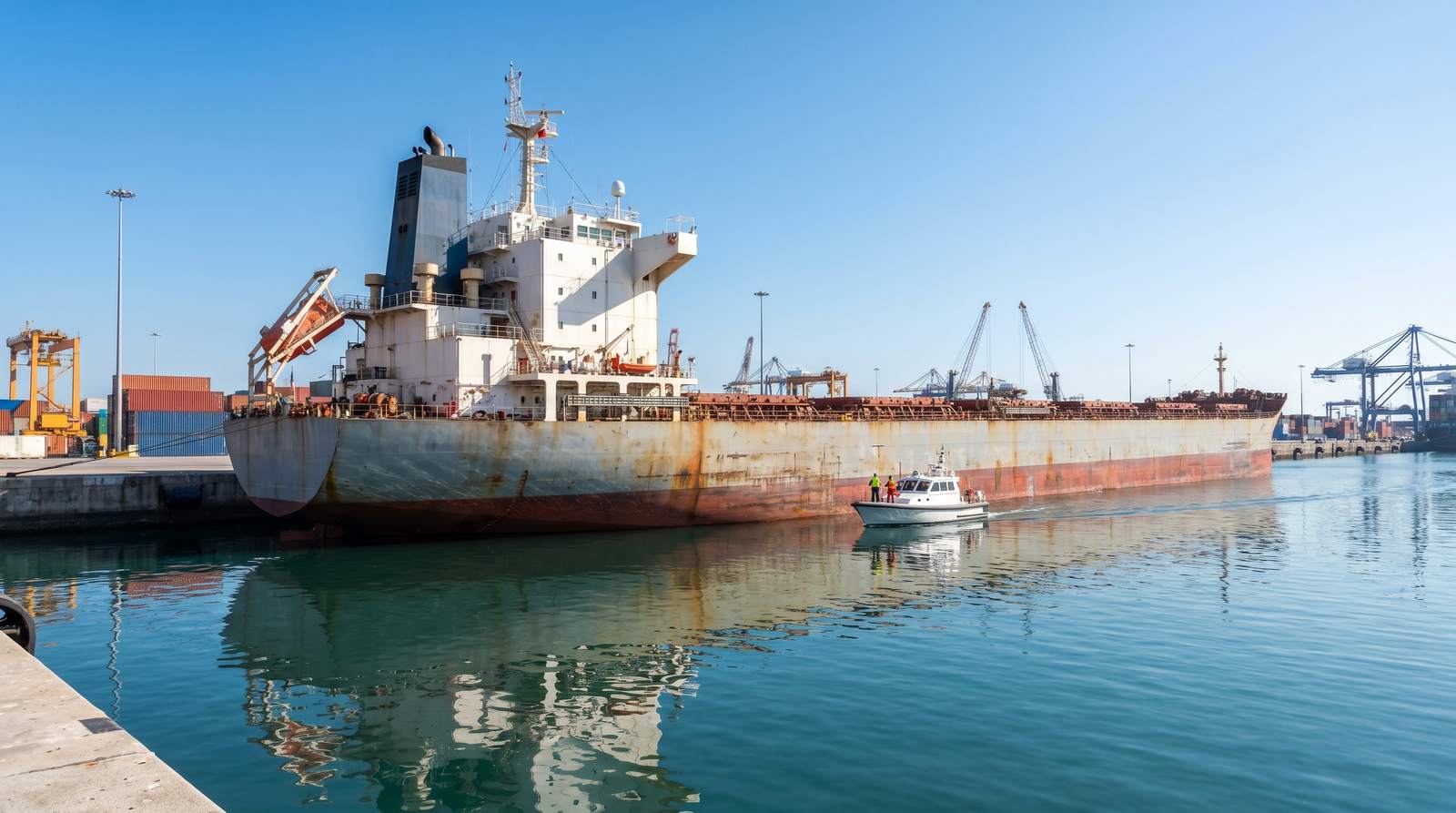
Buying a secondhand bulk carrier is a disciplined process, not an opportunistic one. The ships that look cheapest on a first pass are often the ones carrying the largest hidden liabilities — a poor class record, a weak environmental rating, or steel renewals due at the next special survey. This guide walks the buyer’s path from defining what you actually need through to closing, and flags the checkpoints where deals are won or quietly lost.
FRVous préférez le français ? Lisez notre guide d’achat du navire vraquier.
1. Define the brief before you look at ships
Start with the trade, not the vessel. Which cargoes, which ports, what draft restrictions, what parcel sizes? That answers the size class and whether you need gear (cranes) or can rely on shore equipment. If you are unsure where your trade sits, our explainer on bulk carrier size classes maps each segment to the ports and cargoes it fits. Fix a realistic budget band, a target age, and the classification societies and flags you will accept. A tight brief filters out 80% of the market and stops you falling for a ship that surveys well but is wrong for the job.
2. Screen candidates and read the class record
For each candidate, pull the basics: deadweight, draft, year and yard, class society and survey position, last drydock, and the environmental standing under EEXI and the annual CII rating. The classification record is the single most revealing document at this stage — outstanding recommendations, overdue surveys, or a history of steel renewals tell you more than any glossy spec sheet. Where a ship is approaching its special survey, factor the likely drydock and steel cost into your valuation rather than the asking figure alone.
3. Inspect: condition survey and records
A pre-purchase inspection is non-negotiable. A condition survey should cover hull and structure (with thickness measurements where age warrants), main engine and auxiliaries, cargo holds and hatch covers, the ballast water treatment system, and the ship’s certificates and class records. Hold and hatch condition matters disproportionately on a bulker — cargo damage claims and loading delays trace straight back to them. Read the survey against the brief: a ship that is structurally sound but needs hatch work is a negotiating position, not necessarily a walk-away.
4. Check class, flag and compliance
Confirm the class society is an IACS member and the survey cycle is clean. Review the flag state and whether you intend to keep it or re-flag on delivery — a change of flag has cost and timing implications. On the environmental side, a poor CII trajectory can mean speed restrictions or capital work within a few years, so treat it as a price driver, not a footnote. The goal is to avoid buying a compliance problem dressed up as a bargain.
5. Negotiate and close on a recognised saleform
Most secondhand deals close on a standard memorandum of agreement such as the Norwegian Saleform, which sets out deposit, inspection, delivery and documentation terms. Key commercial points are the deposit (typically held in joint escrow), the inspection regime, the delivery range and date, and the condition on delivery. Work the survey findings into price or into pre-delivery rectification, agree the bunkers-and-lubes settlement, and line up your delivery documentation and registration in advance so closing does not slip. For the full sequence from recap to handover, see our step-by-step S&P process guide.
Where a broker earns the fee
A good S&P broker compresses this process: sourcing candidates that genuinely fit the brief, reading class records critically, benchmarking value, and steering the saleform negotiation so the survey findings land in your favour. You can browse current dry-bulk options on our vessels for sale page and see how we support buyers end to end through our brokerage services. When you have a brief — even a rough one — talk to a broker before you start chasing ships, and you will waste far less time on the wrong tonnage.
Buying, or want a second opinion?
Our sale & purchase desk can help you find, value and inspect the right tonnage. Tell us what you’re looking for and we’ll revert within one working day.