

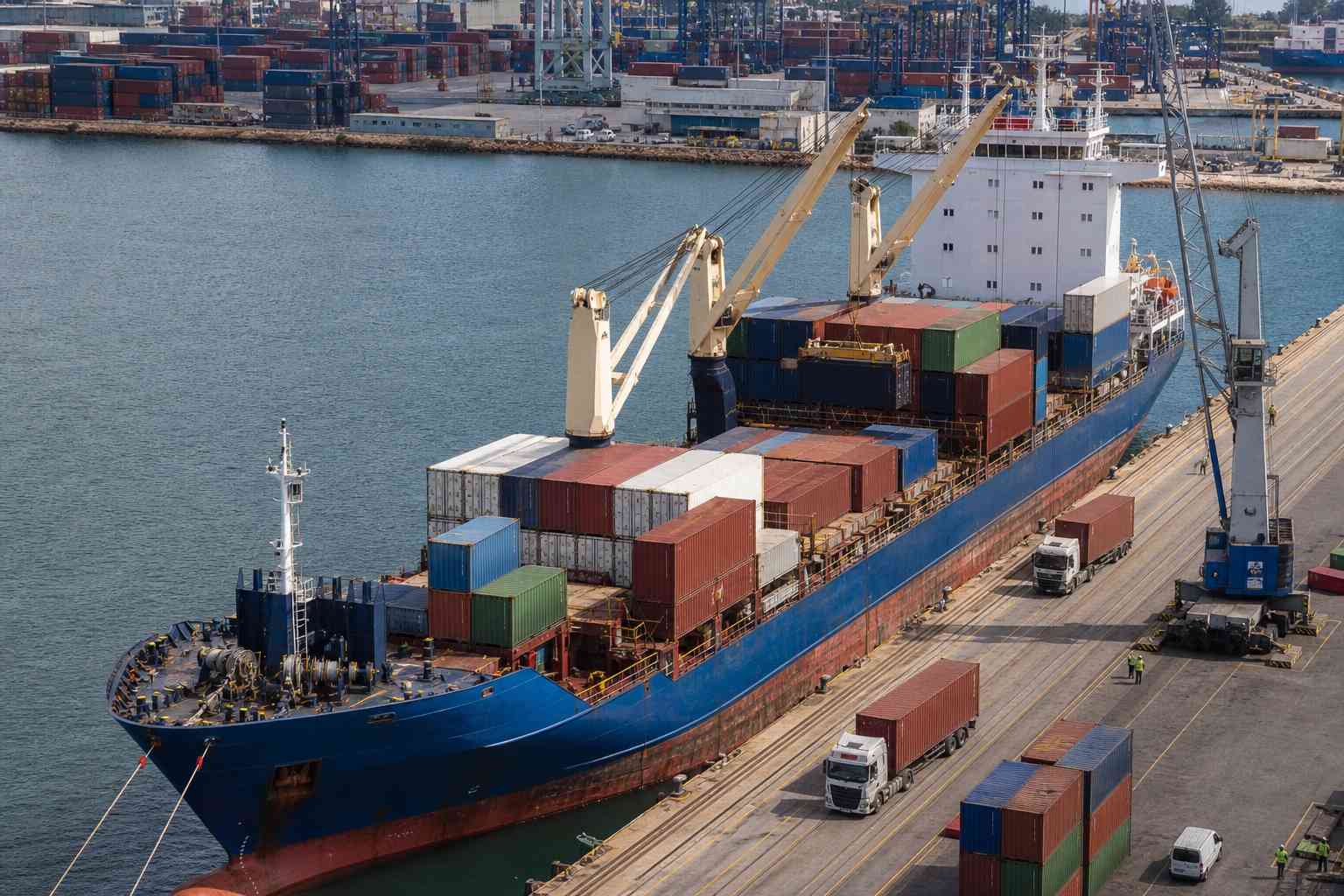
Feeder container ships are the connective tissue of the box trades — moving containers between deep-sea hub ports and the smaller regional terminals the mainline ships never call. For a regional operator, buying one is a different exercise from buying a bulk carrier: the headline TEU figure tells you less than it appears to, and gear, reefer capacity and draft often decide whether a ship fits your network. Here is what actually matters when you evaluate a feeder, and how the spec maps to the trades you can serve.
TEU intake: nominal is not what you carry
Every feeder is quoted a nominal TEU — the maximum number of twenty-foot slots — but that is a theoretical ceiling. What a ship actually lifts is closer to its homogeneous intake, the number of containers at an average weight (commonly quoted at 14 tonnes) it can carry within its deadweight and stability limits. A vessel rated at a high nominal TEU but a modest deadweight will “cube out” or hit its weight limit before the slots are full. For a buyer, the homogeneous figure and the deadweight-to-TEU ratio matter more than the nominal headline, because they tell you what the ship earns on real cargo.
| Check | Why it matters for a feeder |
|---|---|
| Nominal vs homogeneous TEU | Real intake at 14t decides earning capacity, not the slot count |
| Gear (cranes) | Geared ships work ports without shore cranes — wider trade range |
| Reefer plugs | Reefer-heavy trades need plug capacity; it lifts charter appeal |
| Draft | Shallow regional and river ports exclude deeper-draft ships |
| Speed & consumption | Schedule-keeping vs bunker cost on short feeder legs |
Geared or gearless?
Gear is the feeder question that bulk buyers rarely face in the same way. A geared feeder — fitted with its own cranes — can load and discharge at terminals that lack reliable shore cranes, which describes many of the smaller ports feeders are built to serve. That flexibility commands a premium and widens the pool of trades and charterers open to the ship. A gearless feeder is cheaper and lighter but ties you to well-equipped terminals. Which is right depends entirely on the ports in your network, so start the search from the berths you actually need to work.
Reefer capacity, draft and speed
Three further specifications shape a feeder’s earning power. Reefer plug capacity matters wherever the trade carries refrigerated cargo — perishables, pharmaceuticals — and a ship with ample plugs is more attractive to liner charterers. Draft governs port access: a shallower-draft feeder reaches river and tidal berths that exclude deeper ships, which is often the whole point of the segment. Speed and fuel consumption frame the operating economics on short legs, where schedule reliability and bunker cost trade off against one another. Read all three against the specific network you intend to run.
How you will deploy it
A feeder earns either on charter to a mainline carrier or in your own regional service, and the two value different things. Charterers screen on intake, reefer plugs, gear and increasingly fuel efficiency and emissions standing; a ship that fits common charter requirements is easier to keep employed and to sell on. If you are running your own service, the network and its ports drive the spec. Either way, the ship’s environmental position now affects employability — our guide to EEXI and CII for buyers covers why a weak rating narrows a vessel’s market.
Due diligence is the same discipline
While the spec priorities differ, the buying process itself mirrors any quality secondhand purchase. The container-specific points — hatch covers and cell guides, lashing gear, reefer systems and the box-handling cranes — sit on top of the usual hull, machinery and class-record checks confirmed at the pre-purchase inspection, and the deal still closes through the standard sale and purchase process. Price the ship on its real intake and condition, not its nominal TEU.
Match the ship to the network
The best feeder is not the biggest or the cheapest — it is the one whose intake, gear, reefer capacity and draft fit the ports and cargoes you serve. Browse current container and feeder tonnage on our vessels for sale page, and when you have a network in mind, talk to a broker before you commit — we can match the specification to your trade rather than the other way round.
Buying, or want a second opinion?
Our sale & purchase desk can help you find, value and inspect the right tonnage. Tell us what you’re looking for and we’ll revert within one working day.