


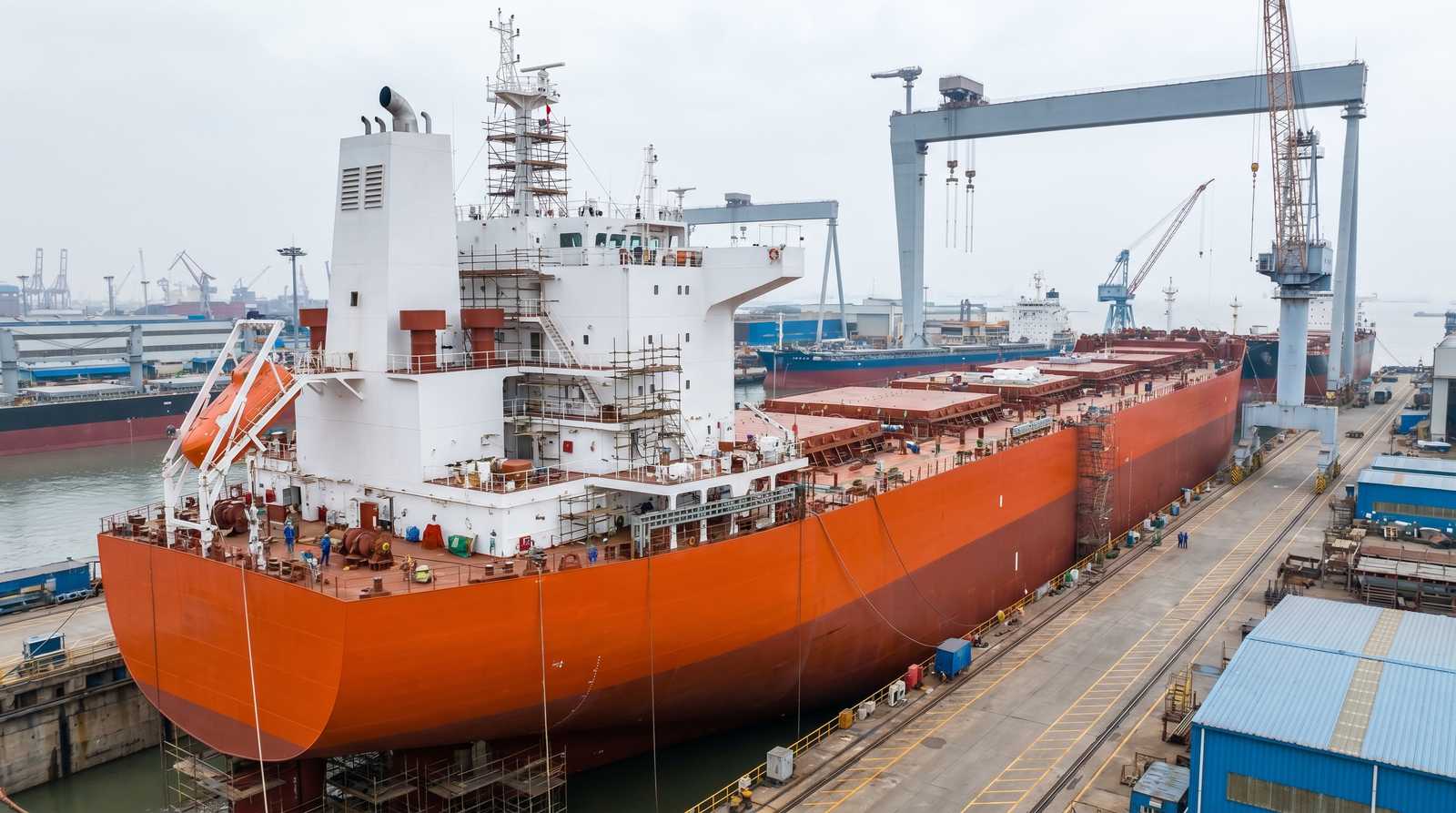
Every dry-bulk buyer eventually faces the same fork: order a newbuilding and wait, or buy secondhand and trade now. There is no universal answer — the right call depends on your cash position, how quickly you need earning capacity, and how much you value fuel efficiency and a clean compliance runway. Get it right and you match the asset to your business; get it wrong and you either sit idle waiting for a ship or inherit liabilities you priced too lightly. Here is how the two routes compare on the factors that actually move the decision in 2026.
FRVous préférez le français ? Lisez notre guide d’achat du navire vraquier.
| Factor | Newbuild | Secondhand |
|---|---|---|
| Upfront cost | Higher; staged yard payments | Lower entry; paid on delivery |
| Time to earning | Long lead — yard slot to delivery | Immediate on delivery |
| Fuel / CII | Latest efficient design; strong CII runway | Varies by age; check rating |
| Specification | Built to your spec | As-is; take the market |
| Main risk | Yard, timing, market at delivery | Condition, near-term steel/survey |
The case for a newbuilding
A newbuild gives you the latest hull and propulsion efficiency, a clean classification and survey position, and a long compliance runway under EEDI and CII — valuable when fuel and decarbonisation costs are rising. You also build to your own specification: cargo gear or gearless, the hold and hatch arrangement that suits your trade, shaft generators and energy-saving devices, and fuel readiness for the path you expect regulation to take. That control matters most to owners who run a ship hard on a defined route for fifteen years or more, where a few percent on daily fuel burn compounds into real money.
The cost is capital and time. You pay through staged yard instalments tied to construction milestones, you wait for a delivery slot that may be years out when order books are full, and you carry the risk of where the freight market sits when the ship finally hits the water. For owners with patient capital and a long view, a modern Kamsarmax or Ultramax order locks in efficiency that older tonnage cannot match — explore current programmes in our newbuilding section.
The case for secondhand
Buying resale puts a ship to work immediately and at a lower entry cost — decisive if you have cargo to cover now or want to deploy capital quickly rather than fund a yard for two years. The secondhand market is also deep and liquid in the geared and Panamax/Kamsarmax segments, which means real choice today and a clearer exit when you come to sell. Liquidity itself has value: an asset you can move is worth more than one you cannot.
The trade-off is that you take the ship as built. You inherit its fuel curve, its CII trajectory, and any near-term steel renewals or survey liabilities — and those can erase an apparent discount fast. That makes rigorous due diligence essential: the value is real, but only if you read the class record, price the survey position, and account for compliance before you sign. What drives the price you pay is a subject in itself — see our read on secondhand value drivers.
How to decide
Weigh three questions. First, timing: do you need earning capacity now, or can you wait for a slot? If you are covering committed cargo, waiting is expensive. Second, capital and risk appetite: can you fund staged yard payments and absorb the risk of the market at delivery, or do you want a known cost and a known ship today? Third, the compliance horizon: how long do you intend to hold, and how exposed is an older ship’s CII to tightening rules over that period? The longer the hold, the more a newbuild’s efficiency pays back.
In practice, a buyer covering immediate cargo on a shorter hold usually leans secondhand, while an owner building a modern, efficient core fleet for the long run leans newbuild. Many do both — a resale ship to trade now and an order for the future, so the fleet earns today and modernises tomorrow. If you are weighing a specific trade and budget, browse current resale tonnage on our vessels for sale page, then talk to a broker: we can model both routes against your numbers before you commit either way.