

The pre-purchase inspection is the moment a deal stops being a paper exercise and becomes a judgement about a real ship. By the time a buyer reaches it, the commercial terms are broadly agreed and a deposit is usually committed — so the inspection is not about finding a reason to walk away, but about confirming what you are paying for and surfacing anything that should move the price or the delivery condition. Done well, it turns the survey report into leverage; done carelessly, it lets a liability through. Here is what a sound condition survey should cover, and how the findings feed back into the deal.
ES¿Prefiere leer en español? Consulte nuestra guía sobre la inspección de pre-compra de embarcaciones.
What access a buyer actually gets
A secondhand inspection is normally carried out with the ship afloat and trading, not in drydock, so the survey is non-destructive: the surveyor inspects what can be seen and reached, reviews records, and forms a view. That makes the classification records as important as the steel itself — they tell you the survey history, outstanding recommendations, steel renewals and drydock dates that a walk-around cannot. A buyer is buying the ship and her paper trail together, and a clean class record with no open items is worth real money. This inspection sits at a defined point in the wider sale and purchase process — typically after the memorandum of agreement and before subjects are lifted.
What a condition survey should cover
| Area | What is checked | Why it matters |
|---|---|---|
| Hull & structure | Visible steel, coatings, thickness-measurement history | Steel renewals drive the biggest unplanned costs |
| Cargo holds & hatch covers | Hold condition, coatings, hatch sealing & weathertightness | Cargo claims and loading delays trace straight here |
| Machinery | Main engine, auxiliaries, running hours, maintenance records | Reliability and fuel performance in service |
| Environmental systems | Ballast water treatment, EEXI/CII standing | Compliance gaps mean retrofit cost or speed limits |
| Certificates & class | Class status, surveys due, outstanding recommendations | Open items can stall closing or force yard time |
Hull, holds and hatch covers
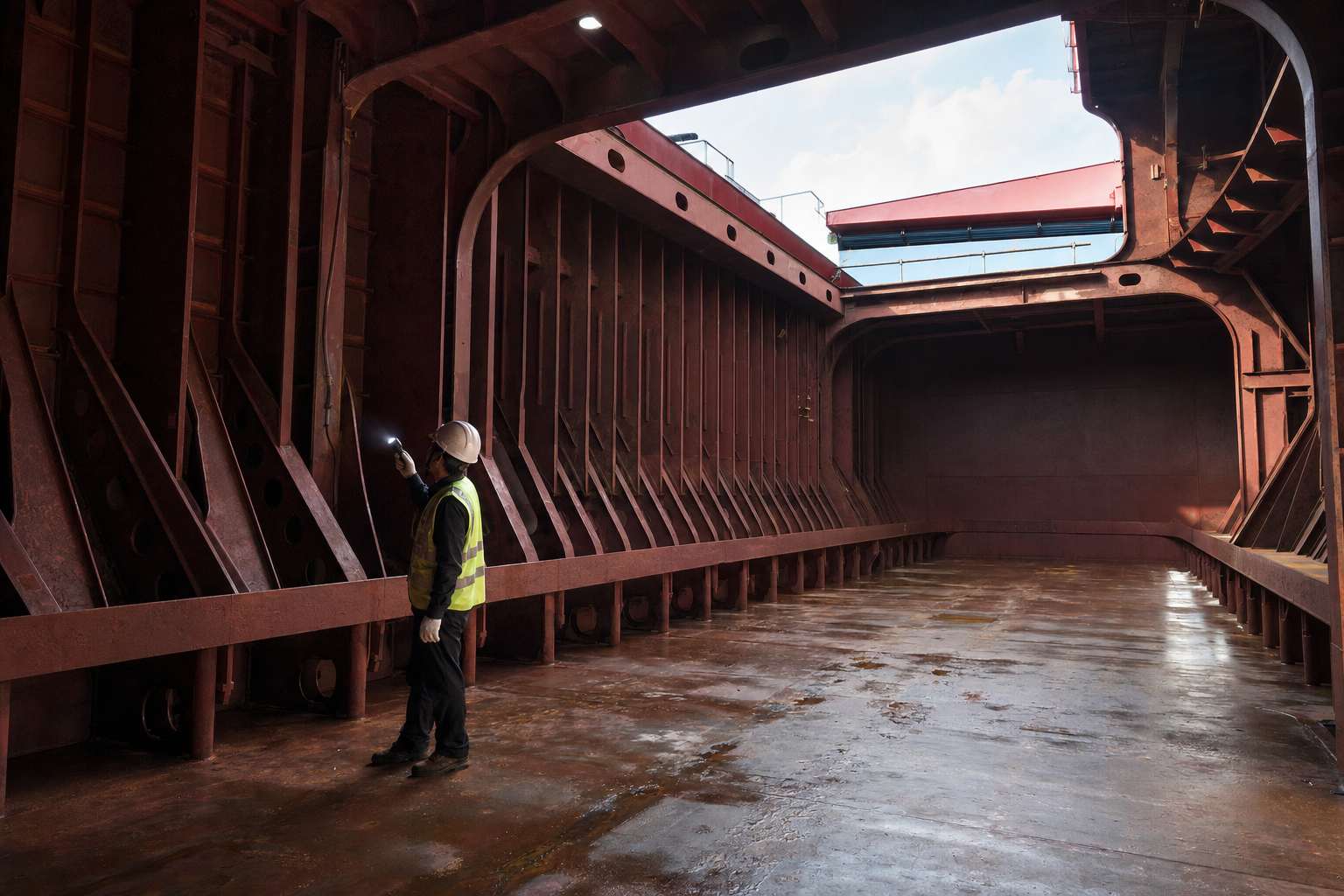
On a bulk carrier these three areas carry disproportionate weight. The hull and structure determine whether steel renewals — the largest unplanned cost a buyer can inherit — are looming; the surveyor reads visible condition against the ship’s thickness-measurement history and the timing of her next special survey. Cargo holds and hatch covers matter because they are where the ship earns and where it gets caught out: poor hold coatings, damaged frames or hatch covers that no longer seal weathertight translate directly into cargo damage claims, rejected loadings and off-hire. A ship that looks tidy topside but has tired holds is a negotiation, not a clean buy.
Machinery, environmental systems and records
The main engine and auxiliaries are assessed on condition, running hours and the quality of the maintenance record — a well-documented engine room tells you as much as the machinery itself. Increasingly, environmental systems decide real cost of ownership: a ballast water treatment system that is fitted and working, and a respectable EEXI and CII position, save a buyer from retrofit bills or speed restrictions down the line. Treat the compliance picture as a survey item in its own right, not a footnote, because it can move value as much as steel can.
How findings feed back into the deal
The point of the survey is to act on it. Findings are read against the standard the memorandum of agreement set for delivery: a structurally sound ship that needs hatch work or a BWTS service is a basis to adjust price or require pre-delivery rectification, not necessarily a reason to walk. A buyer who knows what a sound ship in that segment should look like turns the report into leverage; one who does not is left guessing. This is exactly where the broader buyer’s due-diligence process pays off — the inspection is one checkpoint in a disciplined purchase, and you can see how that discipline plays out across completed deals in our case studies.
Get the right eyes on the ship
A competent condition survey, read by someone who knows the segment, is the cheapest insurance a buyer can hold against a six- or seven-figure surprise. Browse current dry-bulk tonnage on our vessels for sale page, and when you have a candidate worth inspecting, talk to a broker before you commit a surveyor — we can tell you what to look for in that segment and how the findings should shape your number.
Buying, or want a second opinion?
Our sale & purchase desk can help you find, value and inspect the right tonnage. Tell us what you’re looking for and we’ll revert within one working day.