

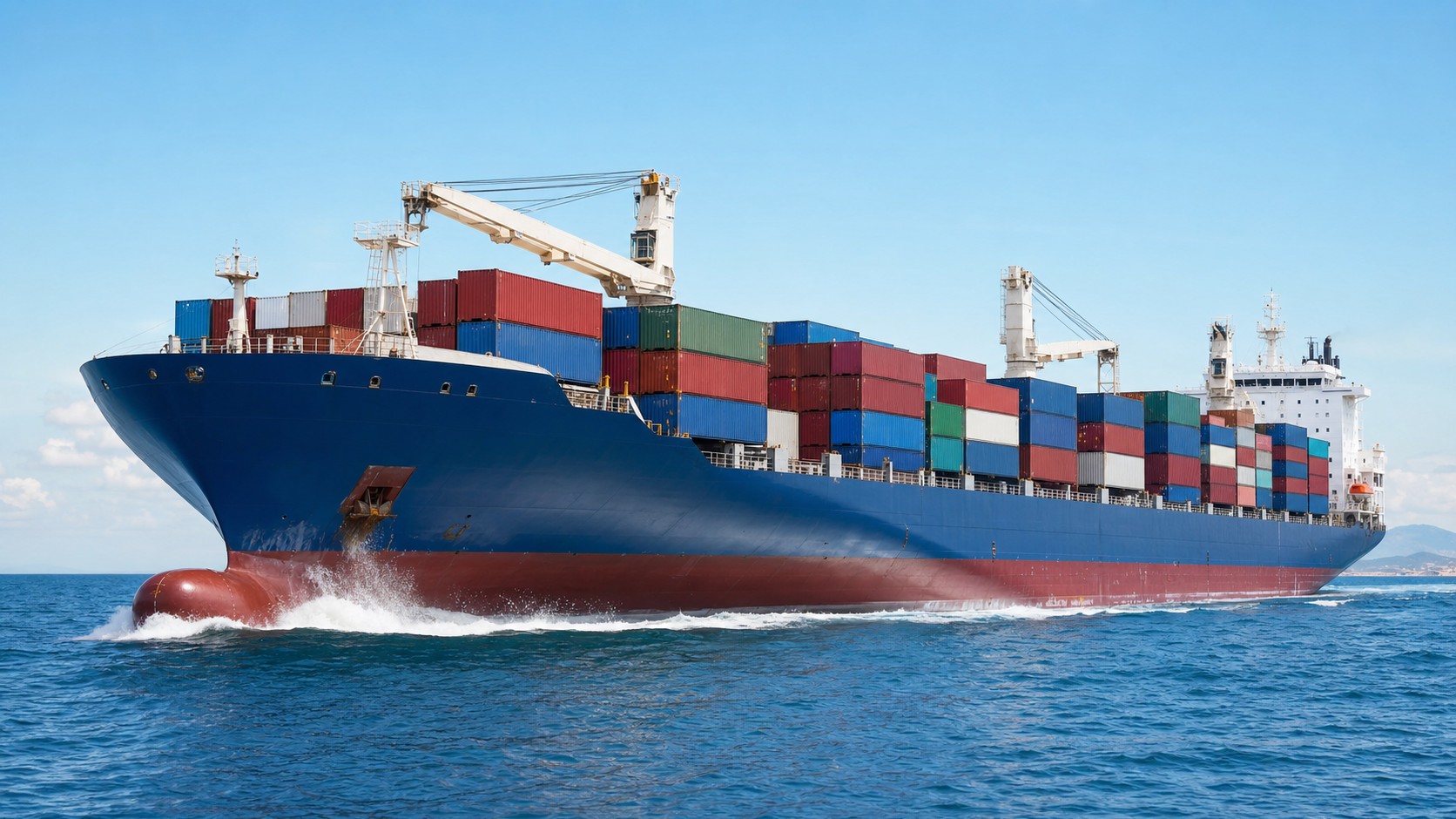
Container ship sizes are usually compared by TEU capacity. Physical size also needs three measurements: length overall, beam and draught. Two ships with similar TEU capacity can have different dimensions, and a ship’s draught changes with its loading condition. Read the capacity figure alongside the vessel’s dimensions and the conditions attached to them.
Container ship size classes at a glance
The feeder bands below retain the approximate terminology used in our existing size guide. They help interpret descriptions across this site. Market sources may use different boundaries, and canal-related names also depend on dimensions. For example, UNCTAD’s fleet grouping describes Panamax container ships using both capacity and beam. UNCTAD Review of Maritime Transport 2025, vessel-size groups
| Term | Capacity reference | How to read the label |
|---|---|---|
| Small feeder | Up to about 1,000 TEU | Lower end of the feeder capacity range |
| Feeder | About 1,000–2,000 TEU | Capacity band used here for regional container ships |
| Feedermax | About 2,000–3,000 TEU | Larger feeder band used here |
| Sub-Panamax / Panamax | Several thousand TEU | Check the dimensions and the classification convention used |
| Post-Panamax / Neo-Panamax | Capacity varies with hull design | Names relate to successive canal and ship-design size categories |
| Ultra-large container vessel (ULCV) | Largest mainline capacity groups | Check the source’s threshold and the named vessel’s particulars |
What is a Feedermax container ship?
In this guide, Feedermax refers to the roughly 2,000–3,000 TEU band above the smaller feeder categories. The term describes a capacity grouping. Obtain the particular vessel’s length, beam and draught to understand its physical scale. A Feedermax label alone leaves those measurements unspecified.
Read length, beam and draught on the same basis
- Length overall (LOA) measures the ship’s overall length. Keep it distinct from length between perpendiculars when comparing particulars.
- Beam describes breadth. Check whether the quoted value is moulded breadth or maximum breadth.
- Draught is the vertical distance from the waterline to the relevant keel reference. Record whether the figure is design draught, a stated maximum or the actual loading-condition draught.
MPC Container Ships’ terminology guide describes draught as varying with utilisation and defines nominal capacity in terms of physical TEU slots. These are separate entries because capacity and loading condition describe different aspects of the ship. MPC Container Ships industry terms
Published design examples: similar width, different length
Damen’s published portfolio lists the following two feeder designs. These are named-design examples from that publication, rather than dimensional ranges for a whole size class. Verify the current particulars of any vessel being offered. Damen cargo vessel portfolio
| Published design | Capacity | LOA | Beam | Draught |
|---|---|---|---|---|
| CFe 800 | 803 TEU | 140.64 m | 21.80 m | 7.33 m |
| CFe 900 | 888 TEU | 150.17 m | 21.80 m | 7.20 m |
In these published examples, the higher-capacity design has the same beam, greater length and a slightly shallower quoted draught. TEU capacity alone would not reveal that combination. Record the document revision and the definition of each draught figure before using the values in an operational comparison.
For a sense of the upper end of the size range, HMM’s fleet list gives HMM Algeciras a capacity of 23,964 TEU. Use the named ship’s dimension records when comparing its physical size with another vessel. HMM vessel fleet
TEU capacity and actual container intake
A twenty-foot container represents one TEU and a forty-foot container two TEU. The nominal capacity counts container slots. The number of loaded containers the vessel can carry depends on their weights, loading condition and the ship’s applicable limits. A homogeneous intake figure also needs its assumed container weight and loading basis.
For the records behind a seller’s capacity figures, use the feeder container ship buying guide. For a specific rotation, cargo mix and port limits, use the feeder route-fit checklist. Current candidates are listed on our feeder container ship inventory page.
Buying, or want a second opinion?
Our sale & purchase desk can help you find, value and inspect the right tonnage. Tell us what you’re looking for and we’ll revert within one working day.