

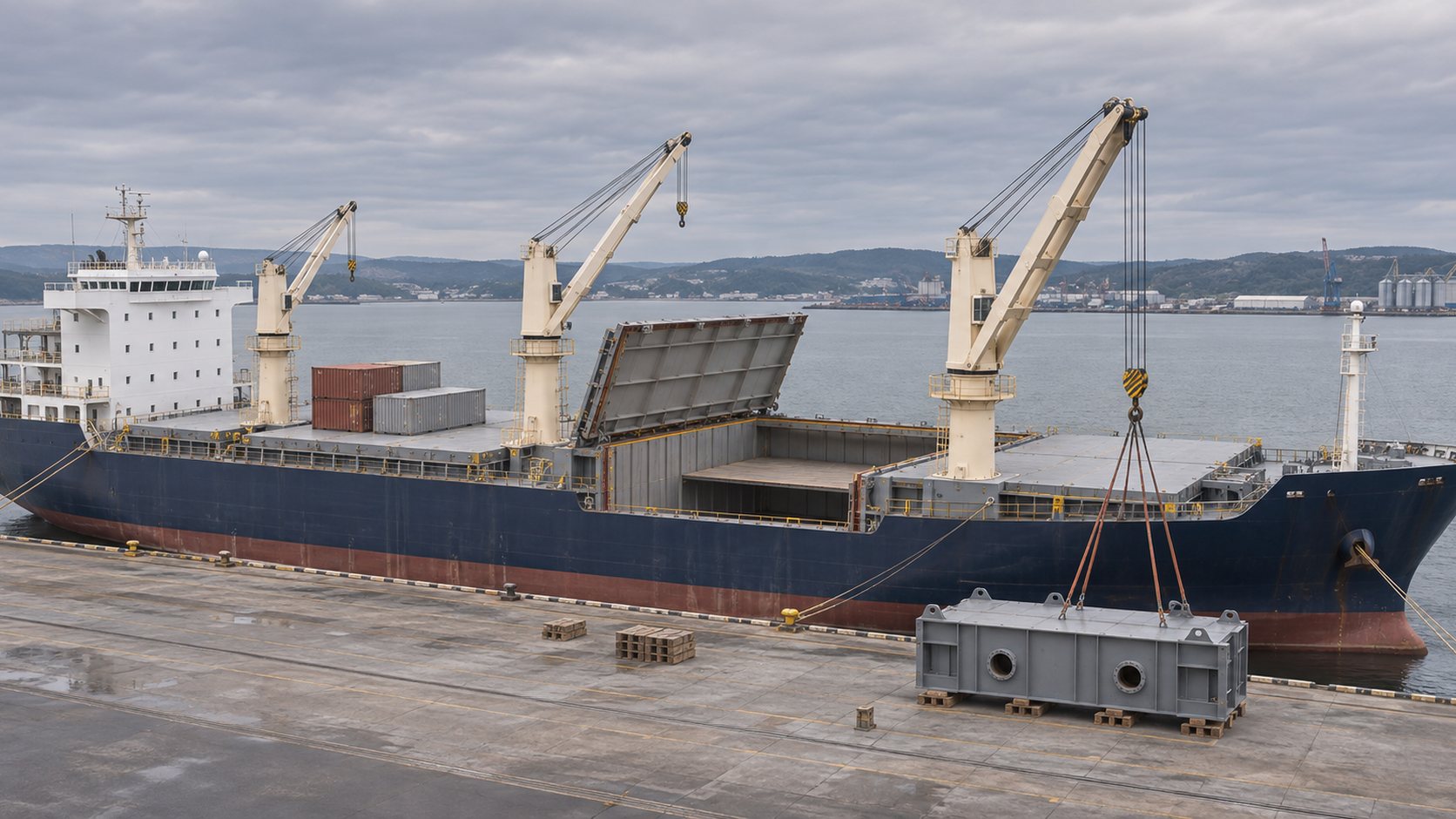
An MPP vessel, short for multipurpose vessel, is a dry-cargo ship with its own cranes, built so one hull can switch between several kinds of cargo: break-bulk such as steel and machinery, containers, dry bulk, and project pieces lifted by its own cranes. The name describes a design that keeps those options open. It is not a single size class or a formal rule category.
This page explains what makes a ship multipurpose and how an MPP differs from a general cargo ship and a heavy-lift vessel. If you are already comparing ships to buy, the MPP buying guide covers inspection and pre-signing checks.
What makes a vessel multipurpose
Four design features usually separate an MPP from a plain cargo ship. A ship does not need every one of them to be called multipurpose, but each one removed narrows the cargo it can take.
- Own cargo gear. Deck cranes, or on older ships derricks, let the vessel load and discharge at berths without suitable shore cranes. Breakbulk magazine describes multipurpose ships as typically geared with some type of crane or derrick.
- Flexible holds. Box-shaped holds, often with movable tween deck panels, can be set as an intermediate deck for break-bulk or stowed away to open a full-depth hold for bulk or containers.
- Container fittings. Fittings in the holds and on the hatch covers allow standard containers to be carried and secured, so the ship can mix boxes with other cargo.
- Strong deck and hatch covers. Heavy pontoon hatch covers let the ship carry project cargo on the weather deck as well as below.
DNV notes that MPP designs often use tween deck panels rated for five to seven tonnes per square metre and heavy pontoon covers for project cargo on deck. The actual figures for any ship come from its approved drawings and class records.
MPP vs general cargo vs heavy-lift ships
The three terms overlap, which is why they are often used loosely. The practical difference is how far each design is optimised for mixed cargo or for single heavy units.
| Feature | General cargo ship | MPP vessel | Heavy-lift vessel |
|---|---|---|---|
| Main purpose | General and break-bulk cargo | Mixed cargo types in one hull | Single heavy or oversized units |
| Cargo gear | Geared or gearless | Usually geared, sometimes with combinable cranes | High-capacity cranes designed for tandem lifts, or a gantry, or float-on loading |
| Holds | Single deck or tween deck | Box-shaped, often with movable tween decks | Box holds, or a large open deck on deck carriers |
| Containers | Limited or not fitted | Container fittings in holds and on hatch covers | Possible, not the design priority |
| Deciding figure | Hold volume and deadweight | Tween deck and hatch cover ratings, crane SWL, container capacity | Certified combined crane SWL, deck strength and stability |
IMO describes a general cargo ship as one with a multi-deck or single-deck hull designed primarily for general cargo. An MPP fits within that broad family but adds container capability and heavier gear. A heavy-lift MPP sits at the upper end: DNV notes that such ships are normally designed for two cranes working together on one lift. A dedicated heavy-lift vessel, including deck carriers and semi-submersibles, is designed around the heaviest single pieces rather than a mix. The heavy-lift buying guide explains those types.
What an MPP vessel carries
The same ship can switch between cargo types from one voyage to the next, which is the main commercial reason the design exists.
- Break-bulk and general cargo: steel coils and plates, bagged goods, timber, machinery and palletised units, often stowed on tween decks.
- Containers: standard boxes in the holds and on deck, sometimes mixed with other cargo on the same voyage.
- Dry bulk: grain, minerals and aggregates loaded into box holds with tween decks stowed.
- Project cargo: wind turbine parts, plant modules, transformers and vehicles, lifted with the ship’s own cranes and carried in the holds or on deck.
Which of these a specific ship can actually take depends on its ratings. A tween deck that cannot carry a dense load, a crane with low capacity at outreach, or missing container fittings will rule out cargo the name suggests.
Typical sizes and particulars
Multipurpose vessels cover a wide size range, from small coastal ships of a few thousand DWT to larger ocean-going units. Size alone does not define an MPP. The same deadweight can belong to a simple general cargo ship or a heavy-lift MPP, depending on the gear and hold design.
The ships in Golden Shipyard’s current listings show that range:
| Listed vessel | Built | Deadweight | Length overall |
|---|---|---|---|
| 5,200 DWT multipurpose vessel | 2005 | abt. 5,200 t | abt. 98.0 m |
| 15,000 DWT multipurpose vessel | 2015 | abt. 15,000 t | abt. 153.0 m |
| 22,000 DWT multipurpose vessel | 2023 | abt. 22,000 t | abt. 146.1 m |
Listed particulars are approximate. Full specifications, including crane outfit and hold arrangement, are shared with qualified buyers. Availability changes, so check the multipurpose vessels for sale page for the current list. For heavier project work, see heavy-lift vessels for sale. For simpler break-bulk trades, see general cargo vessels for sale.
How to tell whether a ship really works as an MPP
A sales description that says “multipurpose” is a starting point. The ship’s documents decide whether it can carry your cargo mix. Before shortlisting, ask for:
- The general arrangement plan and capacity plan, showing hold dimensions and tween deck positions.
- The tween deck and hatch cover load ratings in tonnes per square metre.
- The crane certificates and load charts, including any certified combined lift for two cranes.
- The container stowage plan and the number of slots in holds and on deck.
- Class records for the cargo gear, hatch covers and tween deck panels.
The MPP and heavy-lift crane inspection guide explains how to check the cargo gear itself. For how MPP demand is moving, see the MPP market report.
Sources: DNV, New design loading conditions; Breakbulk, Choose the Right Vessel for Project Needs.
Buying, or want a second opinion?
Our sale & purchase desk can help you find, value and inspect the right tonnage. Tell us what you’re looking for and we’ll revert within one working day.