

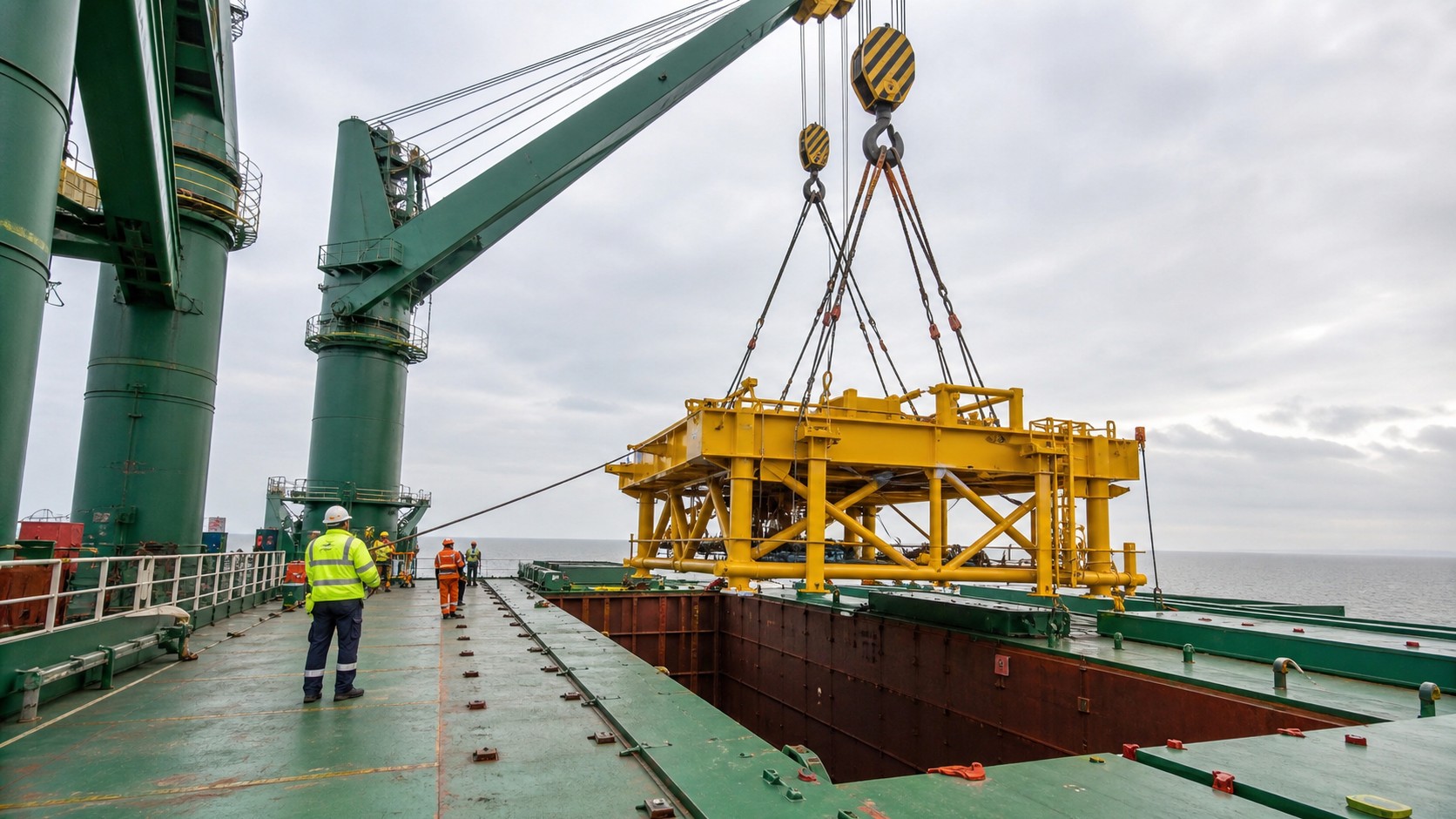
A multipurpose vessel (MPP) is the Swiss-army knife of the cargo fleet. One ship can lift dry bulk on one leg, containers on the next, and a project module or a stack of steel the leg after that. That flexibility is the whole point — but it also means an MPP is defined by features a bulk carrier or container ship doesn’t have: tween decks, box-shaped holds, and its own heavy-lift cranes. Get those right and the ship trades anything; get them wrong and you’ve paid for flexibility you can’t use. This guide covers what actually matters before you sign.
What makes a ship “multipurpose”
An MPP is a geared dry-cargo vessel built to carry several cargo types without modification:
- General & break-bulk — bagged goods, steel, machinery, timber.
- Containers — slots in the holds and on deck/hatch covers, rated in TEU.
- Dry bulk — grain, ores, aggregates in box-shaped holds.
- Project & heavy cargo — oversized units lifted by the ship’s own cranes.
The closer cousin is the general cargo ship; the difference is that a true MPP is optimised for all of the above at once — container-fitted, heavy-lift-capable, and often tween-decked. In-stock MPP tonnage commonly runs from around 15,000 to 22,000 DWT, with container capability of several hundred TEU and multiple holds.
See current availability on our multipurpose vessels for sale page.
Tween decks: the feature that defines flexibility
A tween deck is a movable (or fixed) intermediate deck inside the hold. It’s the single biggest thing that separates a versatile MPP from a plain box-hold ship:
- Tween-deck (movable) — panels can be set at intermediate height to carry break-bulk and palletised cargo that shouldn’t be stacked floor-to-deckhead, or stowed away to open a full-depth box hold for bulk and containers. Maximum flexibility.
- Single-deck (box hold only) — simpler and cheaper, better for bulk and containers, but limited for delicate break-bulk.
Tip: If your cargo mix includes break-bulk, steel, or project pieces alongside bulk and boxes, prioritise a vessel with movable tween decks and check the panel condition, pontoon handling, and securing points — they’re expensive to repair and define resale value.
Cranes and heavy-lift capacity
The ship’s gear decides what it can load where shore cranes can’t:
| Feature | Why it matters |
|---|---|
| Number & SWL of cranes | Safe Working Load per crane, and whether two can be combined (“twin-lift”) for heavier units |
| Combined lift capacity | The real ceiling for project cargo — confirm the certified combined SWL |
| Outreach | How far from the hull the crane can place a load — critical for quay and barge work |
| Crane condition & class | Wire ropes, hydraulics, slew bearings; cranes are costly to overhaul |
For project-cargo trades, combined heavy-lift capacity and outreach are worth more than raw DWT. If you also move oversized cargo on flat, open decks, compare the economics against a deck cargo vessel.
Holds, container capability, and box shape
- Box-shaped holds — maximise cubic capacity and make container and bulk stowage efficient; check hold dimensions against your typical units.
- Container fittings & TEU rating — how many TEU in holds + on hatch covers, and the reefer plug count. If containers will be a core trade, read our guide to container ship sizes and capacity.
- Tank-top strength & grain/bale capacity — for heavy bulk and break-bulk loading.
- Hatch covers — type, weather-tightness, and the stack weight they can take on top.
Class, certificates, and emissions
Before any inspection, confirm on paper:
- Class & status — in class with a recognised society (e.g. CCS, ABS, DNV, BV, LR), no overdue surveys or outstanding Conditions of Class; verify the society suits your flag, insurer, and charterers.
- Statutory certificates — Load Line, Tonnage, Safety Construction/Equipment, and pollution certificates.
- Grain stability documentation — if you’ll carry grain.
- Special survey / drydock dates — price in any near-term survey.
- Emissions standing — for international voyages, check the vessel’s EEXI and CII rating; it affects future trading and value.
Survey: gear and holds get the scrutiny
Commission an independent pre-purchase condition survey, and a drydock survey for any serious purchase. On an MPP the surveyor pays special attention to:
- Cranes — load-test records, wires, hydraulics, slew bearings, structural foundations.
- Tween-deck panels — condition, fit, securing, and lifting/handling gear.
- Holds & tank top — corrosion, dents from grabs, coating, and strength in way of heavy cargo.
- Hatch covers — weather-tightness (hose/ultrasonic test), cleats, and bearing pads.
- Container securing — twistlock sockets, lashing points, and fittings.
- Steel — thickness gaugings of holds, decks, and ballast tanks.
Tip: A cheap MPP with tired cranes or worn tween-deck panels often costs more than a dearer, well-maintained sister once you add overhaul and off-hire — survey the gear before the price tempts you.
Due diligence and total cost of ownership
Reputable sellers release full particulars to qualified buyers under an NDA. Insist on the GA and capacity plan, crane and tween-deck documentation, class and statutory certificates, survey status, maintenance and drydock history, and a clean title free of liens. Then budget beyond the price: survey and any class rectification, crane/hatch overhaul reserve, delivery and repositioning, flag and class transfer, insurance, and modifications for your trade. The document exchange is one stage of a wider deal — see our guide to the ship sale and purchase process from LOI to delivery.
Quick pre-signing checklist
- ☐ Cargo mix mapped to the right configuration (tween-deck vs box hold)
- ☐ Crane number, individual and combined SWL, and outreach confirmed for your cargo
- ☐ Tween-deck panels, securing, and handling gear inspected
- ☐ Box-hold dimensions, container/TEU rating, and reefer plugs verified
- ☐ Hatch covers weather-tight; tank-top and grain/bale capacity adequate
- ☐ In class, no overdue surveys / Conditions of Class; special survey priced in
- ☐ EEXI/CII reviewed
- ☐ Independent condition survey (+ drydock), gear and holds included
- ☐ Full document set under NDA; clean title confirmed
- ☐ Total cost of ownership budgeted (incl. crane/hatch overhaul reserve)
Frequently asked questions
What is a multipurpose (MPP) vessel? A multipurpose vessel is a geared dry-cargo ship designed to carry several cargo types — general/break-bulk, containers, dry bulk, and project/heavy cargo — without modification. It typically has its own cranes, box-shaped holds, container fittings, and often tween decks.
What’s the difference between an MPP and a general cargo ship? All MPPs are general cargo ships, but a true MPP is optimised to carry containers, bulk, break-bulk and heavy project cargo interchangeably — usually container-fitted, heavy-lift-capable, and tween-decked. A basic general cargo ship may lack some of these.
What is a tween deck? A tween (between) deck is an intermediate deck inside the cargo hold. Movable tween decks can be set at height for break-bulk and palletised cargo or stowed away to open a full-depth box hold for bulk and containers — the key flexibility feature on an MPP.
Why does combined crane capacity matter? Many MPPs can pair two cranes for a single heavier lift (“twin-lift”). The certified combined Safe Working Load — not the single-crane rating — sets the heaviest project unit the ship can load on its own, so confirm it before buying for heavy-lift trades.
What size MPP should I buy? Match holds, container/TEU rating, and crane capacity to your cargo mix rather than headline DWT. In-stock MPP tonnage commonly runs from around 15,000 to 22,000 DWT with several hundred TEU of container capability.
Looking for a multipurpose vessel now? Golden Shipyard carries in-stock and newbuilding MPP tonnage from roughly 15,000 to 22,000 DWT — geared, container-capable, with tween-deck and box-hold configurations. Browse current availability on our multipurpose vessels for sale page, or learn about our ship sale & purchase brokerage services. To receive full particulars under NDA, email [email protected].