

Flag and class get treated as an afterthought on a lot of barge purchases, because buyers carry over a self-propelled-ship mindset onto an asset that doesn’t work the same way. A barge’s non-propelled, often unmanned status changes what flag state actually requires and how classification societies certify it — get this wrong and you can end up with a barge that’s legally correct on paper but can’t do the job you bought it for. See our deck barge buyer’s guide for the rest of the purchase checklist.
Why non-propelled status changes the rules
Most flag state manning and safety regimes are written around a vessel that moves itself. A dumb barge with no engine, no accommodation and no crew doesn’t fit that framework — so flag administrations typically apply a separate, lighter set of requirements: no minimum safe manning certificate, different survey intervals, and in many cases exemption or modification of standard load line rules that assume a crewed, self-propelled hull. The practical effect is a lighter compliance burden, but it only applies cleanly if the barge is genuinely non-propelled and unmanned as certified — a barge later fitted with even limited self-propulsion or accommodation can trigger full ship-level requirements it was never designed to meet.
Classification: what an IACS society actually certifies on a barge
Classification societies issue barge-specific notations rather than treating a barge as a small ship. What class actually verifies:
- Structural strength for the intended service — deck loading, longitudinal strength, and towing gear rated for the barge’s actual work (deck cargo, accommodation, crane pedestal, etc.), not a generic hull standard.
- Unmanned/unattended notation — confirms the barge is certified to operate without permanent crew, which is what unlocks the lighter manning regime above.
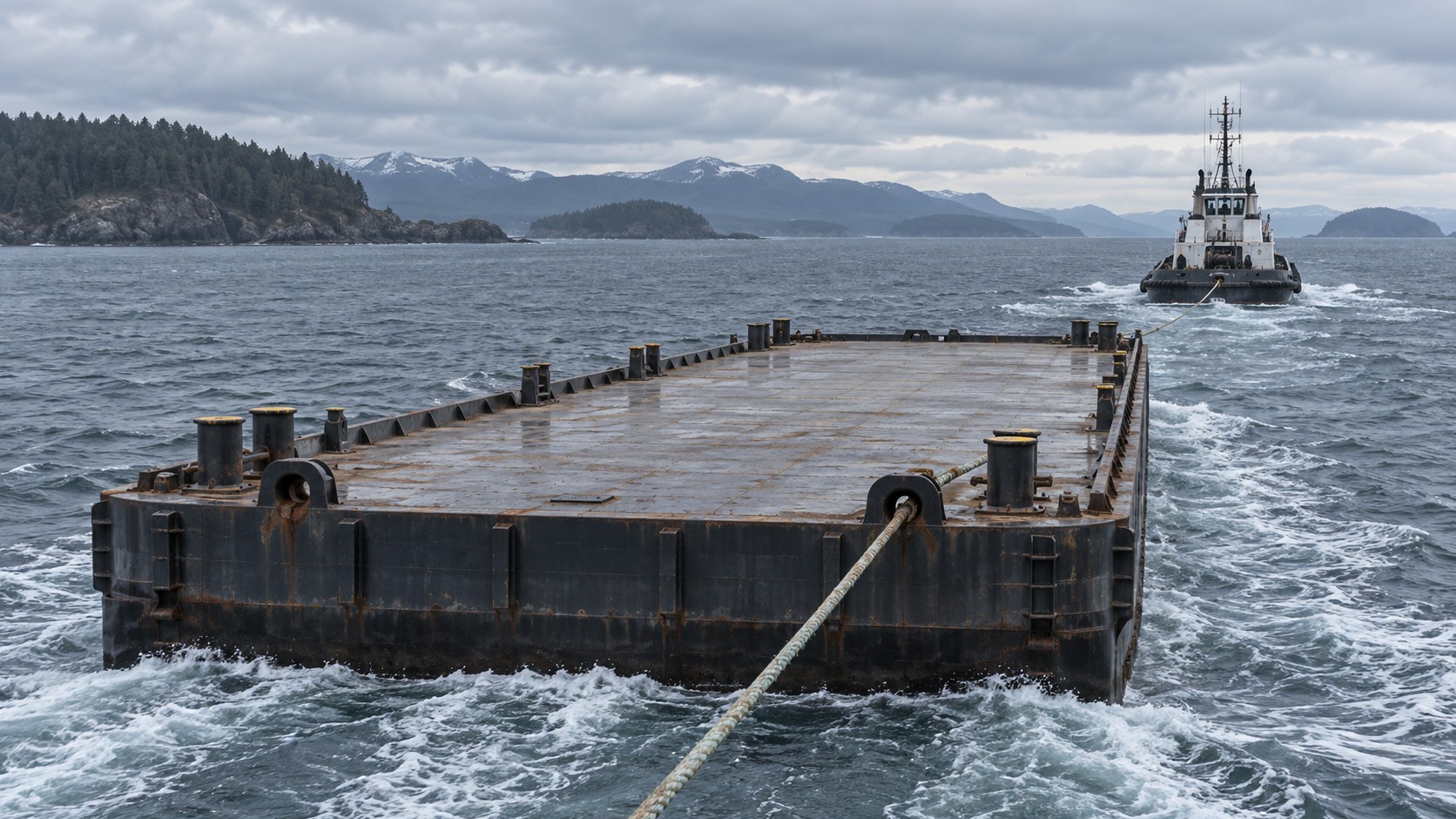
- Towing arrangement — bollards, towing bitts and fairleads rated and inspected as part of class, since a barge’s safety in transit depends entirely on its tow rather than its own propulsion.
See our general class notations explainer for how IACS classification works more broadly — the barge-specific notations sit on top of that same base framework.
Tip: Before you buy, confirm the barge’s class certificate explicitly states unmanned/unattended service and the specific deck loading it’s rated for — a barge classed for light general cargo will not legally or structurally take a heavy crane or accommodation module without a fresh class review.
Panama and other common barge flags
Panama is a common flag choice for barges for the same reasons it dominates ship registration generally: a large global service network, competitive fees, and an administration with deep, specific experience processing non-propelled tonnage — barge registration is a routine transaction there, not an edge case. See our broader flag state guide for how to weigh Panama against other registries for a specific purchase, including financier acceptance and port state control standing, which apply to a flagged barge just as they do to a ship.
What to check when buying a flagged, classed barge
- Certificate matches actual configuration — unmanned/unattended status, deck loading, and towing gear rating all correspond to how the barge is actually built and equipped today, not an outdated certificate.
- No undisclosed modifications — added accommodation, machinery, or self-propulsion since class was last surveyed can invalidate the lighter compliance basis the barge was certified under.
- Continuity of class — no gaps, on a recognised IACS society, the same baseline that matters for any vessel’s resale value.
- Flag and class match your actual trade — a barge flagged and classed for coastal towage isn’t automatically certified for the ocean or offshore work you may have in mind.
Quick checklist
- ☐ Unmanned/unattended notation confirmed on the current class certificate
- ☐ Deck loading and structural rating matched to your intended cargo
- ☐ Towing gear (bollards, bitts, fairleads) rated and inspected as part of class
- ☐ No undisclosed accommodation, machinery or self-propulsion added since last survey
- ☐ Continuity of class confirmed with a recognised IACS society
- ☐ Flag and class service area matched to your actual trade (coastal vs. ocean/offshore)
Frequently asked questions
Does a barge need a load line certificate? Often on a modified basis — many flag administrations apply reduced or exempted load line requirements to a genuinely non-propelled, unmanned barge, but the exemption only holds if the barge’s actual configuration matches what was certified.
Can a non-propelled barge be reflagged easily? Generally yes, and often more straightforward than reflagging a self-propelled ship, since there’s no crew certification or manning scale to reconcile — but any registered mortgage still needs the lender’s consent first, the same as with a ship.
What happens if a barge is later fitted with an engine? It typically loses the lighter non-propelled compliance basis and needs to be reassessed against standard self-propelled vessel requirements — manning, load line and class notation can all change as a result.
Finding the right barge
Flag and class aren’t paperwork to handle after you’ve picked a barge — they decide what work it can legally and structurally do. Confirm both before you commit, browse current deck barges for sale, or talk to a broker about a specific requirement.
Buying, or want a second opinion?
Our sale & purchase desk can help you find, value and inspect the right tonnage. Tell us what you’re looking for and we’ll revert within one working day.