


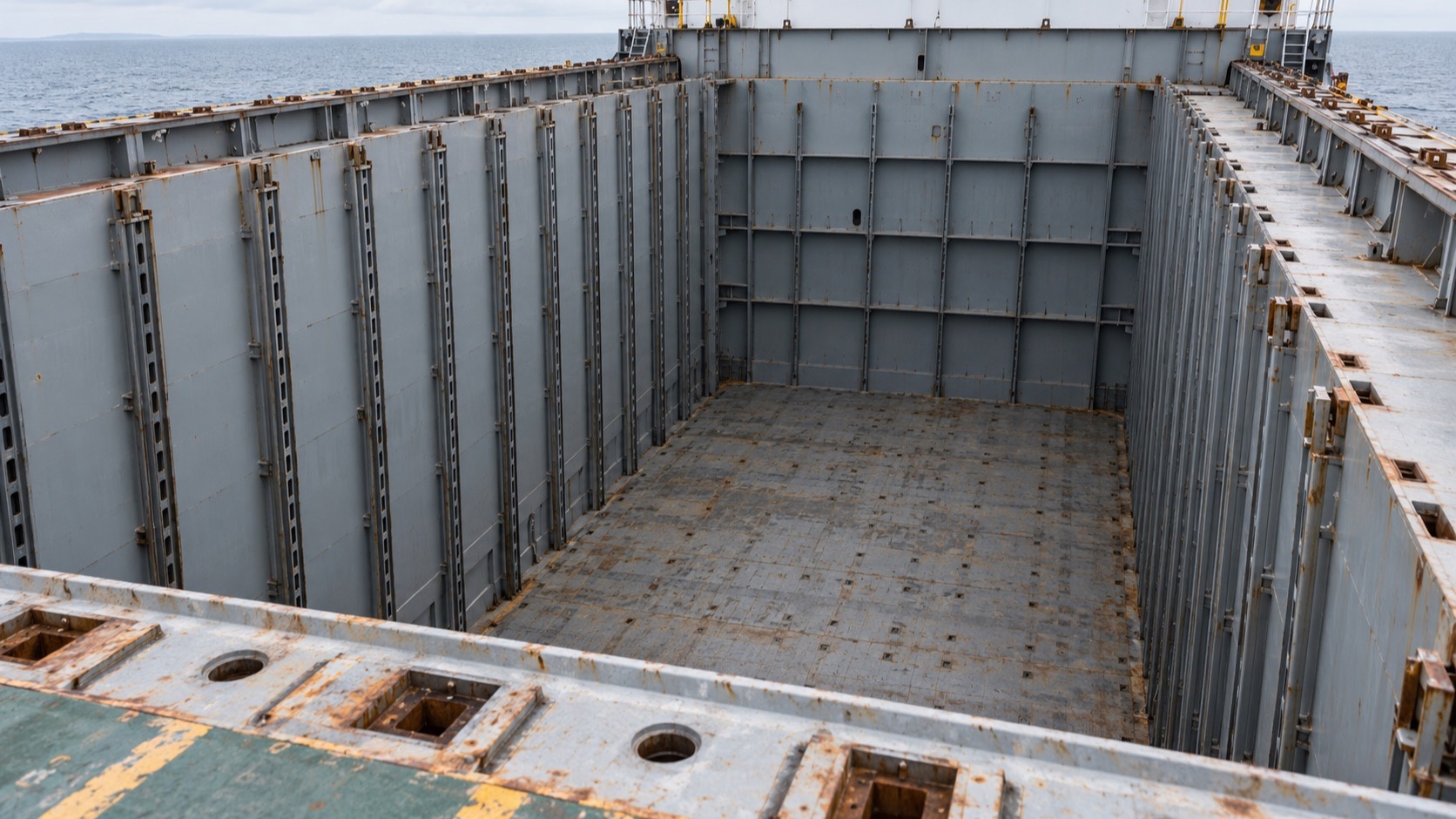
When inspecting a used container ship, look beyond the headline TEU capacity and the number of reefer plugs. Check whether the installed cargo equipment matches the vessel’s documented arrangements, whether it is serviceable, and which parts of the proposed operation can actually be demonstrated. A tidy deck alone cannot answer those questions.
This guide helps buyers prepare a survey brief for cell guides, container securing equipment and reefer electrical supply, with supporting checks on hatch-cover load paths and cargo cranes where fitted. Arrange the wider hull and machinery assessment using our pre-purchase ship inspection guide. Ownership and transaction checks belong in the ship acquisition due diligence process.
1. Request the cargo-system records before boarding
Ask for documents that identify the current vessel configuration, including revisions following repairs or modifications. Give them to the surveyor before the visit so that the inspection can target discrepancies rather than simply record what is visible.
- Container arrangement and capacity plans, with bay positions, supported container sizes and reefer locations.
- The approved Cargo Securing Manual and relevant securing drawings, equipment specifications and inspection records.
- Available cell-guide drawings, repair history and records of cargo-handling damage.
- Hatch-cover drawings and documented container support and stack-load limits for the proposed positions.
- Reefer distribution drawings, electrical load information, maintenance records and a list of unavailable outlets.
- Where cranes are fitted, the lifting-appliance register, certificates, maintenance history and operating restrictions.
Keep an exceptions list: a missing drawing, an undocumented replacement fitting or a bay unavailable for inspection needs a named follow-up. Do not treat missing evidence as a confirmed defect, but do not mark the item accepted without resolving the uncertainty.
2. Inspect cell guides by bay and position
Ask the surveyor to identify accessible guides, their supports and attachment areas. Record distortion, impact marks, corrosion and visible repairs against bay and row references. Photographs should make it possible to locate the finding again; a close-up without a position reference is difficult to use for repair quotations.
Where alignment or structural condition is questionable, request measurements and an assessment against the vessel’s drawings and applicable criteria. Do not apply an invented universal tolerance. A guide may appear straight from deck level while an inaccessible section or damaged support remains unexamined.
Review reports of containers binding during loading or discharge and compare them with recorded repairs. If an operational demonstration is agreed, state which positions it covers. Successful handling in one bay does not establish the condition of every guide. Loaded holds, restricted access and concealed attachment areas should remain explicit limitations in the report.
3. Reconcile lashing gear with the securing arrangement
Use the ship’s Cargo Securing Manual as the reference for the equipment and arrangement being inspected. IMO’s CSS Code overview emphasises that personnel planning and supervising securing need practical knowledge of that manual. For a buyer, the useful question is whether the onboard inventory and condition support the documented arrangement.
- Fixed fittings: identify damaged or corroded foundations, sockets and lashing points, including accessible attachment areas.
- Loose equipment: reconcile twistlocks, rods, turnbuckles and other specified components with the inventory included in the sale.
- Identification and compatibility: ask for specifications and certificates where relevant; distinguish approved replacements from unexplained substitutions.
- Condition: record deformation, damaged threads, seized mechanisms and items removed from service. Agree functional checks appropriate to the equipment.
- Access: inspect available lashing platforms, walkways and access arrangements alongside the fittings they serve.
UK P&I’s container stacking and lashing guidance provides background on securing systems and their limitations. The purchase inspection should produce a vessel-specific equipment list and findings, rather than assume that all securing components are interchangeable.
4. Check hatch-cover supports and documented load limits
For positions carrying containers on hatch covers, request the documented support arrangement and applicable limits. Have the surveyor relate visible container foundations, cover supports and accessible structure to those drawings. Record modifications and previous repairs that need further review.
Separate two questions: does the hatch close and seal as intended, and does the proposed container arrangement remain within the documented structural and securing limits? A sealing demonstration does not establish permitted stack weight. Any suggested increase in stack height or change in support positions needs an appropriate technical assessment.
Ask for an example stowage assessment using the intended container mix. Lloyd’s Register’s container stowage services address stack weights and approved arrangements, illustrating why nominal capacity alone is an incomplete basis for assessing cargo use.
5. Assess reefer supply as a complete system
A plug count is an inventory figure. Ask a qualified marine electrical specialist to establish which outlets are usable and whether the documented supply arrangement supports the intended simultaneous reefer demand alongside other ship services.
- Map outlets by location and identify unavailable circuits, temporary repairs and recorded recurring faults.
- Inspect accessible sockets, enclosures, cables and distribution equipment for deterioration or damage.
- Review circuit ratings, protective devices, maintenance history and relevant test records.
- Agree suitable electrical and functional checks, with isolation and testing controlled by qualified personnel.
- Request the electrical load basis and discuss an agreed load demonstration where practicable.
Record exactly what a demonstration proves. Energising selected outlets does not demonstrate all circuits or sustained operation at the proposed reefer load. Where a representative test is unavailable, identify the outstanding evidence and any further engineering work needed. Keep the ship’s electrical supply assessment separate from inspection of the individual refrigerated containers.
6. Review cargo cranes where fitted
For a geared vessel, compare crane identification, rated capacity and outreach with the supplied documents. Review inspection and test records, repairs and restrictions; ask the surveyor to inspect accessible foundations, wires, sheaves and machinery as appropriate. Agree demonstrations with the operator and competent specialists.
A crane moving without load does not prove its lifting performance. Any load test requires a separately agreed method, suitable equipment and competent supervision. Report unavailable tests and outstanding defects. The question here is the condition and documented capability of the fitted cranes; choosing between geared and gearless vessels is a separate selection decision.
Turn findings into a purchase decision
Ask for a findings schedule with the equipment location, supporting photograph or record, recommended investigation, repair scope and responsible party. Separate confirmed defects from areas that could not be inspected. Obtain quotations for significant work and identify whether access requires cargo discharge, specialist attendance or yard time.
- Installed arrangements reconciled with the available drawings and manuals.
- Cell-guide findings recorded by position, with access limitations listed.
- Securing-equipment condition and sale inventory checked.
- Hatch-cover container supports and proposed loads reviewed.
- Reefer outlet availability, supply evidence and test scope recorded.
- Crane records and agreed demonstrations reviewed where applicable.
- Unresolved items assigned follow-up work before technical acceptance.
Frequently asked questions
Does a clean class record replace a cargo-equipment inspection?
No. Use the class records alongside a vessel-specific inspection brief. Identify what the available surveys examined and what still needs checking for the intended cargo operation.
Can every reefer plug be counted as usable capacity?
Establish outlet condition and availability, then review the supply and demand basis. The installed count alone does not demonstrate simultaneous operation.
What if the vessel is loaded during the inspection?
Record inaccessible bays and concealed equipment. Agree whether records, later access or additional demonstrations are needed, and keep those items open in the technical assessment.
To discuss a candidate from our container vessel inventory, send the vessel reference, intended container mix, reefer demand and inspection window through our enquiry form. These details help define the cargo-system questions to resolve before purchase.
Buying, or want a second opinion?
Our sale & purchase desk can help you find, value and inspect the right tonnage. Tell us what you’re looking for and we’ll revert within one working day.