

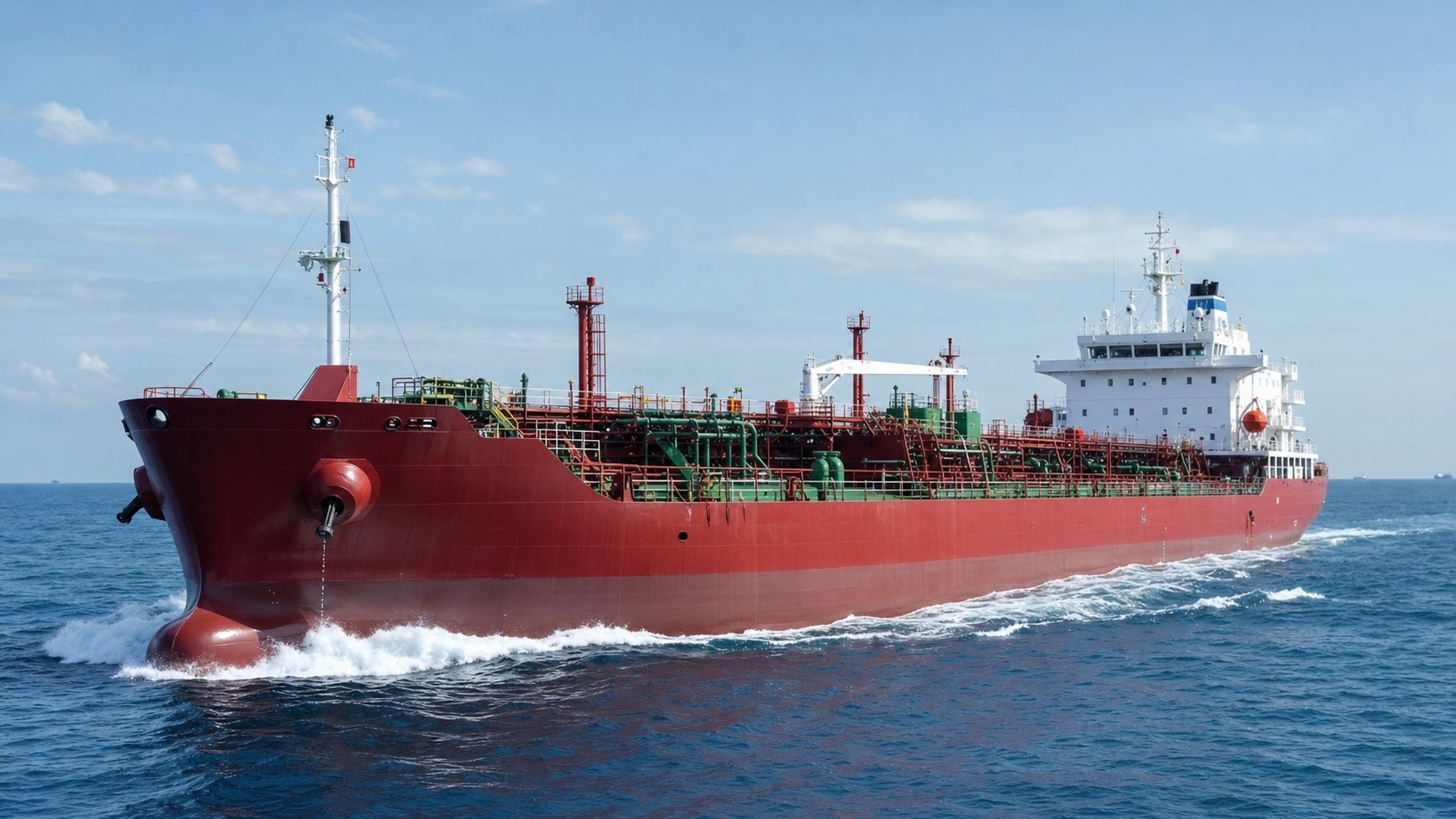
A product tanker can move clean petroleum products, dirty products, or — depending on its build — certain easy chemicals and vegetable oils. That flexibility is exactly why used product tankers trade actively, and why two vessels of the same deadweight can be worth very different money. The deciding factors are rarely the headline DWT; they’re the IMO ship type, the tank coatings, the cargo-handling plant, and the survey position. This guide walks through what actually matters before you sign.
First, classify the vessel correctly: oil tanker vs. product tanker vs. chemical tanker
The word “tanker” hides three different assets with different rulebooks:
- Oil tanker — carries crude or petroleum products under MARPOL Annex I. Most small and coastal tankers fall here, often described by flashpoint (e.g. flashpoint ≤ 60 °C).
- Product tanker — an oil tanker optimised for clean refined products (gasoil, jet, naphtha), usually with coated tanks and multiple segregations so it can carry several grades at once.
- Chemical tanker — certified under the IBC Code to carry listed chemicals, with stainless or specially coated tanks and an IMO Type 1 / 2 / 3 rating that defines how dangerous a cargo it may carry. If you need to lift chemicals, look at chemical tankers specifically — a plain product tanker won’t be certified for them.
Tip: Buy to your cargo and your charterers’ approval requirements, not to a category name. A “product tanker” that isn’t actually approved by the oil majors or your intended charterer for your grades is just an oil tanker with coated tanks.
Step 1 — Understand IMO ship types and what they let you carry
For product and chemical service, the IMO ship type (Type 1, 2, or 3 under the IBC Code) caps the hazard level of cargo the vessel may load and dictates tank location and survival standards:
| IMO ship type | Carries | Typical use |
|---|---|---|
| Type 1 | The most hazardous cargoes | Rare; severe pollution/safety hazard products |
| Type 2 | Moderately hazardous cargoes | Most chemical/parcel tankers |
| Type 3 | Least hazardous cargoes | Many product tankers, clean petroleum, easy chemicals/veg oils |
Pure petroleum product tankers trading under MARPOL Annex I won’t always carry an IBC Type rating — but if you want optionality to lift the easier chemicals or vegetable oils, an IMO Type 2/3 certificate widens your charter market. Confirm exactly which cargoes are on the vessel’s Certificate of Fitness before assuming flexibility.
Step 2 — Tank coatings decide which cargoes (and how clean)
Coatings are the single biggest value driver on a used product tanker, and the most expensive thing to put right.
- Epoxy coatings — the workhorse for clean products. Check coating type, age, and the last coating condition report. Re-coating a full set of tanks runs into serious money and weeks of off-hire.
- Zinc silicate — favoured for certain solvents and high-purity cargoes; less tolerant of some products.
- Stainless steel tanks — chemical-tanker territory; widest cargo range, highest price.
- Uncoated (bare steel) — fine for dirty products and crude, but limits you to the bottom of the market.
Ask for the coating maker, application date, touch-up history, and the most recent close-up tank inspection. A vessel marketed as a “clean product tanker” with tired epoxy is a re-coating bill waiting to happen.
Step 3 — Cargo system, pumps, and the systems that make it charter-ready
Two same-age tankers price differently on plant condition. Check:
- Number of tanks and segregations — more segregations = more grades carried at once = more charter options.
- Cargo pumps — type (deepwell vs. centrifugal), capacity, condition, and stripping performance.
- Heating coils — needed for heavy or waxy cargoes; confirm material and condition.
- Inert Gas System (IGS) — required on tankers above defined sizes; verify it works and is in class.
- Crude Oil Washing (COW) — relevant for crude/dirty service.
- Tank cleaning gear, slop tanks, and pump room condition.
- Double hull — mandatory under MARPOL for oil tankers; confirm the vessel is double-hull (modern Chinese-built tonnage typically is) and check ballast tank coatings.
Step 4 — Class, certificates, and emissions standing
Before any inspection, confirm on paper:
- Class society & status — in class with a recognised society (e.g. CCS, ABS, DNV, BV, LR), no overdue surveys or outstanding Conditions of Class. Verify the society suits your flag, insurer, and charterers.
- Certificate of Fitness / IOPP and the cargo list it permits.
- Special survey / drydock dates — a tanker due for special survey soon should be priced for it.
- Emissions standing — for tonnage on international voyages, check the vessel’s EEXI and CII position; a poor CII rating affects future trading and value.
- Vetting history — SIRE/CDI inspection records and oil-major approvals are worth real money on a product tanker.
Step 5 — Survey: never skip the tanks
Commission an independent pre-purchase condition survey, and for any serious purchase a drydock or underwater survey. On a tanker, the surveyor’s focus is sharper than on a dry vessel:
- Cargo tanks — coating breakdown, pitting, scale; close-up survey of internals.
- Steel — thickness gaugings of deck, bottom, and ballast tanks; corrosion in way of heating coils.
- Cargo & ballast pumps, valves, and lines — pressure-test, check stripping.
- IGS, COW, and tank-cleaning systems — operational test, not just paperwork.
- Pump room — gas detection, bilge, ventilation, and structural condition.
- Last three special surveys and any repair history against what you see.
Tip: A clean coating report and recent vetting approvals can justify a higher price than a cheaper sister with tired tanks — the cheaper one often costs more once you add re-coating and lost trading days.
Step 6 — Due diligence and the total cost of ownership
Reputable sellers release full particulars to qualified buyers under an NDA. Insist on:
- General Arrangement, capacity plan, and pumping/piping diagram
- Class certificates, Certificate of Fitness, survey status, and coating reports
- Vetting (SIRE/CDI) and oil-major approval history
- Maintenance, drydock, and repair records
- Clear title — no liens, mortgages, or maritime claims attached to the hull
Then budget beyond the purchase price: survey and any class rectification, tank re-coating reserve, delivery/repositioning, flag and class transfer, insurance (H&M and P&I), and modifications. The document exchange is one stage of a wider deal — see our guide to the ship sale and purchase process from LOI to delivery.
Quick pre-signing checklist
- ☐ Right asset for the cargo — oil, product, or chemical — and charterer-approved
- ☐ IMO ship type / Certificate of Fitness covers your intended grades
- ☐ Tank coating type, age, and last condition report reviewed (re-coating reserve set)
- ☐ Cargo pumps, segregations, heating, IGS/COW tested and in class
- ☐ Double hull confirmed; ballast tank coatings checked
- ☐ In class, no overdue surveys / Conditions of Class; special survey date priced in
- ☐ EEXI/CII and vetting/approval history reviewed
- ☐ Independent condition survey (+ drydock) completed, tanks included
- ☐ Full document set reviewed under NDA; clean title confirmed
- ☐ Total cost of ownership budgeted
Frequently asked questions
What’s the difference between a product tanker and a chemical tanker? A product tanker carries refined petroleum products under MARPOL Annex I, usually with coated tanks. A chemical tanker is certified under the IBC Code with an IMO Type 1/2/3 rating to carry listed chemicals, typically in stainless or specially coated tanks. Chemical tankers can usually carry products too, but cost more.
What do IMO Type 1, 2, and 3 mean? They rank how hazardous a cargo a tanker may carry, from Type 1 (most hazardous, rare) to Type 3 (least hazardous, many product tankers). The type drives tank location and survival requirements and is shown on the Certificate of Fitness.
Why do tank coatings matter so much? Coatings determine which cargoes a tanker can carry cleanly and how easily it switches grades. Re-coating tanks is one of the most expensive maintenance items, so coating age and condition are major value drivers — always review the latest coating condition report.
Does a used tanker have to be double-hull? Under MARPOL, oil tankers must be double-hull. Confirm the vessel is double-hull and check the ballast tank coatings; modern Chinese-built tonnage is typically double-hull.
How do I get full specifications? Complete particulars — GA, Certificate of Fitness, coating and vetting reports — are released to qualified buyers under an NDA.
Looking for a product or oil tanker now? Golden Shipyard carries in-stock double-hull oil and product tankers from roughly 3,500 to 18,000 DWT. Browse current availability on our tankers for sale page, see chemical tankers if you need IBC-certified tonnage, or learn about our ship sale & purchase brokerage services. To receive full particulars under NDA, email [email protected].
Buying, or want a second opinion?
Our sale & purchase desk can help you find, value and inspect the right tonnage. Tell us what you’re looking for and we’ll revert within one working day.