

Most ship purchases go smoothly — but the ones that go wrong usually flashed a warning sign the buyer either missed or talked themselves past. A used ship is a large, cross-border commitment, and the difference between a good buy and an expensive mistake is often just knowing what to look for. Here are the ten biggest red flags, and how to check each one before you commit.
1. Overdue or imminent surveys
A ship with an overdue survey, or a special survey and drydock due very soon, means class risk and a large near-term bill. Check the ship’s position in the survey and drydock cycle — a special survey landing right after you buy should be priced in, not discovered later.
2. Outstanding Conditions of Class
Conditions of Class (recommendations) are defects class has allowed to be deferred, with deadlines. Several outstanding, or overdue, conditions signal neglect and pending cost. Get the class status report and price every open item.
3. Steel wastage and deferred maintenance
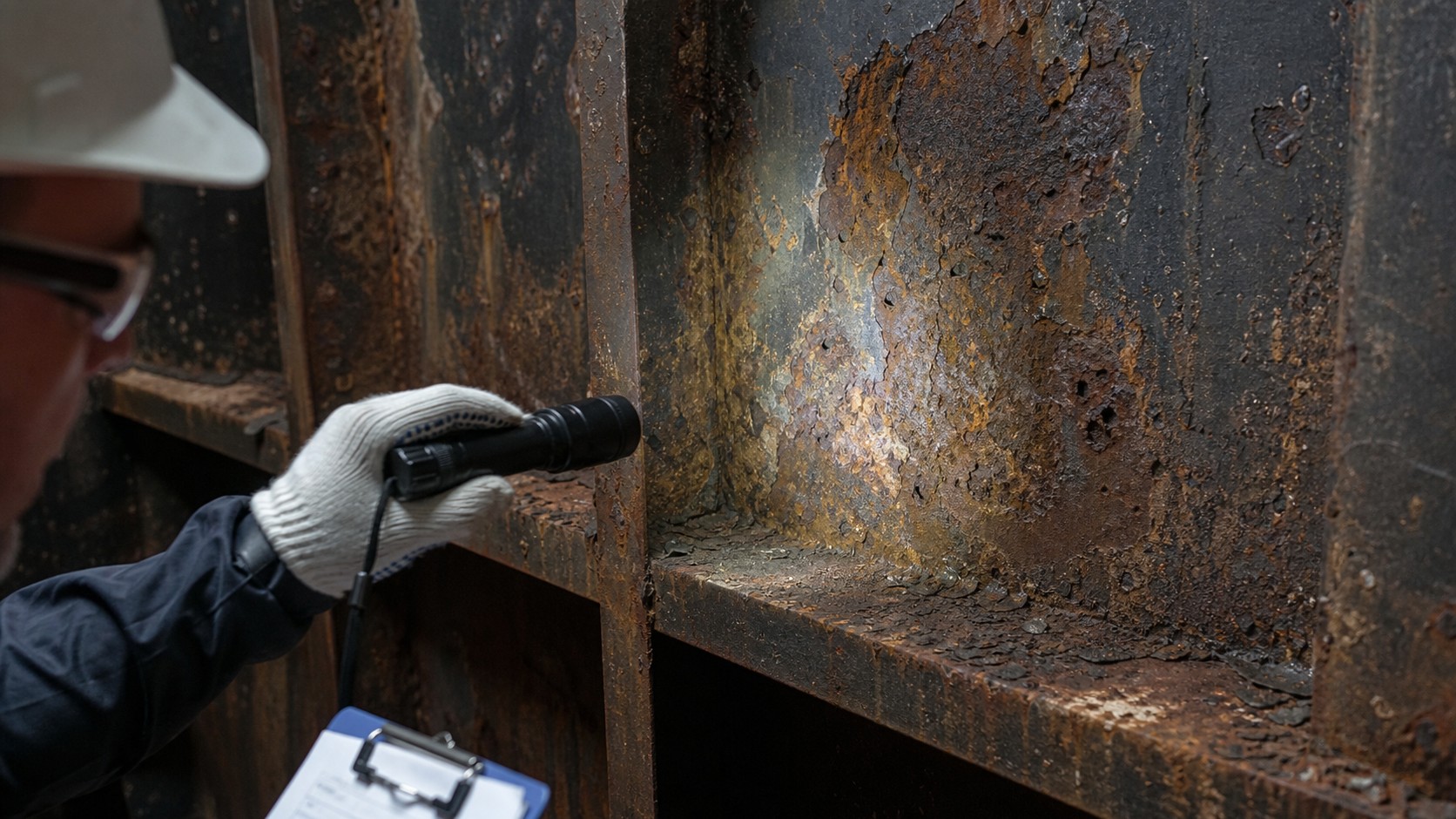
Thin steel and deferred maintenance don’t always show on a walk-through. Thickness gaugings and a proper pre-purchase condition survey reveal wastage, pitting, and put-off repairs that the low price may be hiding.
4. A missing or non-approved BWMS
No ballast water treatment system (BWMS), or one without the right type approval, is one of the most expensive surprises on an older ship — a retrofit is major cost and off-hire. Check it alongside EEXI and CII in our environmental compliance guide.
5. A poor (D/E) CII rating
A persistently poor CII rating limits future trading and signals an inefficient ship. It’s not automatically a dealbreaker, but it must be reflected in the price and your trading plan.
6. Unclear title, liens, or mortgages
A ship with unclear title, undisclosed liens, or an unreleased mortgage can carry that debt to its new owner. Verifying clean title free of encumbrances is non-negotiable — it’s a core protection in the MOA and closing.
7. A price that’s too good
A price well below comparable ships is a flag, not a bargain — it usually reflects survey position, condition, compliance cost, or a title issue. Anchor to a proper valuation and find out why it’s cheap before you get excited.
8. Notations or certificates that don’t match the trade
Class notations that don’t support your intended trade — wrong service area, no ice class, no DP, missing cargo notation — mean the ship can’t legally or safely do your job. Read them against your needs; see ship class notations explained.
9. A seller who won’t share particulars
Reputable sellers release full particulars, class status, and history to qualified buyers under an NDA. A seller who stalls, withholds documents, or won’t allow inspection is a serious warning sign — walk carefully.
10. Vague identity, broker chains, and “too-easy” terms
Unusually long broker chains, a seller who can’t clearly prove ownership, pressure to skip survey or escrow, or requests to pay outside a proper escrow account are classic fraud/scam flags. Insist on a standard MOA, a joint escrow, and verified ownership.
How to clear the red flags
Most red flags are cleared by the same disciplined process:
- Independent condition survey (and drydock/gaugings on a serious deal).
- Class status report from the classification society — surveys, Conditions of Class, notations.
- Full particulars and history under NDA — GA, certificates, maintenance, drydock records.
- Clean title verification — no liens, mortgages, or claims.
- A realistic valuation and a standard MOA with escrow.
Do these, and a red flag becomes either a fair discount or a reason to walk — both good outcomes.
Quick red-flag checklist
- ☐ No overdue surveys; next special survey/drydock dates known and priced
- ☐ Conditions of Class listed, dated, and costed
- ☐ Condition survey done; steel/gaugings and deferred maintenance reviewed
- ☐ BWMS fitted and type-approved (or retrofit cost negotiated)
- ☐ CII rating checked and reflected in price/plan
- ☐ Clean title confirmed — no liens or mortgages
- ☐ Price explained by condition/market, not a hidden problem
- ☐ Class notations support your intended trade
- ☐ Seller shares full particulars and allows inspection under NDA
- ☐ Standard MOA, joint escrow, and verified ownership — no “too-easy” terms
Frequently asked questions
What are the biggest red flags when buying a used ship? The most important are overdue or imminent surveys, outstanding Conditions of Class, steel wastage and deferred maintenance, a missing ballast water system, a poor CII rating, unclear title or undisclosed liens, an unexplained bargain price, notations that don’t fit your trade, a seller who won’t share particulars, and pressure to skip survey or escrow.
Why is a very low price a warning sign? A price well below comparable ships usually reflects a reason — an upcoming special survey, poor condition, a compliance retrofit, or a title problem. It’s not automatically bad, but you should find out why it’s cheap and price the risk, anchored to an independent valuation.
How do I check for liens or unclear title on a ship? Verify ownership and that the ship is free of encumbrances through the registry and the sale documentation, with the MOA warranting clean title. Undisclosed liens or an unreleased mortgage can follow the ship to a new owner, so this check is essential before closing.
Is a poor CII rating a dealbreaker? Not necessarily. A poor CII rating limits future trading and signals inefficiency, but a sound ship at the right price can still work — provided the rating is reflected in the price and your trading plan and you understand the corrective path.
What should I do if a seller won’t share the ship’s documents? Treat it as a serious red flag. Reputable sellers release full particulars, class status, and history to qualified buyers under an NDA and allow inspection. If a seller stalls or withholds, be very cautious and insist on proper documentation before any deposit.
Doing your due diligence? Golden Shipyard helps buyers survey, check class and title, value, and close safely on both newbuilding and secondhand tonnage. Browse current availability under vessels for sale, or get experienced help avoiding the pitfalls with our ship sale & purchase brokerage services. To receive full particulars under NDA, email [email protected].