

Environmental rules have become one of the biggest hidden costs in buying a ship. A vessel that looks cheap can carry a large compliance bill — a ballast water treatment system to fit, a poor efficiency rating to fix, or exhaust equipment to add. For a buyer, the questions are simple: is the ship compliant now, what will it cost to keep it compliant, and how does that affect the price? This guide walks through the main rules and what to check.
The main environmental rules a buyer must check
Four areas drive most of the compliance cost on a merchant ship:
| Rule | What it covers | Buyer’s concern |
|---|---|---|
| Ballast water (BWMS) | Treating ballast water to kill invasive organisms | Is a treatment system fitted, type-approved, and working? |
| EEXI | A one-off energy-efficiency index for existing ships | Does the ship meet its required EEXI (or need engine power limitation)? |
| CII | Annual operational carbon-intensity rating (A–E) | What is its rating, and is it trending toward non-compliance? |
| Sulphur / air emissions | IMO 2020 sulphur cap, ECA limits | Low-sulphur fuel or a scrubber; any NOx/exhaust equipment |
Together these determine whether a ship can keep trading without extra investment — and each can move the price.
Ballast water treatment (BWMS)
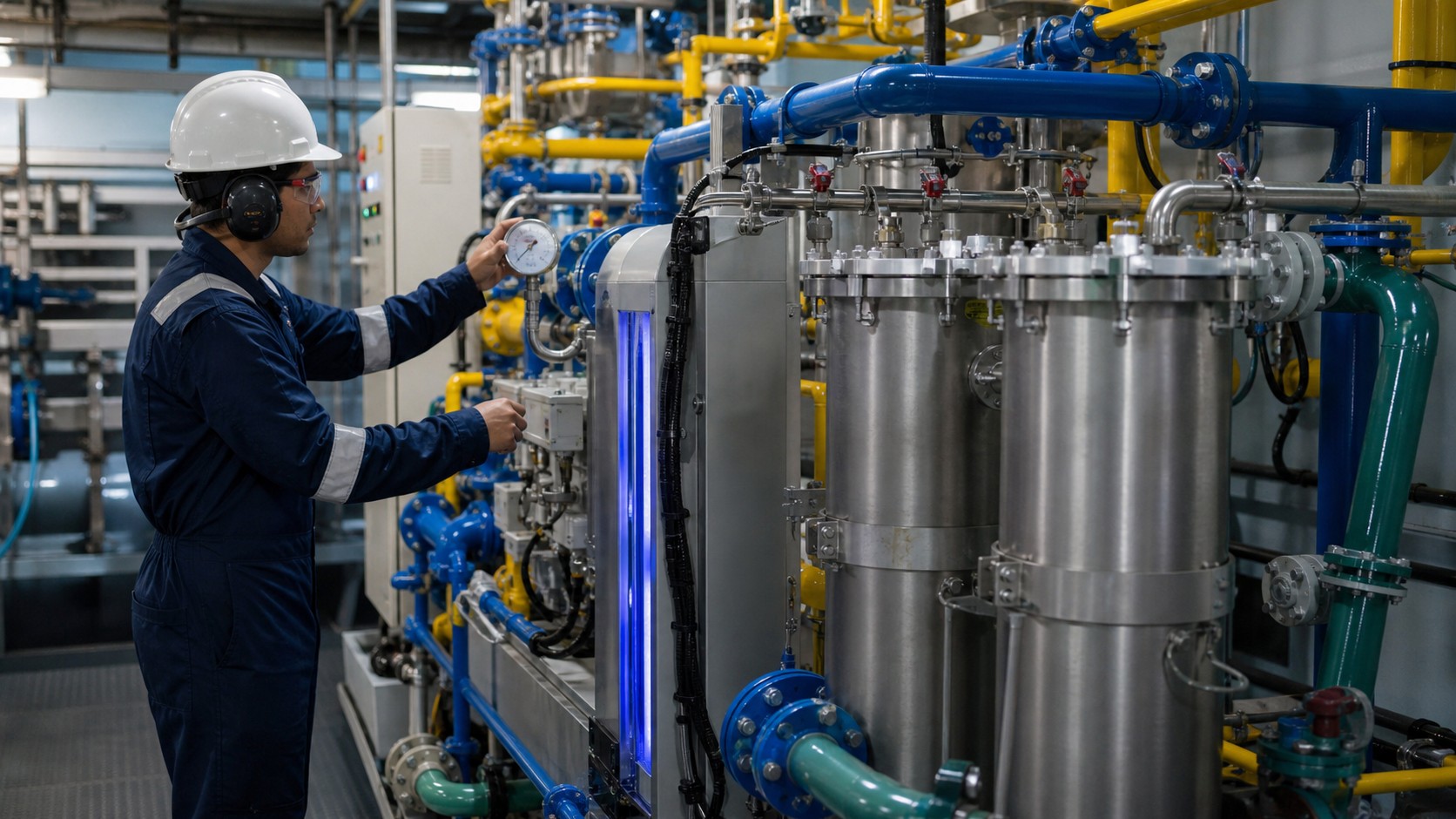
The Ballast Water Management Convention requires ships to treat ballast water, and the deadlines have now passed for most tonnage — so a trading ship should have a ballast water treatment system (BWMS) fitted:
- Is a BWMS fitted and type-approved? Confirm the maker, type approval (IMO and, for US trading, USCG), and that it works.
- If not fitted, a retrofit is a major cost and off-hire — usually done at a drydock, and a big negotiating point on an older ship.
- Operation & records — the system must be usable in your trades and properly logged.
Tip: A missing or non-USCG-approved BWMS is one of the most expensive surprises on a secondhand ship. Confirm the system, its approvals, and your trading areas before you price the ship.
EEXI and CII — efficiency and carbon
Emissions rules apply to ships on international voyages:
- EEXI (Energy Efficiency Existing Ship Index) — a one-off technical index each existing ship must meet, often achieved with an engine power limitation (EPL). Confirm the ship’s EEXI status and any EPL.
- CII (Carbon Intensity Indicator) — an annual operational rating from A to E; ships must improve over time, and a persistent D/E rating triggers corrective action. A poor CII limits future trading and value.
We cover these in depth in EEXI and CII explained for vessel buyers — factor both into your assessment.
Sulphur, scrubbers, and air emissions
- IMO 2020 sulphur cap — ships must burn ≤0.50% sulphur fuel (0.10% in Emission Control Areas) or fit an exhaust-gas cleaning system (scrubber).
- Scrubber or not? A scrubber lets a ship burn cheaper high-sulphur fuel but is a capital item with its own maintenance and some port restrictions; without one, the ship needs compliant low-sulphur fuel.
- NOx / other — engine NOx tier and any other exhaust equipment for your trades.
How compliance affects price and the deal
This is where environmental rules hit the purchase:
- Retrofit cost as a discount — a ship needing a BWMS, EPL, or scrubber should be priced below a compliant sister for the coming work and off-hire; reflect it in your valuation.
- Timing with drydock — compliance work is usually bundled into a special survey/drydock; knowing the next docking date helps you plan and price it.
- Trading limits — a poor CII or missing equipment can restrict which charters and areas the ship can take.
- Deferred compliance is a hidden cost — a condition survey and document review reveal what’s outstanding.
Quick environmental-compliance checklist
- ☐ BWMS fitted, type-approved (IMO; USCG if trading US), and operational
- ☐ EEXI status confirmed, and any engine power limitation noted
- ☐ Current CII rating (A–E) and its trend reviewed
- ☐ Sulphur compliance — scrubber fitted, or low-sulphur fuel operation
- ☐ Any NOx/exhaust equipment appropriate for your trades
- ☐ Retrofit costs (BWMS, EPL, scrubber) estimated and negotiated into price
- ☐ Compliance work aligned with the next drydock/special survey
- ☐ Trading-area implications of CII and equipment checked
- ☐ Certificates and records verified (issued by flag / classification society), not just the equipment present
- ☐ Condition survey used to reveal deferred compliance work
Frequently asked questions
What is a BWMS and does the ship need one? A BWMS is a ballast water treatment system that kills invasive organisms in ballast water, required under the Ballast Water Management Convention. Deadlines have passed for most ships, so a trading vessel should have a type-approved system fitted and working — if it doesn’t, a retrofit is a significant cost to factor into the price.
What is the difference between EEXI and CII? EEXI is a one-off technical energy-efficiency index each existing ship must meet, often via an engine power limitation. CII is an annual operational carbon-intensity rating from A to E that ships must improve over time. EEXI is about the ship’s design efficiency; CII is about how it actually performs.
Do I need a scrubber to buy a ship? No — a ship can comply with the IMO 2020 sulphur cap either by burning compliant low-sulphur fuel or by fitting a scrubber (exhaust-gas cleaning system) to use cheaper high-sulphur fuel. A scrubber is a capital investment with its own economics and some port restrictions; whether it’s worth it depends on fuel prices and your trades.
How does environmental compliance affect a ship’s price? A ship that needs a BWMS retrofit, an engine power limitation, or a scrubber — or that has a poor CII rating — should be priced below a compliant sister to reflect the coming cost, off-hire, and trading limits. Compliance status is a major factor in valuation and negotiation.
How do I check a ship’s environmental compliance before buying? Verify the BWMS and its type approvals, confirm EEXI status and CII rating, check sulphur compliance (scrubber or fuel), and review all certificates and records — not just the equipment on board. A condition survey and document review reveal any deferred compliance work.
Assessing a ship’s compliance? Golden Shipyard helps buyers check environmental compliance, survey, class, and value on both newbuilding and secondhand tonnage. Browse current availability under vessels for sale, or get an informed view with our ship sale & purchase brokerage services. To receive full particulars under NDA, email [email protected].
Buying, or want a second opinion?
Our sale & purchase desk can help you find, value and inspect the right tonnage. Tell us what you’re looking for and we’ll revert within one working day.