


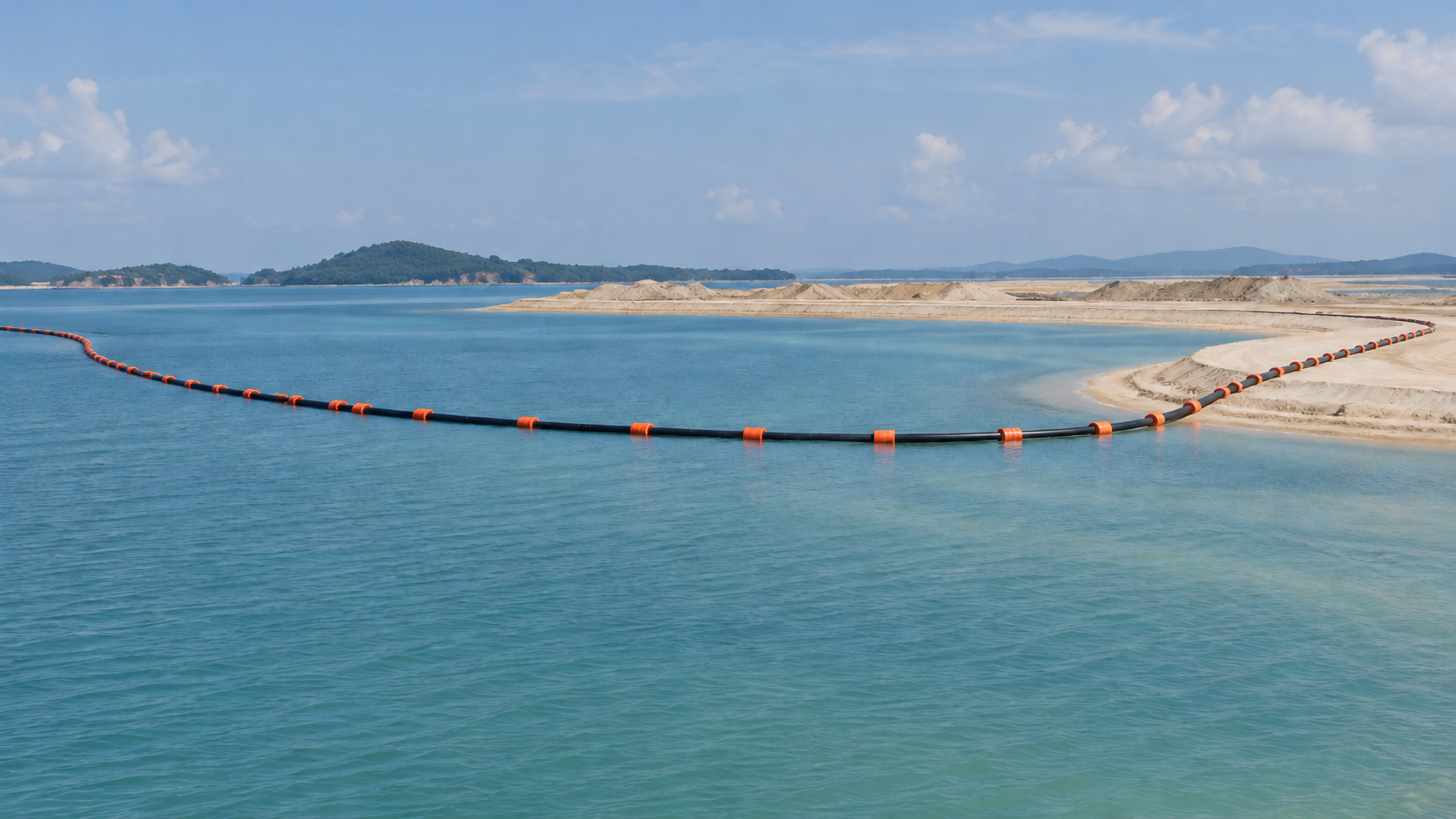
A cutter suction dredger offered with a stated discharge distance may look suitable for your project. Before using that figure to shortlist the unit, establish what material, route, output and equipment configuration it describes. A distance without its operating basis leaves the buyer with an unanswered question: what evidence supports this dredger working on this particular route?
This checklist helps buyers assemble that evidence and identify equipment or verification still to be purchased. For vessel selection, general specifications and condition-survey priorities, start with our CSD buying guide. Here the task is narrower: reconcile the seller’s performance statement with your project and the equipment included in the sale.
1. Put the discharge claim and project route on one sheet
Keep the original offer and give the buyer’s project sheet a date and revision number. Ask the seller to respond against that revision. If the disposal point or material information changes, issue an updated sheet; otherwise different parties may be evaluating different jobs.
- Material: attach available investigation reports, sampling locations and material descriptions; identify missing particle-size, solids-density, carrier-liquid or concentration assumptions for the specialist to resolve.
- Route: provide the planned pipe alignment, segment lengths, elevations, changes in diameter, fittings and discharge arrangement. Distinguish routed pipe length from straight-line site distance.
- Required output: state the quantity basis, required period and assumed operating hours. Identify whether the requirement concerns mixture flow, solids output or surveyed excavation volume.
- Proposed equipment: identify the dredger, installed pump and drive, pipe sections and any proposed booster stations by equipment reference.
- Open information: assign each missing input an owner and a date for reply instead of filling gaps with unlabelled estimates.
Keep volume definitions explicit. A mixture-flow figure includes carrier water; an in-situ excavation figure refers to material in the ground. Ask the supplier to explain the conversion basis and distinguish pumping output from daily production after interruptions. Do not compare two offers until their units and time bases match.
2. Ask for evidence tied to the offered configuration
Request the pump performance curve with its identifying details: pump model, impeller configuration, speed and stated test medium. Have the supplier identify which particulars represent the installed equipment and which describe a proposed modification.
KSB explains that a centrifugal pump’s operating point comes from the intersection of its pump curve and the system curve. A pump curve alone therefore does not establish the output on your route. Request a project-specific assessment that identifies the route assumptions and the expected operating point, together with power, suction-condition and operating-limit checks. See KSB’s operating-point reference.
For slurry service, ask how the assessment treats the material and concentration. KSB’s solids-transport reference describes how particle size, concentration and flow velocity affect transport and settling. A clear-water result should be labelled accordingly; ask the specialist to document the basis used to apply it to the intended material.
Hydraulic transport capacity is only one part of dredging production. Ask the supplier to distinguish the discharge-system assessment from the cutter, excavation and material-feed constraints that also affect the dredger’s achievable output.
Previous job records can support the review if the seller supplies their context. Ask for the route, material, equipment configuration, measurement method and operating period behind each reported result. Record differences from your project. A photograph of discharge or an isolated production total does not resolve those differences.
3. Review the booster proposal as part of the system
Damen describes booster stations as equipment that can extend discharge distance, including applications involving heavier material or higher mixture concentration. That establishes their role, rather than the number or placement needed for a particular purchase. See Damen’s dredge-pump overview and dredging R&D examples.
If the seller proposes a booster, ask for a dated arrangement covering:
- The proposed station identity and location, with the calculation revision supporting the arrangement.
- The main pump and booster operating assumptions, including expected flow and pressure conditions for specialist review.
- Confirmation of equipment and pipeline compatibility, including pressure limits along the route and the assessment of start-up, shutdown and other transient conditions, plus any restrictions.
- The drive, fuel or electrical supply, controls, communications and supporting site equipment included in the proposal.
- The supplier’s proposed start, stop, flushing and interruption procedures, and who will commission the combined system.
Keep unresolved engineering questions open until the responsible supplier or specialist answers them. Avoid treating a generic distance threshold as a booster-selection rule. The buyer’s register should identify the technical decision still required and the evidence that will close it.
4. Turn “pipeline included” into an itemized sale schedule
Ask for a signed schedule identifying each equipment lot, its quantity, location, ownership and condition evidence. Separate items already included from optional purchases, third-party equipment and items still to be sourced. For each pipe or hose lot, request the available dimensions, connection details and pressure documentation for compatibility review.
| Package entry | Evidence to request | Buyer follow-up |
|---|---|---|
| Pipe and hose lots | Lengths, bore, connections and available condition records | Which usable sections match the proposed route? |
| Fittings and connection hardware | Bends, reducers, couplings, seals and fasteners listed separately | What must be purchased to connect the lots? |
| Floats and supporting equipment | Quantities, identities and compatibility evidence | What installation or support items remain outside the offer? |
| Booster package, if proposed | Station, drive, controls and auxiliary supply scope | Who supplies, integrates and commissions each item? |
| Delivery and handover work | Locations, dismantling, loading, freight and assembly responsibilities | Which costs and completion dates remain unquoted? |
Carry unresolved entries into a budget with an allowance basis and a named party responsible for obtaining a quotation. Use separate lines for equipment, inspection, refurbishment, transport, installation and commissioning. A low equipment price can become difficult to compare when another offer includes work that this one excludes.
5. Work through a discrepancy before accepting the package
Illustrative example: a seller offers a CSD with a stated 2 km discharge capability and 800 m of pipeline. The buyer’s proposed alignment is 1.6 km and ends at an elevated placement area. The seller’s supporting performance record comes from another job, with no identified elevation profile or material basis.
The shorter route does not settle the performance question. Request a supplier assessment against the buyer’s route revision and material data. Separately, the listed pipe length leaves a nominal 800 m gap before checking connection allowances, usable condition and route details. Obtain an itemized supply proposal and ask whether the performance assessment assumes any equipment outside the sale.
This example produces an evidence request and a package-gap register. It does not establish an output figure or prove that a booster is needed. Those conclusions require the relevant technical assessment.
Before moving the candidate forward
- The performance statement distinguishes a supplier estimate, a past result and any contractual guarantee, and references an identifiable project sheet and equipment configuration.
- Output definitions and measurement bases are consistent across the offers being compared.
- The supplier has addressed differences between supporting records and the intended project.
- Any booster proposal has a documented technical basis and a defined supply scope.
- Included equipment, missing items and additional work have named owners and budget entries.
If a performance demonstration forms part of the purchase, agree the material, route, configuration, measurement basis, duration and acceptance criteria in writing. Identify who will witness it and how departures from the agreed conditions will be recorded.
Use the register to decide which questions require an answer before progressing the purchase. Where project data remain provisional, keep the corresponding performance conclusion provisional too.
To discuss a candidate, send Golden Shipyard the seller’s particulars, available material information, route sketch, output requirement and equipment list. Browse our dredger category or contact the brokerage team with those documents so the outstanding questions can be identified early. For the wider transaction, see our ship acquisition due-diligence checklist; condition findings belong in an independent pre-purchase survey. Our ship sale and purchase services cover the brokerage discussion around a candidate.
Buying, or want a second opinion?
Our sale & purchase desk can help you find, value and inspect the right tonnage. Tell us what you’re looking for and we’ll revert within one working day.