


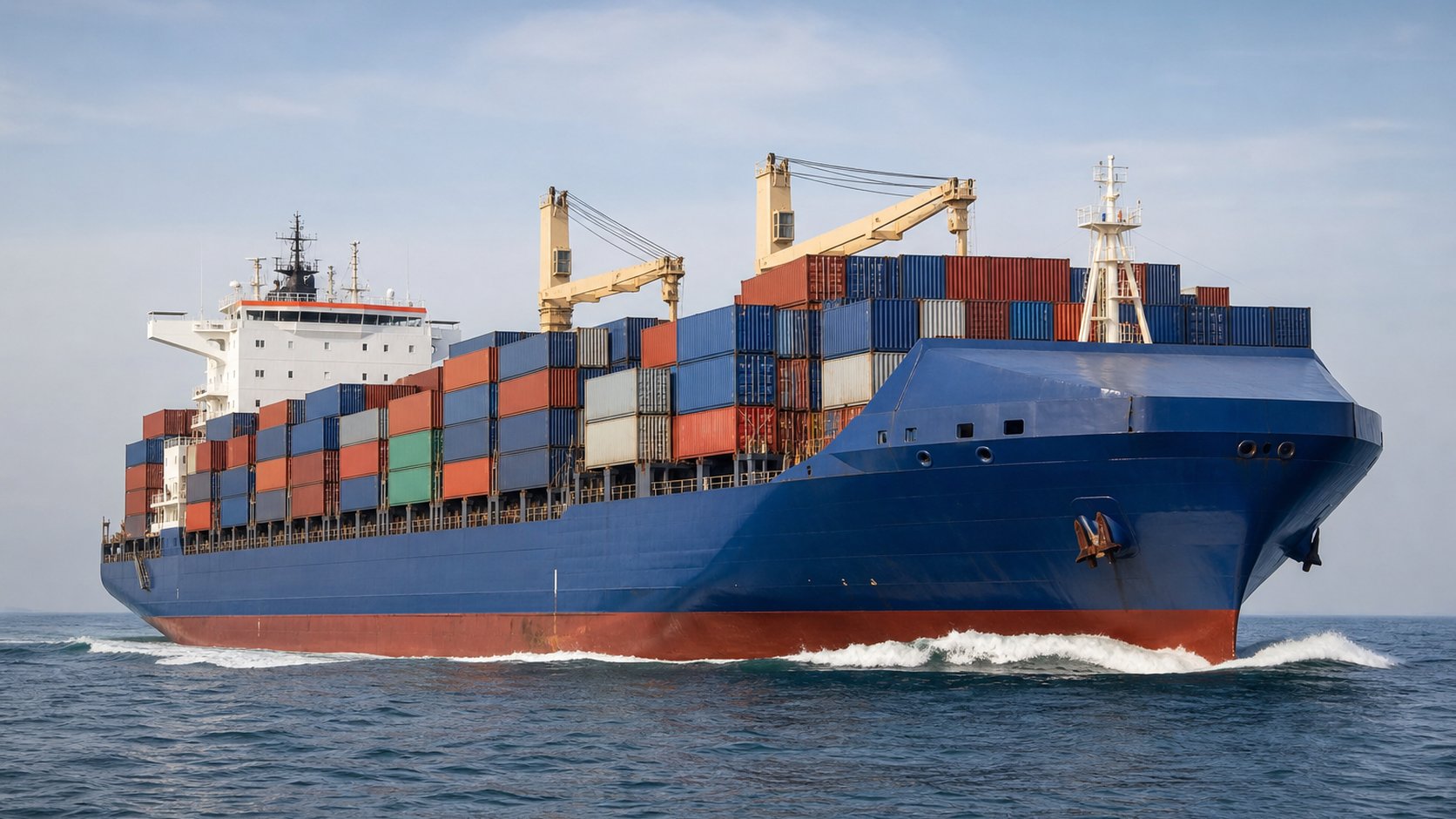
Feeder tonnage has had an unusually settled run into 2026. While the wider container market has swung on overcapacity fears and a record ordering binge for bigger ships, sub-3,000 TEU feeders have held their value and their charter rates better than almost any other segment. This is a broker’s read on what is driving feeder values right now, and what a buyer should weigh before committing.
Charter rates: firm, and staying that way through the near term
One-year time-charter rates for feeder tonnage have been climbing through late 2025 and into 2026 — 2,100 TEU non-eco feeders reached around US$30,100/day, with 1,100 TEU non-eco feeders around US$15,800/day. The driver is simple: no meaningful growth in available feeder capacity was expected through the first half of 2026, so a fleet that was already tight stayed tight. For an owner, that is a strong earnings backdrop; for a buyer, it means secondhand feeders are being priced against genuinely firm charter income, not sentiment.
Secondhand values: resilient, and diverging by age and efficiency
Feeder secondhand values have proven more resilient than the larger, ocean-going classes through 2026, helped by a clear charterer and buyer preference for fuel-efficient, modern tonnage. As a rough guide, a well-maintained 15-year-old 1,000 TEU unit has been trading in the USD 6–12 million range depending on gear, survey position and engine, while modern secondhand feeder tonnage has traded near 80% of newbuild parity — an unusually thin discount for buying secondhand. The market is not treating all feeder tonnage the same way, though: young eco vessels and ships ready for prompt delivery are holding their values noticeably better than midlife and older units, and that gap looks set to widen rather than close.
CII: a compliance metric that has become a pricing metric
The IMO’s Carbon Intensity Indicator grades ships A to E on emissions per tonne of cargo per nautical mile, and rating thresholds tighten by roughly 2% every year — a ship rated C today drifts toward D or E over time even if nothing on board changes. That used to be a compliance issue for the operations team; it is now a value issue for the buyer, because CII directly affects charter attractiveness, financing terms and resale value. Fleet-wide fuel consumption per TEU has fallen markedly this decade as owners have modernised, so an older, thirstier feeder is competing for charterers against a steadily improving fleet average, not a static one — its relative CII position gets harder to hold every year it stays in service unmodified.
Where the demand is: intra-Asia strength underpins the segment
Feeder demand is not evenly spread, and buyers should weigh trade exposure alongside the headline charter numbers. Intra-Asia trade — connecting China, India, Japan, South Korea and Southeast Asia — has been the standout, supported by steadily growing regional container volumes and trade patterns shifting as some export flows diversify away from direct long-haul routes. That trade is also comparatively insulated from the geopolitical disruption that has hit some deep-sea routes. A feeder bought for deployment into a strong regional network carries a different risk profile than one bought speculatively for whatever trade turns up — worth factoring in alongside the ship’s specification when you weigh a candidate.
Supply: an ordering binge, but not where the feeder buyer needs to worry yet
2025 closed as a record year for container ship ordering, with the global pipeline reaching around 10 million TEU — but a large share of that binge has gone into larger, ocean-going tonnage rather than the feeder segment specifically, even as owners continue to place firm orders for feeder-sized ships up to roughly 3,300 TEU. Newbuild feeder pricing reflects the strong demand: a 1,000 TEU container ship has run around USD 19–22 million from a Chinese yard for 2026–2027 delivery, and larger 1,800 TEU units have priced around USD 32.5 million each for 2028 delivery. With little near-term feeder capacity growth expected, the segment looks set to stay tight in the short run even as the wider orderbook grows — see newbuilding vessels for how ordering a feeder yourself would run.
Demolition: nearly stopped, and propping up older tonnage
Scrapping has slowed to a trickle across the container fleet, with owners keeping older ships trading rather than sending them to the breakers — a decision made easier by still-favourable freight income and high secondhand values. That has an indirect effect on feeder buyers: with fewer old ships leaving the fleet, the segment’s age profile is ageing overall, which is part of why the market is rewarding young, efficient tonnage so clearly relative to older units.
What this means for a feeder buyer in 2026
The segment rewards being decisive on quality and patient on price for everything else. A young, fuel-efficient feeder with a clean survey position is trading at a thin discount to newbuild and will likely stay in demand — that is not a segment to expect a bargain in. An older, less efficient unit is a different conversation: charter rates are firm enough that it will still earn, but its resale value is exposed if the age/efficiency divergence widens further, as the current data suggests it will. Match the ship to how long you actually intend to hold it, not just to today’s charter rate. Browse current feeder tonnage on our feeder container ships for sale page, or see our buyer’s guide for what to check on a specific candidate. For a valuation read on a ship you’re considering, talk to a broker.
Buying, or want a second opinion?
Our sale & purchase desk can help you find, value and inspect the right tonnage. Tell us what you’re looking for and we’ll revert within one working day.