


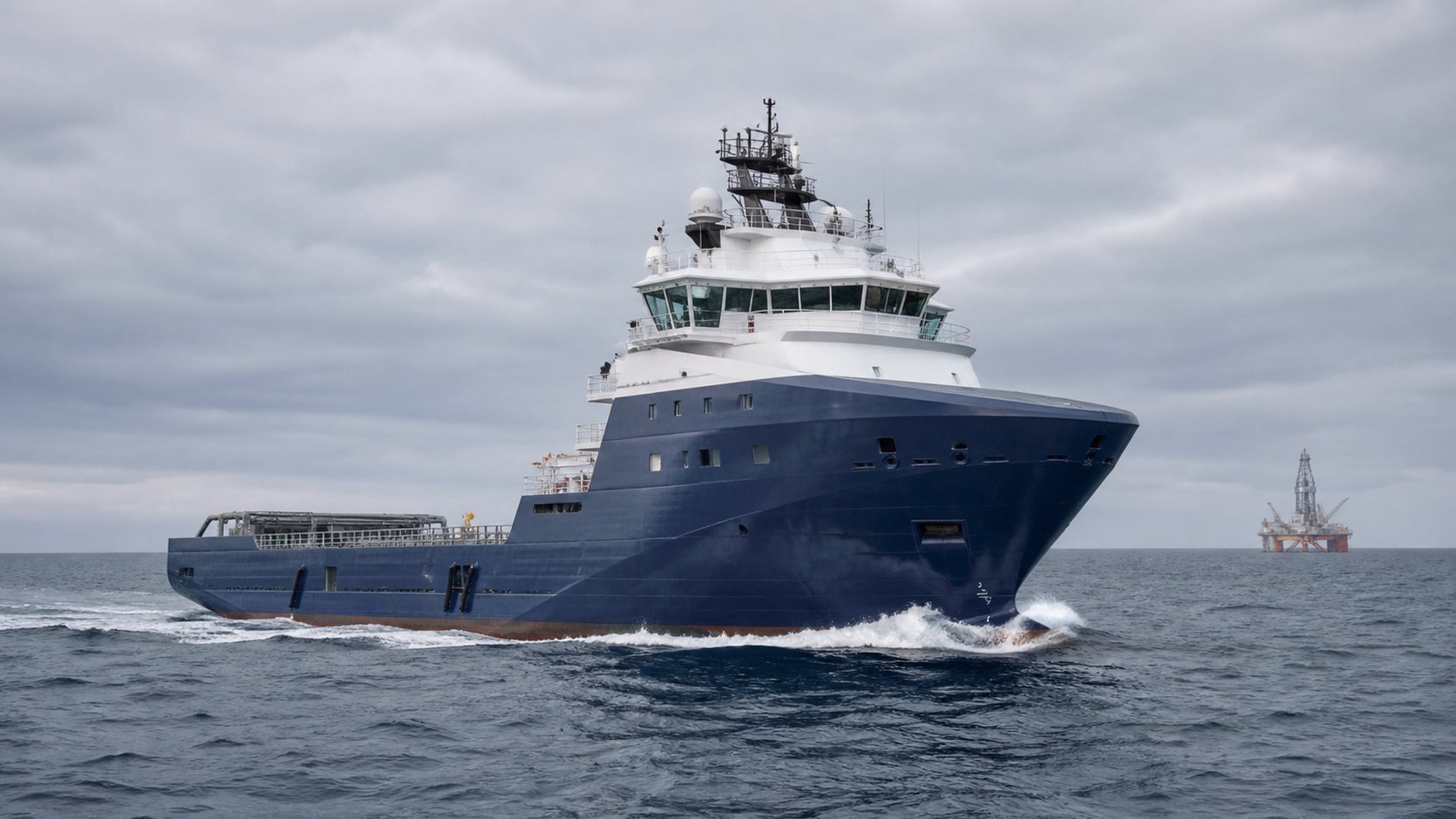
The OSV market has gone from oversupplied to structurally tight in the space of a decade, and 2026 is the year that tightness is showing up clearly in day rates. Unlike the product tanker market, where a supply wave is working against owners, the offshore support fleet has been shrinking for years — and newbuild economics mean it isn’t coming back quickly. This is a broker’s read on what that means for anyone buying PSV, AHTS or work-boat tonnage in 2026.
Day rates: back to levels the market hasn’t seen in years
Large AHTS vessels are commanding US$35,000–55,000/day on short-term fixtures, and units with around 200 tonnes of bollard pull have recovered from US$15,000–20,000 to US$35,000–40,000 — roughly double where they sat only a few years ago. In the North Sea specifically, peak spot rates for large AHTS have been regularly exceeding NOK 400,000/day in tight conditions. PSVs of 4,000+ DWT capacity are achieving US$22,000–32,000/day, up from lows around US$10,000–15,000 in 2018–2020. This isn’t a short spike — utilisation for both AHTS over 4,000 BHP and PSVs over 1,000 DWT is approaching 85–90% by mid-2026, which is the kind of tight-fleet reading that keeps rates firm rather than a one-off seasonal peak.
Why the fleet is this tight: a decade of attrition, not a demand shock
The current tightness is a supply story more than a demand story. Over 300 OSVs were scrapped or moved to non-marine use between 2015 and 2023, and the effective working fleet in the North Sea is now around 30–40% smaller than it was at the 2014 peak. Laid-up vessel counts have fallen from roughly 500 in 2017–2018 to below 200 by 2026 — the slack that used to absorb a demand upturn has largely been used up. That combination means today’s firm rates reflect a fleet that genuinely shrank, not a temporary demand surge that could reverse as quickly as it arrived.
Newbuild economics: the main reason the fleet isn’t refilling fast
A large PSV that might have cost US$28–32 million to order from a European yard in 2019 now costs US$50–60 million from that same tier, or US$40–48 million from a competitive Asian yard — close to double in real terms. That kind of newbuild cost inflation is exactly why the fleet has not refilled despite years of improving rates: the economics only work at day rates that are still relatively recent, so owners have been slow to commit to new orders even as utilisation climbed. For a buyer, that constraint on new supply is part of why the current tightness looks more durable than a typical cycle — see newbuilding vessels for how that ordering economics plays out in practice.
Regional variation: North Sea leads, Middle East on a different timeline
The tightness is not evenly spread. The North Sea has been the clearest example of structural attrition driving rates, with fleet ageing and builder drought compounding the supply squeeze there specifically. The Middle East is on a different trajectory — OSV demand there is expected to plateau through 2026 before picking up again in 2027, which matters if your intended deployment region is Gulf-based rather than North Sea or Atlantic-margin work. Match the region you actually intend to operate in against the regional supply-demand picture, not the headline global rate.
What this means for an OSV buyer in 2026
This is a seller’s market for well-specified, in-demand tonnage — vessels with strong bollard pull, DP2 capability and good deck area are commanding rates that reward owners for holding rather than selling, which can make good candidates harder to find and pricier to acquire than the headline rates alone suggest. A buyer with a genuine operational need should expect to pay for that tightness rather than wait it out, given how slowly newbuild economics are letting the fleet refill. See our OSV buyer’s guide for what to check on a specific PSV, AHTS or work-boat candidate, browse current stock under work & offshore vessels for sale, or talk to a broker for a read on a specific opportunity.
Buying, or want a second opinion?
Our sale & purchase desk can help you find, value and inspect the right tonnage. Tell us what you’re looking for and we’ll revert within one working day.