


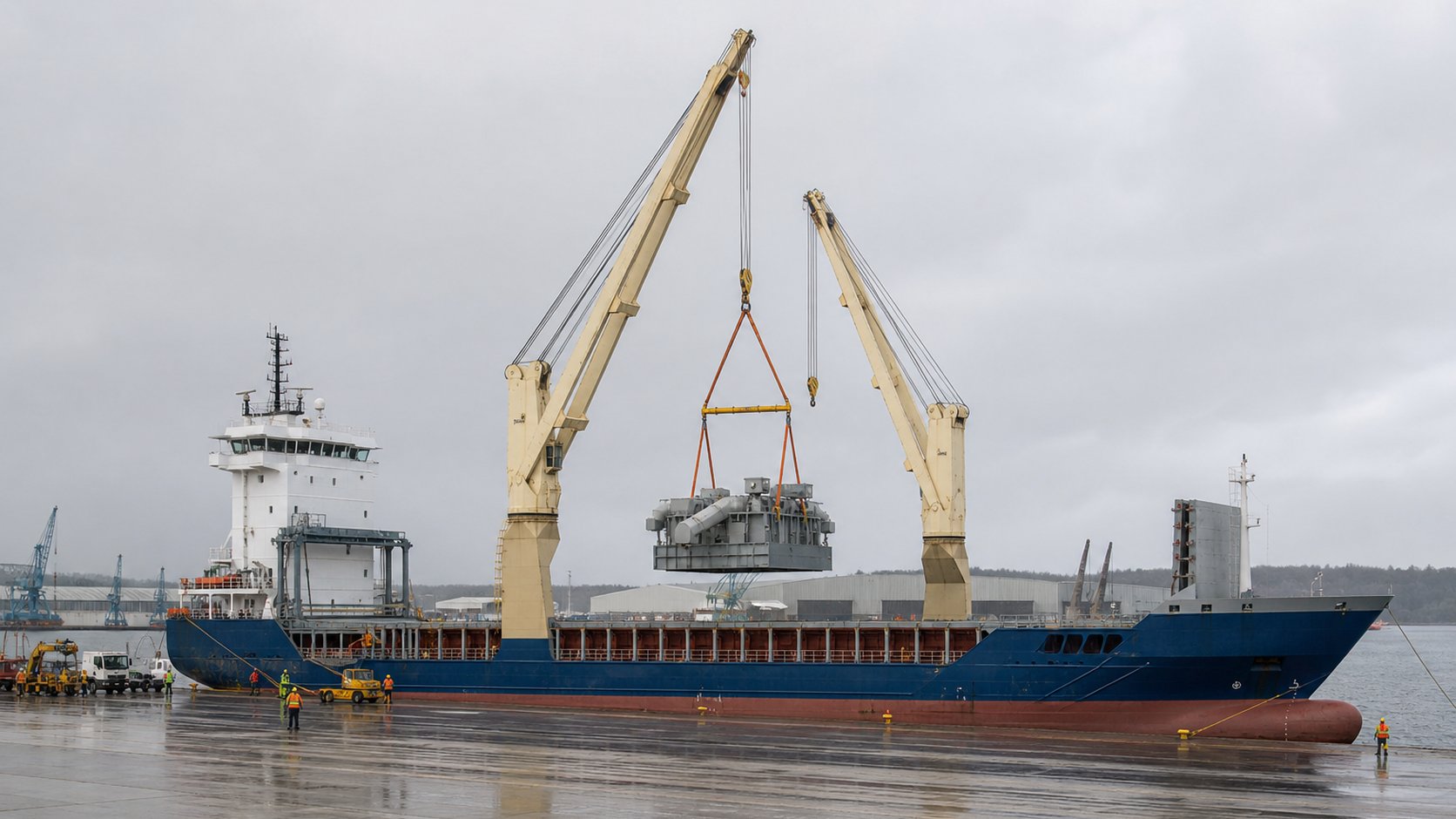
The multipurpose vessel market looks stable on the headline number — but that number is hiding a split that matters more than the average. The Toepfer Multipurpose Index has barely moved all year, sitting in a narrow band through 2026, yet the sector’s own analysts describe the year ahead as a fracture into two distinct realities depending on which end of the MPP fleet you’re looking at. This is a broker’s read on both halves of that market, and where an MPP buyer should be positioning.
The headline number: stable, and stronger than it looks
The Toepfer Multipurpose Index (TMI) settled at US$12,648/day in January 2026, ticked up 0.39% to US$12,750/day by March, and eased slightly to US$12,683/day in April — a genuinely narrow range for a full year. What makes that stability notable is what it survived: rates held firm and even ticked up amid Middle East turmoil and a Hormuz-related supply scare in the first half of the year, when many freight segments would have seen far more volatility. A rate index that doesn’t flinch at a geopolitical supply shock is telling you something about underlying tightness, not just calm conditions.
Two distinct realities: project cargo pulls ahead of general cargo
Underneath that stable headline, the sector’s own analysts (Drewry) describe 2026 as splitting the MPP fleet into two different stories. Project carriers — the heavy-lift end of the fleet serving energy and infrastructure investment — are positioned for rate increases as energy-transition and infrastructure project cargo demand builds. The general cargo end of the fleet is a different picture entirely, facing turbulence as spillover capacity and pricing pressure from the container market bleeds into general cargo trades. Two ships that both carry the “MPP” label can be facing opposite-direction markets depending on which trade they actually serve — which makes the specific trade a candidate is built for at least as important as its size or gear when reading its outlook.
Fleet age: a structural brake on how fast capacity can respond
Around 60% of the global MPP fleet is now at least 15 years old, and roughly 30% is over 20 — an ageing profile that limits how quickly the sector can expand capacity even where demand (on the project-cargo side) is building. That is a large part of why the TMI has held firm through a geopolitical scare rather than correcting: there simply isn’t a lot of young, flexible capacity standing by to undercut the market. For a buyer, an ageing fleet cuts two ways — it supports charter rates for the tonnage that is trading, but it also means a well-specified younger unit stands out more clearly against an older fleet than it would in a segment with abundant modern newbuilds.
What’s actually driving the project-cargo side
The demand pulling the project-carrier half of the fleet forward is concrete, not speculative. Energy transition infrastructure — offshore wind components, hydrogen infrastructure, carbon capture and storage equipment, and power-grid hardware — is the primary growth driver behind project cargo and breakbulk volumes in 2026, and the pace of offshore wind development in Europe, Asia-Pacific and North America is currently outstripping the available supply of wind turbine installation vessels and heavy-lift vessels, pushing some of that demand onto general heavy-lift MPP tonnage as a substitute. LNG is adding to the same pull: global LNG supply is set to grow by roughly 30 million tonnes in 2026, driven mainly by project ramp-ups in North America, and every LNG project brings its own wave of oversized modules and components that need heavy-lift capacity to move. Breakbulk volumes are already showing it — general cargo tonnage handled in major hubs like Rotterdam rose several percent in the most recent reporting period, driven specifically by offshore wind foundations, CCS project steel conduits and offshore-industry steel plate transshipment.
Newbuild activity: owners are betting on the project-cargo side
Where owners are placing new orders tells you which half of the two-speed market they believe in. Chipolbrok has ordered six new-generation 60,800 DWT MPP heavy-lift vessels with options for four more, and COSCO Shipping Specialized Carriers has ordered a quartet of 40,000 DWT MPP heavy-lift units — both squarely at the project-cargo, heavy-lift end of the fleet rather than general-purpose tonnage. That ordering pattern lines up with the Drewry read: capital is following the energy-transition and infrastructure demand story, not the pressured general-cargo side. See newbuilding vessels for how a comparable order would run if you were considering the same route.
What this means for an MPP buyer in 2026
The sector-wide stability is real, but it is not evenly earned — it is being carried by the project-cargo half of the fleet while general cargo absorbs pressure from the container market. A buyer targeting energy, infrastructure or heavy-lift project work is buying into the stronger half of a genuinely two-speed market, and the ageing fleet means well-specified younger tonnage in that segment is scarcer than the headline TMI number suggests. A buyer competing more in general cargo trades should price in the container-market spillover pressure rather than assume the sector’s calm headline rate applies evenly. See our MPP buyer’s guide for what to check on a specific candidate, browse current stock under multipurpose vessels for sale, or talk to a broker about a specific trade.
Buying, or want a second opinion?
Our sale & purchase desk can help you find, value and inspect the right tonnage. Tell us what you’re looking for and we’ll revert within one working day.