


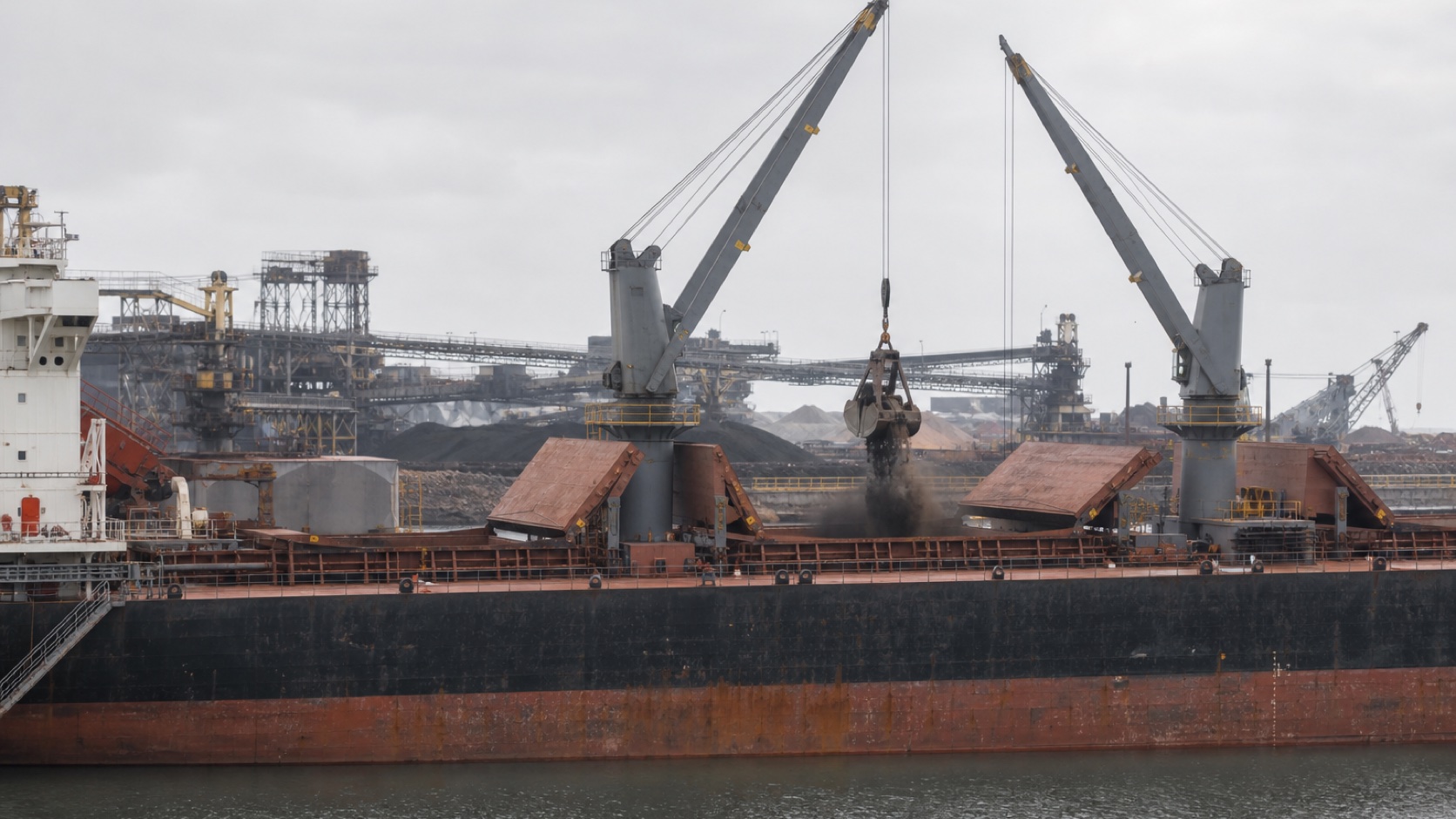
Bulk carriers move the cargoes that keep everything else running — grain, coal, ore, steel, cement — and Golden Shipyard carries a range of bulk carriers for sale to match, from small Handysize tonnage for port-restricted trades up to 82,000 DWT Kamsarmax for long-haul dry bulk. This page is your starting point: the sizes available, what each suits, and how to view them.
FRVous préférez le français ? Lisez notre guide d’achat du navire vraquier.
Bulk carriers for sale — by size
Our current range spans roughly 7,000 to 82,000 DWT, across in-stock and newbuilding tonnage:
| Size band | Indicative DWT | Typical role |
|---|---|---|
| Small Handysize | ~7,000–16,500 DWT | Coastal and short-sea trades into port-restricted or shallow-draft berths |
| Handymax / Supramax | ~50,000–63,500 DWT | The flexible workhorse band — geared for self-loading, wide port access |
| Panamax / Kamsarmax | ~82,000 DWT | Long-haul grain, coal, ore and steel on major bulk trade routes |
See the full, up-to-date list on our bulk carriers for sale page — availability and particulars change as ships are sold and added.
In stock vs. newbuilding
The range includes both:
- In-stock (available for inspection now) — completed vessels you can inspect and take relatively quickly, including a 10,800 DWT unit built in 2009, 16,500 and 51,000 DWT tonnage built in 2022, and a 63,500 DWT vessel built in 2024.
- Newbuilding (available to order) — vessels available to build, including 7,000 DWT small Handysize tonnage and 82,000 DWT Kamsarmax units with 2026 delivery slots.
For the trade-offs between buying now and ordering new, see our newbuild vs secondhand bulk carrier comparison and how to buy a used bulk carrier.
What to look for in a bulk carrier
When you compare bulk carriers for sale, the value drivers are:
- Deadweight and cubic capacity — the headline DWT and, separately, the grain and bale cubic figures that decide what you can actually load on a light, high-stow cargo.
- Geared vs. gearless — geared tonnage can self-discharge at ports without shore cranes, which matters most on the Handysize and Supramax bands serving developing-port trades.
- Tank-top strength and hold configuration — decisive for heavy ore cargoes, where a hold rated for grain alone can be the wrong ship at the wrong price.
- Class, age and efficiency — IACS class, build year, and EEXI/CII standing all drive tradability and resale value; see what drives secondhand bulk carrier values.
- Route and port fit — draft, beam and length against the specific canals, rivers or berths you actually intend to call.
Tip: Don’t shop by DWT alone. A geared Supramax and a gearless Panamax at similar deadweight can serve completely different port networks — the gear, not the tonnage figure, is often what decides which cargoes and which berths are actually open to you.
How much does a bulk carrier cost?
Every bulk carrier for sale here is offered on the same basis: full particulars to qualified buyers, price on application. Bulk carrier prices move with size, age, specification and the freight market, so vessels are offered on a P.O.A. (price on application) basis. Full particulars — including indicative pricing — are released to qualified buyers under an NDA. Tell us the size band and trade you have in mind and we’ll match you to what’s available and its terms.
How to view and buy
1. Browse the bulk carriers for sale list and shortlist by DWT and in-stock/newbuilding. 2. Request full particulars under NDA — specification, class, and (for in-stock) inspection. 3. Inspect — arrange a pre-purchase condition survey for a secondhand ship, or site supervision for a newbuilding. 4. Close through a standard MOA with our brokerage support.
Quick buying checklist
- ☐ DWT band matched to your trade (Handysize / Supramax / Panamax-Kamsarmax)
- ☐ In-stock (inspect now) vs. newbuilding (order) decided
- ☐ Geared vs. gearless suited to your discharge ports
- ☐ Grain and bale cubic checked against your typical cargo
- ☐ Tank-top strength confirmed for any heavy ore cargoes
- ☐ Class (IACS), age, and EEXI/CII reviewed
- ☐ Full particulars requested under NDA
- ☐ Draft and dimensions suit your berths and canals
Frequently asked questions
What bulk carriers do you have for sale? Golden Shipyard offers bulk carriers for sale from around 7,000 to 82,000 DWT — including in-stock Handysize, Supramax and Kamsarmax tonnage and newbuilding units across the same range. See the current list on our bulk carriers for sale page, as availability changes.
How much does a bulk carrier cost? Prices depend on the exact size, age, specification, and the market, so ships are offered P.O.A. (price on application). Indicative pricing and full particulars are shared with qualified buyers under an NDA — contact us with your target size and trade for current terms.
Are the bulk carriers in stock or newbuildings? Both. Some are completed and available for inspection now — for example a 2009-built 10,800 DWT unit and 2022-2024-built tonnage from 16,500 to 63,500 DWT; others are newbuildings available to order, including 7,000 DWT Handysize and 82,000 DWT Kamsarmax with 2026 delivery.
What’s the difference between Handysize, Supramax and Kamsarmax? They’re deadweight and dimension bands set largely by canal and port limits. Handysize is the smallest and most port-flexible; Supramax/Handymax is the geared workhorse band; Panamax and Kamsarmax are the largest that can transit the Panama Canal, suited to long-haul grain, coal, ore and steel.
How do I inspect a ship before buying? Request full particulars under NDA, then arrange an independent pre-purchase condition survey for a secondhand vessel or site supervision for a newbuilding. We coordinate viewing, survey, and closing.
Looking for a bulk carrier? Golden Shipyard has bulk carriers for sale from around 7,000 to 82,000 DWT, in-stock and newbuilding. Browse current availability on our bulk carriers for sale page, or email [email protected] with your target size and trade to receive full particulars under NDA.
See what’s available now
Browse the current inventory in this segment, or tell our sale & purchase desk exactly what you need — size, deadweight, flag, delivery window — and we’ll revert within one working day.