


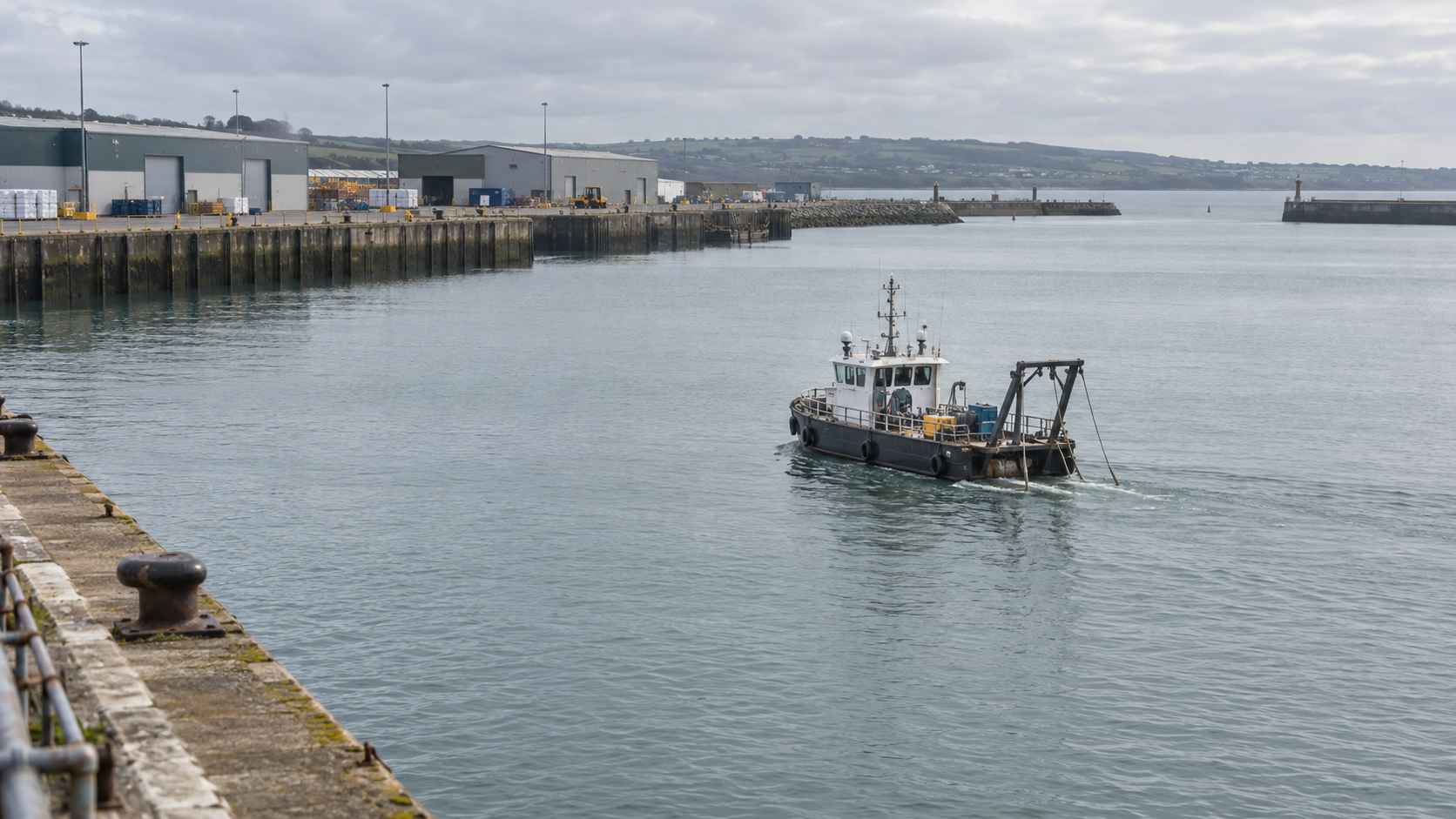
A berth can contain soft silt and still be an unsuitable water injection dredging project. Loosening the material is only part of the task. Before selecting a water injection dredger (WID), the buyer needs a credible account of how the sediment will leave the maintained area, what may happen along its route and how the result will be accepted.
This guide turns those questions into a project-screening brief. Our dredgers for sale overview covers the main equipment types and commercial options. Here, the decision is narrower: whether there is enough site evidence to take WID forward for specialist assessment.
1. Define the result before specifying the vessel
Write down the maintained area, required depth, survey reference level, completion window and who will accept the work. Distinguish maintaining access from recovering material for a reclamation project or removing sediment to an identified off-site destination. Those objectives require different evidence.
WID uses water injection to mobilise bed material, with subsequent movement relying on density-driven flow and site hydrodynamics. IADC’s technical account of water injection dredging distinguishes sediment fluidisation from the natural transport needed to carry it away. A successful pass through the work area is therefore not, by itself, evidence that the project’s depth or sediment-management objective has been achieved.
Ask the project owner to identify what must be demonstrated: an accepted depth over a defined footprint, movement out of a berth, or a wider sediment-management outcome. If the requirement includes physical recovery and delivery of material, do not assume that a standalone WID operation provides it. Refer any combined-method proposal to the project team rather than changing the objective to suit an available vessel.
2. Establish whether the sediment can be mobilised and transported
“Soft mud” is a description, not a complete ground investigation. Request dated samples or investigation records tied to locations and the thickness of the layer being maintained. Have the specialist identify whether those records represent the current deposits, including any harder underlying layer or mixed material.
IADC’s 2013 WID factsheet explains two separate limitations: stronger, more consolidated cohesive material can resist fluidisation, while coarser particles can settle before travelling far enough. It identifies highly plastic clays and rock as unsuitable for effective application of the method described. A generic grain-size label or vessel power rating does not resolve these questions.
Organise the sediment evidence for a competent specialist to assess. Ask which particle-size, strength, consolidation or settling information is needed for this site, which tests are missing and whether field validation is necessary. Do not insert a universal sand-content or strength threshold into the buying brief. A favourable description at one berth does not establish the behaviour of another deposit.
3. Map the whole sediment pathway
Place the work footprint, proposed transport route and potential receiving areas on one current bathymetric plan. Include the connecting route, not just the deepest nearby sounding. Ask the specialist to identify local rises, enclosed pockets or other features that may interrupt movement or cause deposition where it would create another problem.
The USACE dredging manual, section 2.30.3, describes density-current behaviour as dependent on sediment properties, bathymetry and ambient currents. A bed slope can help, but is not an absolute requirement for density-current flow. Neither “the bottom slopes” nor “the port is tidal” is a sufficient screening conclusion.
Request current and water-level information relevant to the proposed working period. Ask whether it represents the berth and connecting route, rather than a distant station alone. Record the conditions under which transport is expected, the evidence behind that expectation and the uncertainty if those conditions change. Low-energy pockets, changing river flows and tidal reversals need site-specific assessment, not an assumed arrow on a plan.
Keep the proposed receiving area distinct from a guaranteed final destination. The buyer’s question is whether the predicted redistribution is credible and acceptable for the project, including possible return to the maintained area. Ask the assessor to explain when modelling, additional measurements or a monitored trial is needed to address uncertainty.
4. Check environmental acceptability before treating WID as available
WID does not make sediment disappear. IADC’s equipment and environmental-effects guidance notes the limited control over where hydrodynamically moved material ultimately settles and the potential for suspended sediment and seabed deposition. Do not promise that all material remains at the bottom or that the upper water column is unaffected.
Provide available sediment-quality information and identify nearby sensitive areas, water uses and infrastructure for the environmental team. Ask the responsible authority and advisers what permissions, restrictions, monitoring and response arrangements apply to the proposed redistribution. Neither clean-looking sediment nor an existing maintenance programme proves that a different dredging method is authorised.
Where contamination or restrictions on resuspension are identified, keep the WID proposal on hold pending specialist and authority review. The screening brief should identify the unresolved decision and who must make it; it should not invent an acceptable turbidity limit or declare approval on the buyer’s behalf.
5. Use an evidence register to decide the next step
The following register is a proposed buying aid, not an engineering approval or regulatory checklist. Replace the role descriptions with named people and dates for the actual project. A missing input should remain visible when offers are compared.
| Screening question | Evidence to assemble | Decision owner / open item |
|---|---|---|
| What result must be accepted? | Work footprint, depth reference and acceptance requirements | Project owner: confirm the success criterion |
| Can this deposit support the method? | Located sediment records and identified testing gaps | Sediment specialist: assess mobilisation and settling |
| Where can the material move? | Bathymetric route and relevant current information | Hydrodynamic assessor: explain transport and uncertainty |
| Is the redistribution acceptable? | Sediment quality, receptors and applicable permission conditions | Environmental adviser / authority: resolve constraints |
| How will the result be verified? | Proposed surveys, monitoring and reporting responsibilities | Project owner and technical team: agree the verification plan |
Classify the outcome carefully. Screen out the standalone proposal if it cannot deliver the stated objective. Hold for evidence where a transport, sediment or permission question remains unanswered. Proceed to detailed assessment where the evidence supports further investigation. That last category is not a purchase recommendation or a production guarantee.
6. Worked example: similar silt, different buying decisions
Fictional screening example. Two berth projects each report recent soft silt deposits. Both owners receive an offer for the same WID. Neither description includes a verified production rate.
Project A provides a current survey extending from the berth to a proposed transport corridor, sediment records and relevant current observations. Its advisers have identified the redistribution questions and a route to resolving permissions. The useful next step is a documented specialist assessment, with any further data collection or trial justified by its findings. The vessel has not yet been shown suitable.
Project B provides only a berth survey. The supposed deeper receiving area lies beyond an unsurveyed connection, and the owner has not confirmed whether moving sediment there is acceptable. The immediate decision is to hold the shortlist and close those gaps. More installed power or a lower asking price does not demonstrate a transport pathway.
The difference is the evidence available to support the project decision, not a claim that one deposit must work and the other cannot. Keep a record of which missing inputs could change the conclusion before requesting a firm performance commitment.
7. Turn a viable concept into a vessel enquiry
Once the project assessment supports further consideration, give the supplier the dated site brief and ask for a response tied to that revision. Request the candidate’s operating-depth range, access and draft constraints, injection-system particulars and the limitations of any claimed comparable project. Keep water-pump flow separate from sediment production: the volume of injection water does not establish the volume of bed material successfully relocated.
Agree how the work would be checked before accepting a proposal. Record the survey method, datum, timing and treatment of mobile sediment layers with the hydrographic team. Identify what observations will test the proposed transport behaviour, what environmental requirements must be monitored and who will interpret results or authorise a response. A visually clear surface or an immediate post-pass reading alone should not be made the acceptance rule without the project’s technical agreement.
For an alternative involving hopper removal, use our TSHD buying guide. If the project instead calls for a cutter and pumped discharge, start with the CSD buying guide; pipeline performance is addressed separately in our CSD discharge verification checklist.
Send Golden Shipyard the project objective, available site evidence and the open-question register to discuss the next enquiry through our sale and purchase team. A method-screening discussion does not imply that a WID is currently available for sale. Vessel condition, documentation and title still require their own pre-purchase inspection and due diligence.
Buying, or want a second opinion?
Our sale & purchase desk can help you find, value and inspect the right tonnage. Tell us what you’re looking for and we’ll revert within one working day.