


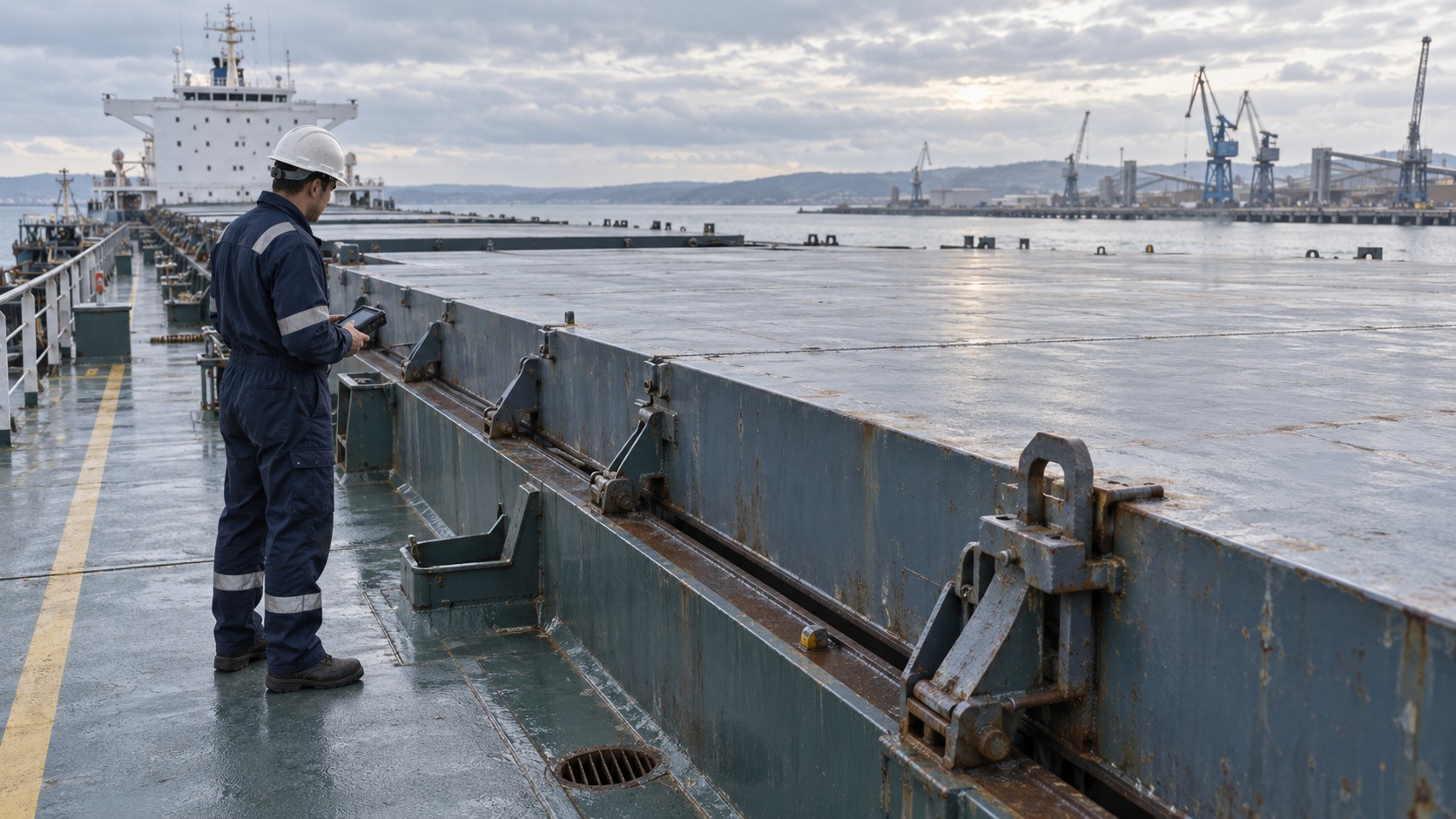
A clean hatch top and a report marked “passed” are useful starting points when viewing a used bulk carrier. The buyer still needs to know which covers were examined, how they were closed for testing, what defects were found and whether subsequent repairs were verified. Those details turn a general assurance into evidence that can be reviewed.
This guide scopes a bulk carrier hatch cover inspection before purchase, concentrating on seals, tightness-test records and repair verification. Use our used bulk carrier buying guide for the wider acquisition process and our pre-purchase condition survey guide for the hull, machinery and other systems.
1. Identify every hatch and the inspection limits
Start with a hatch-by-hatch register. Record the hold number, cover type, maker where identifiable, panel arrangement and available manuals. Use the same identifiers in photographs, test diagrams and repair lists. A report for No. 1 hold should not become an assurance about every hatch on the ship.
Agree with the seller and surveyor which covers can be opened, operated and tested during the visit. Cargo, terminal operations and access restrictions may limit the examination. Record unexamined panels and inaccessible areas explicitly, together with the further visit or evidence needed to resolve them. Closed-cover testing and an open-cover examination answer different questions.
Request the maker’s instructions, recent inspection and tightness-test reports, maintenance entries, damage and repair records, and relevant outstanding class items. Ask whether repairs or adjustments have occurred since the latest test. An older result may describe a configuration that no longer exists.
2. Inspect the sealing system, not just the rubber
The seal works with the surrounding steel and hardware. UK P&I’s Risk Focus: Hatch Covers explains the importance of compression surfaces, bearing arrangements and correctly engaged securing devices. Review their condition together rather than assuming new rubber resolves every sealing defect.
- Packing rubber and joints: identify damaged sections, uneven condition, patches and replacement history.
- Compression surfaces: inspect accessible contact areas for corrosion, damage and alignment concerns.
- Supports and locating devices: ask the specialist to assess wear and panel seating against the installed design.
- Cleats and securing components: check completeness, condition and engagement with the covers properly closed.
- Drainage: examine channels, outlets and non-return arrangements for condition and obstruction.
Have the surveyor distinguish visible defects from questions requiring measurement or maker advice. For example, a suspicious panel gap needs its location and the applicable design reference recorded. Avoid applying a universal clearance or adjustment allowance across different hatch systems.
Where accessible, map deformation, corrosion and previous repairs on panels and coamings. Suspected structural damage belongs in the technical follow-up even if a sealing test gives a satisfactory result.
3. Understand what each test establishes
Chalk contact checks, hose tests and ultrasonic tightness tests are not interchangeable evidence. UK P&I’s hatch cover testing guidance distinguishes seal contact from effective compression and explains the limitations of hose testing. The selected method and its interpretation should be agreed with a competent hatch-cover specialist.
- Contact checks: help examine where the mating surfaces meet; they should not be treated as a complete demonstration of service performance.
- Hose testing: looks for water penetration under the recorded test arrangement. An absence of observed leakage needs to be read alongside the method and coverage.
- Ultrasonic testing: identifies sound transmission through the closed sealing arrangement. Review the readings with the reference measurement, location map and stated acceptance procedure.
Do not compare unexplained raw ultrasonic readings from different reports. Ask the operator to identify the equipment, reference measurement, test setup and interpretation. Any numerical acceptance criterion should name the procedure used and be confirmed for the survey’s purpose.
A satisfactory tightness test does not replace a condition examination. The same UK P&I guidance requires the supporting components to be considered before drawing a conclusion about weathertightness.
4. Ask for a report you can trace to the ship
A useful buyer’s evidence pack lets another technical adviser follow the result without relying on a verbal summary. Ask for:
- Vessel identification, inspection date and the hatch or panel identifiers covered.
- Inspector details and the method, equipment identification and relevant equipment verification records.
- The closing and securing arrangement, test conditions and any temporary treatment of seals.
- A diagram showing the examined joints, readings or observations, and all excluded areas.
- Photographs and a separate list of condition defects, including findings outside the sealing test.
- The acceptance procedure, conclusions, recommended action and unresolved limitations.
These are practical evidence requests for an acquisition review, not a substitute certificate format. If the report will also serve a class, charterer or other acceptance purpose, confirm those requirements before commissioning the work.
Missing detail is an uncertainty to investigate. It does not by itself establish failure. Equally, a signed cover sheet should not close out defects omitted from the underlying examination.
5. Connect each repair to its verification
For each finding, create a short record linking the location, observed problem, proposed action, responsible party and required evidence. This gives the buyer, seller and repair contractor a common reference instead of several different descriptions of “hatch work”.
Ask the specialist to investigate the cause before agreeing a repair scope. Rubber replacement, panel alignment, support repairs and securing-device work may involve different parts, access and attendance. Obtain a vessel-specific quotation; a generic cost per hatch is a weak basis for budgeting.
UK P&I’s Steel Hatch Covers chapter recommends recording leakage locations, identifying their causes, rectifying defects and testing again after the covers are resecured. Retain that sequence in the evidence pack.
For delivery planning, distinguish work completed from work accepted. Ask for repair descriptions, parts or service records as appropriate, photographs of the affected locations and the follow-up examination or test report. Have the adviser confirm whether further checks are needed because the repair affected adjacent joints or panel seating. Structural alterations or significant repairs may also require maker or class involvement, as applicable.
Agree how outstanding findings will be handled within the actual transaction terms. A defect does not automatically create a right to reduce the price, reject the vessel or require a particular repair; the broker and legal adviser should relate the evidence to the agreed contract.
6. Keep the demonstration safe and the limitations visible
Arrange operation through the ship’s authorised personnel. Follow the installed system’s operating instructions, exclusion zones and isolation arrangements. No one should enter a moving cover’s path or work under an inadequately secured panel to obtain a closer photograph.
Any hold entry needs the vessel’s applicable enclosed-space assessment and entry controls. A buyer’s request for more evidence is not a reason to bypass them. If safe access cannot be provided, retain the limitation in the report and agree another way to resolve it.
Buyer’s hatch cover evidence checklist
- Hatches and panels identified consistently across records.
- Accessible seals, supports, securing devices and drainage examined.
- Test method, coverage, reference readings and acceptance procedure stated.
- Untested joints and inaccessible components listed.
- Defects mapped to an agreed repair scope and quotation.
- Completed work linked to follow-up examination and test evidence.
- Outstanding questions assigned before the delivery decision.
Use these findings within the wider ship acquisition due-diligence review. If you are still shortlisting tonnage, browse our bulk carriers for sale; once a candidate is identified, bring its particulars and available hatch records to the technical review.
Buying, or want a second opinion?
Our sale & purchase desk can help you find, value and inspect the right tonnage. Tell us what you’re looking for and we’ll revert within one working day.