


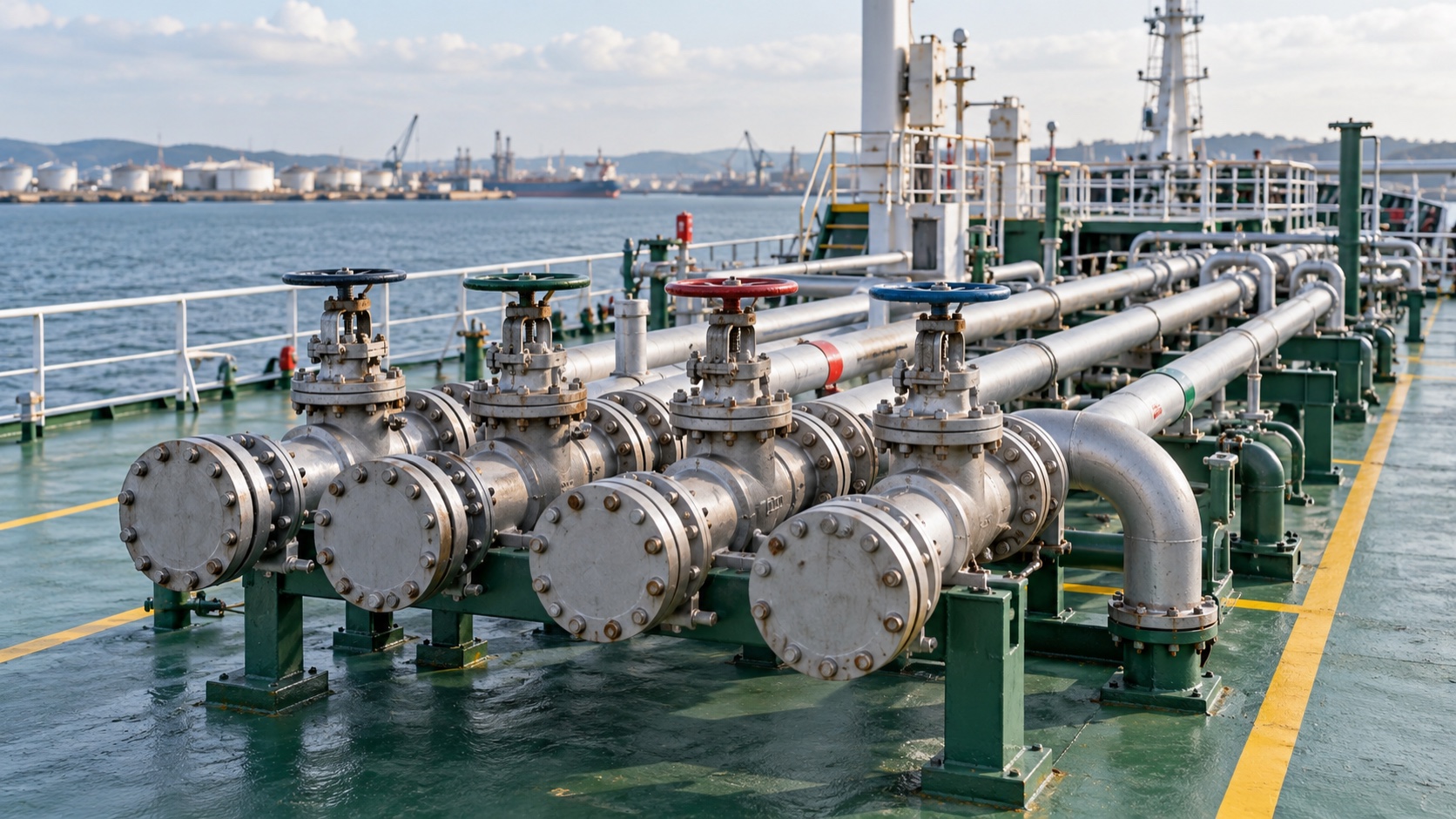
A used chemical tanker can have an attractive specification and still need substantial work before it suits your intended cargoes. A certificate, a freshly cleaned tank and a cargo pump that starts each answer a different question. The purchase inspection should connect them: what the vessel is authorised to carry, what its cargo systems can handle, and what evidence supports their present condition.
This guide covers tank coatings, cargo pumps and cargo history, with supporting checks on segregation and cleaning equipment. Use it to brief a surveyor experienced in chemical tankers. For vessel selection, see our chemical tanker buying guide; arrange the wider hull and machinery assessment through the pre-purchase ship inspection process.
1. Define the cargo programme before requesting tests
Give the surveyor a shortlist of intended products, relevant specifications, expected temperatures and parcel sizes. Identify cargoes with demanding purity requirements and any simultaneous carriage you expect. Without that brief, an inspection may describe the equipment accurately while leaving the most important commercial question unanswered: whether it supports your proposed operation.
IMO’s IBC Code overview explains the connection between product hazards, ship design and equipment requirements. For the vessel under review, obtain the applicable Certificate of Fitness, its attached product list and relevant conditions. Have the responsible technical adviser check the intended cargoes against the vessel’s current documentation and applicable requirements.
Then examine tank materials, coating compatibility and installed equipment separately. An IMO Type 2 description alone does not establish suitability for every proposed product. Our chemical cargoes guide explains the cargo-list question; the inspection below addresses the evidence behind the actual tanks and machinery.
2. Build a tank-by-tank document pack
Request records before boarding so the surveyor can target gaps and discrepancies. Keep tank numbers consistent across plans, photographs, maintenance records and cargo history. A general statement that “all tanks are epoxy coated” is too broad for assessing a vessel with different coating ages or local repairs.
- Tank arrangements: capacity plan, tank material or coating schedule, cargo piping diagrams and pump identification.
- Coating evidence: exact manufacturer and product, application dates, surface preparation, application and curing records, inspections and repairs where available.
- Machinery evidence: pump manuals, service history, seal replacements, breakdowns, operating logs and relevant condition-monitoring results.
- Cargo and cleaning evidence: recent products by tank, cleaning records, available cleanliness test results, contamination incidents and corrective work.
- Operating documents: applicable Procedures and Arrangements Manual, Cargo Record Book, calibration records and relevant class or statutory findings.
Record unavailable documents as uncertainties requiring follow-up. Missing records do not prove a defect, but a buyer should not price an undocumented system as if its history had been verified.
3. Inspect tank coatings against the identified system
For coated tanks, establish the exact coating system before discussing chemical resistance. Check the manufacturer’s current guidance and seek written advice for uncertain products or operating conditions. Jotun provides a product resistance guide for tank coatings; the useful reference is the guidance for the product actually installed, rather than a generic coating category.
Arrange internal inspection only under the vessel’s enclosed-space entry procedures, with the required atmosphere checks, isolation, supervision and rescue arrangements. The seller, master and competent personnel must establish safe access. Tank entry is not an informal buyer walkthrough, and an inaccessible tank should remain an explicit limitation in the survey report.
Ask the coating specialist to map accessible blistering, cracking, flaking, rust breakthrough and visible damage by tank and location. Include bottoms, suction areas, welds and heating-coil supports where accessible. Compare repair patches with the documented coating system and repair procedure. Photographs should show both the defect and its location.
Visual findings may justify further testing, but they do not establish the condition of every coated surface. Any thickness, adhesion or other specialist testing needs an agreed method suited to the coating, including permission for destructive work and restoration where necessary. Avoid a universal acceptance percentage: the repair decision depends on the coating, defect pattern, substrate and intended service.
4. Check stainless-steel tanks and cargo-contact components
For stainless-steel tanks, request material identification and repair records. Have the specialist assess accessible corrosion, pitting, weld condition and evidence of inappropriate repairs or surface treatment. Agree further measurements or examinations where the findings justify them; a stainless-steel description is not a condition report.
Extend the review to cargo-contact components, including pumps, lines, valves, coils and seals as applicable. A tank material may suit a proposed cargo while another wetted component requires closer review. If passivation or other remedial treatment is proposed, obtain a defined specialist scope and the evidence required before returning the system to service.
5. Review cargo pumps through records and agreed demonstrations
Identify each pump and its drive arrangement. Compare overhaul dates, recurring faults and replaced parts with operating records. Ask which pumps are unavailable, which rely on temporary arrangements, and whether the sale includes relevant tools and spares. Installed pump count should be reconciled with the serviceable inventory.
For Framo submerged pumps, review cofferdam purging records and investigate recorded leakage with a qualified specialist. Framo’s cofferdam guidance describes its role in monitoring seal condition. Apply the relevant equipment manual and service advice; this is not a generic procedure for every cargo pump design.
Agree demonstrations with the operator and attending specialists. State the test medium, operating conditions, measurements and limitations before running equipment. Check appropriate observations such as pressure, flow, abnormal noise, vibration, leakage and control response. Never run a pump dry or arrange improvised tests outside its approved operating procedure.
A brief start-up confirms much less than a representative discharge test. Even measured flow under one set of conditions does not prove performance with every proposed cargo. If a suitable demonstration is unavailable, list the outstanding evidence, further attendance required and commercial consequences of accepting that uncertainty.
6. Follow the cargo path beyond the pump
Trace the intended parcels through tanks, valves, lines and manifolds using the current piping drawings. Ask the surveyor to identify shared sections, isolation arrangements and modifications that need documentary support. A large number of tanks does not by itself establish the number of parcels that can be handled independently.
Review accessible piping, valve condition, heating-coil records, cleaning machines, stripping arrangements and instrumentation relevant to the cargo programme. Agree any leak, pressure or functional testing with competent personnel under an appropriate procedure. Record what was tested and what remained concealed or unavailable.
Where the intended products require particular heating, venting, inerting or monitoring arrangements, have the technical adviser verify the applicable requirements and installed capability. Keep the inspection tied to the proposed trade rather than treating an equipment list as proof of operational suitability.
7. Reconstruct recent cargo and cleaning history
Ask for a tank-by-tank history covering a period agreed with the surveyor and proposed operator. Include product identity, loading and discharge dates, relevant temperatures, cleaning methods and available acceptance results. Request earlier records where an incident, repair or sensitive cargo sequence warrants investigation.
Compare the records with coating restrictions and reported contamination or rejected-loading incidents. International Paint’s chemical resistance guidance notes discuss retained cargo and sequencing risks. Obtain the current advice for the installed system; historic guidance is background, not clearance for a new cargo programme.
A clean-looking tank is useful evidence of visible condition, but cannot establish suitability for a high-purity cargo. Where appropriate, agree specialist sampling or cleanliness testing against the proposed cargo’s acceptance criteria. A satisfactory result is specific to the tested tank, method and condition; it is not a guarantee for all subsequent cargoes.
Distinguish ordinary cleaning work from a recurring problem involving residues, damaged coatings or ineffective equipment. Ask what corrective action was completed and whether subsequent results support it. Unresolved incidents should remain visible in the purchase assessment.
8. Turn the findings into repair scope and delivery conditions
Prepare a findings schedule identifying the tank or equipment, supporting evidence, confirmed defect, access limitation and recommended next action. Obtain specialist quotations for material work. Coating renewal can involve preparation, access, application, curing and inspection; pump work may require parts, specialist attendance and a repeat demonstration.
Budget for the complete scope, including cleaning, waste handling, transport, berth or yard time and the period before the system can return to the intended service. Use vessel-specific quotations rather than an unsupported flat allowance per tank or pump. Keep repair cost and lost operating time visible as separate assumptions.
Discuss material findings with your broker and transaction advisers before agreeing technical acceptance. Record any seller repairs, documents to be supplied, repeat inspections and agreed delivery condition in the transaction arrangements. A survey recommendation only becomes a resolved purchase item when responsibility and acceptance evidence are clear.
Frequently asked questions
Does a valid Certificate of Fitness prove the tanks are in good condition?
It is an essential certification document, but does not replace a purchase condition assessment. Review the applicable product list and conditions alongside coating, machinery and inspection evidence.
Are stainless-steel tanks always the better purchase?
The choice depends on intended cargoes, material suitability, condition, cleaning needs and acquisition cost. Assess the actual vessel and its cargo-contact components rather than assuming the material description settles the decision.
What if tanks cannot be inspected before purchase?
Keep them listed as uninspected. Agree further access, specialist evidence or transaction conditions with your advisers. State clearly which assumptions remain unresolved when evaluating the price and repair exposure.
What should I send a broker when looking for a used chemical tanker?
Send intended products, parcel sizes, temperature and purity requirements, trading area and delivery timing. Review chemical tanker listings with those requirements in mind, then request vessel-specific records before arranging inspection.
Buying, or want a second opinion?
Our sale & purchase desk can help you find, value and inspect the right tonnage. Tell us what you’re looking for and we’ll revert within one working day.