


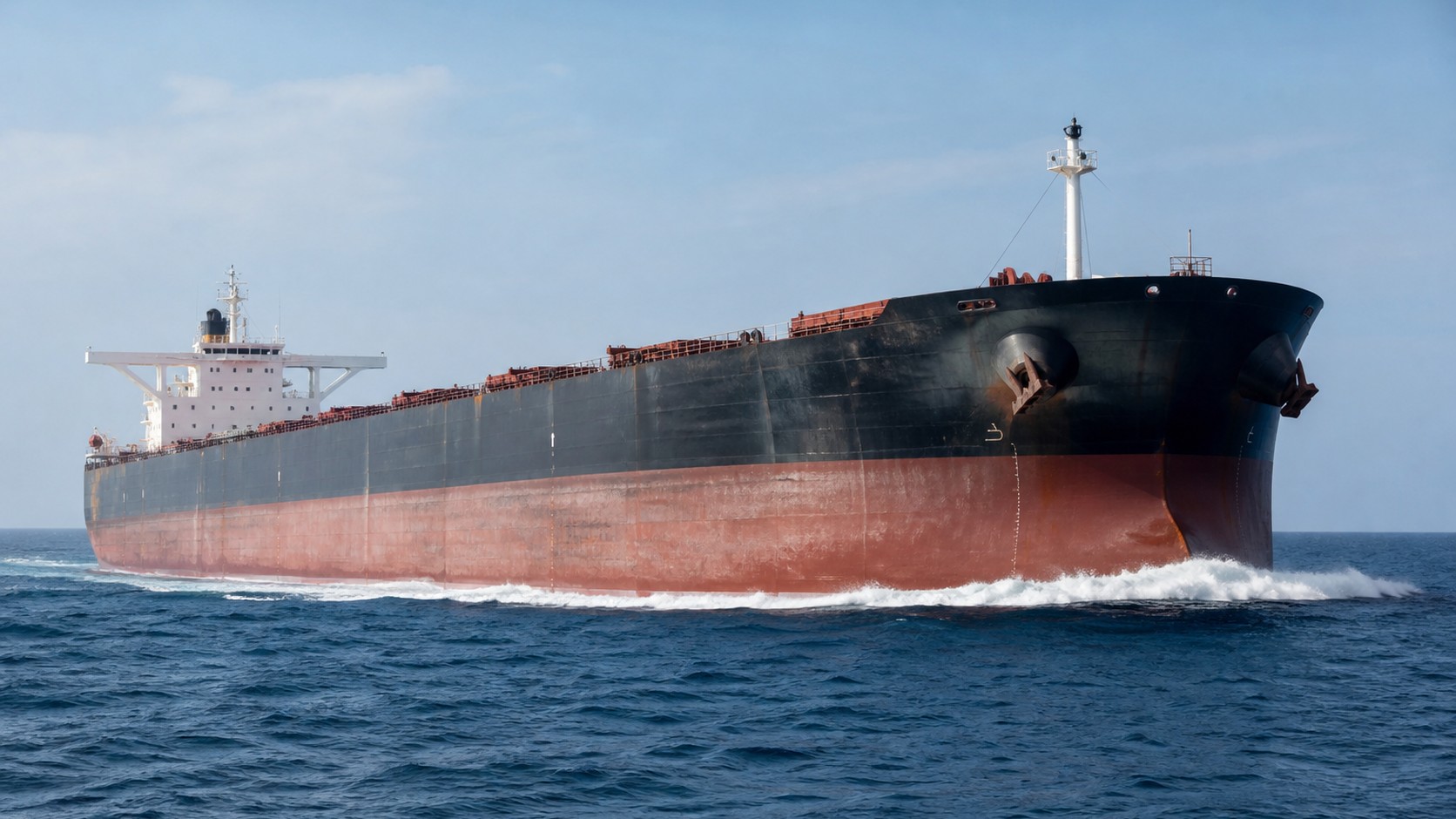
Dry bulk in 2026 is really two markets sharing one Baltic Dry Index headline. Capesize rates and secondhand values are running firm enough to look like a genuinely strong year, while Panamax and Supramax are absorbing most of a newbuild delivery wave that’s keeping a lid on their earnings — and underneath both, the working fleet is older than it has been in decades, with owners barely scrapping into the good conditions. This is a broker’s read on what’s actually driving each size band, for anyone buying or comparing a used bulk carrier against newbuild tonnage in 2026.
FRVous préférez le français ? Lisez notre guide d’achat du navire vraquier.
Capesize: the segment carrying the headline
The Baltic Dry Index opened 2026 modestly, around 1,882 points, before climbing toward the 2,700 range through the year on the back of Indian steel demand and firm coal trade — and Capesize has been doing most of that lifting. Daily earnings on the big ore carriers ran as high as $41,000–$44,000 in late May, and were still around $38,000 in mid-August even as the Capesize index itself swung sharply within the month — sliding roughly 5% before recovering days later. That volatility is normal for the segment: Capesize earnings move on a small number of large iron ore and coal fixtures, so a handful of cargoes can swing the index either way within a week. The direction through 2026, though, has consistently been firm relative to the smaller size bands.
Panamax and Supramax: where the newbuild wave actually lands
The supply story in 2026 is concentrated well away from Capesize. Dry bulk newbuild deliveries are forecast to hit a six-year high of around 41.2 million DWT this year, and Panamax accounts for the largest single share of that at 33.9%, with Supramax close behind at 28.3% — Capesize takes just 23.9% of the new tonnage. Panamax earnings reflect the pressure: daily rates were running near $19,800–$20,100 in August, roughly half of Capesize over the same period. For anyone comparing Handysize through Kamsarmax as a buy, this is the single most important 2026 fact: the size bands are not absorbing new supply at the same rate, and that gap shows up directly in earnings and, eventually, in resale value.
An ageing fleet that isn’t being scrapped into the good years
The working bulk carrier fleet has aged sharply — average age has climbed from around 8.6 years in 2018 to roughly 13 years now, and about 13% of the global fleet is 21 years or older, with the ageing most pronounced in the Small Bulk and Handysize bands above 25 years. Normally a market this firm would pull older tonnage out through demolition, but scrapping has stayed historically low: recent annual demolition volumes of roughly 2–3.5 million DWT compare with the 10 million-plus tons a year removed during the 2015–2016 downturn. Owners are holding onto ageing ships rather than cashing them in, which means more older tonnage stays in trade — and in the secondhand market — for longer than the fleet-age numbers alone would suggest.
Secondhand values: Capesize at a 2008-era high
That combination of firm Capesize earnings and a fleet that isn’t being renewed quickly is showing up directly in asset prices: secondhand values for 15-year-old Capesize vessels have reached their strongest levels since September 2008. That’s a resale premium built on current freight strength rather than on the underlying vessel getting any younger — worth remembering if you’re evaluating a specific candidate on what actually drives secondhand bulk carrier value rather than on where the headline index happens to sit this month.
What this means for a bulk carrier buyer in 2026
The size band you buy into matters more than the BDI headline this year. Capesize buyers are paying into a segment with firm rates, limited incoming newbuild supply and secondhand values near a 17-year high — a seller’s market where the case for buying rests on the trade you’re serving, not on picking up a bargain. Panamax and Supramax buyers are on the other side of that: softer current earnings under a genuine wave of new deliveries, which argues for negotiating harder on price and being realistic about near-term resale upside until that supply works through. Across every band, the historically low scrapping rate means age and class standing on a specific ship tell you less about how much longer it will actually trade than they used to — check condition and compliance on the vessel itself rather than assuming the market will retire it for you. Browse current stock under bulk carriers for sale, compare size classes against your trade, or talk to a broker about a specific opportunity.
Buying, or want a second opinion?
Our sale & purchase desk can help you find, value and inspect the right tonnage. Tell us what you’re looking for and we’ll revert within one working day.