


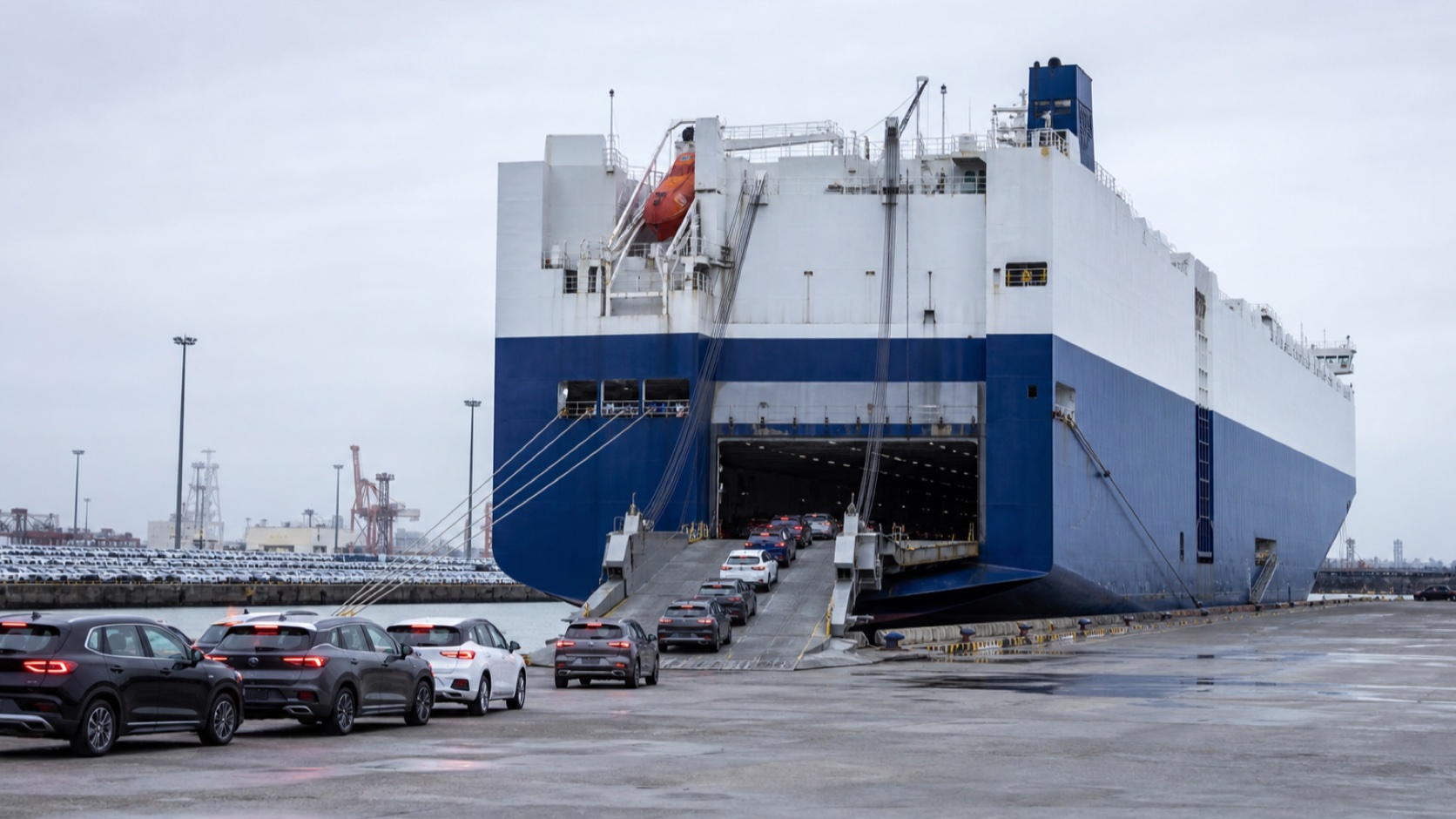
Few segments in shipping have had a run like the PCTC market has had over the past two years, and 2026 is showing no sign of that easing. Charter rates are climbing quarter on quarter, secondhand values are rising alongside them, and owners who sat on their hands through a cautious 2025 are now ordering newbuild tonnage at a pace the sector hasn’t seen in years. But the same forces lifting the market today carry an expiry date that is already visible on the calendar. This is a broker’s read on the boom, and the risk building underneath it, for anyone buying Ro-Ro or PCTC tonnage in 2026.
Charter rates: still climbing, and forecast to keep climbing into 2027
One-year time-charter rates for standard PCTCs averaged US$52,200/day in the second quarter of 2026, up 14.1% on the previous quarter, according to Veson Nautical’s Q3 2026 shipping market outlook. Midsize PCTCs — the band that covers most of the tonnage actually changing hands in the secondhand market — moved even faster, up 29.2% quarter on quarter to US$35,700/day. The forecast doesn’t call for a plateau either: standard PCTC rates are projected to reach US$69,800/day by 2027 (up 19.2% year on year) and midsize units to US$48,800/day (up 22.5%). Secondhand values are moving with the rates rather than lagging them — a five-year-old standard PCTC was valued around US$82 million in Q2 2026, and a five-year-old midsize unit around US$62 million, both up 2.9% on the quarter.
What’s actually driving it: Chinese exports and a longer route
Two forces are doing almost all of the work. China’s light vehicle exports grew 63% year on year between January and May 2026, and China alone accounts for roughly a third of global car sales — a volume increase that size needs a lot of vehicle-carrying capacity to move, and it needs it now. At the same time, continued diversions around the Cape of Good Hope rather than through the Suez Canal are adding roughly 25% to Asia-Europe voyage distances, which ties up tonnage on longer round trips and effectively removes capacity from the market even before a single additional car is exported. Put together, CEU-mile demand — capacity measured in car-equivalent-units times the distance it has to travel — is growing at an average of around 7.3% across 2026 and 2027, a rate of demand growth the existing fleet was not built to absorb without rates moving.
Not just China: Japan, Korea and a fleet with little spare capacity
China’s export surge is the headline, but it’s landing on a fleet that was already committed elsewhere. Japan remains the world’s largest car exporter in absolute terms, shipping several million vehicles a year, and PCTCs carry roughly 60% of that volume — Japanese exporters aren’t a swing factor here, they’re a large, steady baseline draw on the same pool of tonnage China is now competing for. South Korea adds another layer of structural demand: its government-backed K-Ship financing programme is letting domestic yards fast-track newbuild PCTCs to keep pace with Hyundai and Kia’s export schedules, which tells you Korean exporters are securing capacity through long-term shipbuilding commitments rather than the spot market. The practical effect for anyone shopping the charter or secondhand market today is that roughly 80% of 2026 Ro-Ro capacity is already locked up under long-term contracts, leaving a genuinely thin slice of the fleet exposed to spot rates — which is a large part of why short-term and secondhand pricing has moved as sharply as it has. A buyer without an existing long-term contract position is competing for a small residual share of a fully-booked fleet, not for capacity in an open market.
Newbuild orders: owners are finally reacting, after a slow start
Ordering activity reflects how sharply sentiment has turned. Confirmed newbuild orders reached 87,200 CEU in the second quarter of 2026 alone — up 275% on the previous quarter and 652% year on year — marking a sharp reversal after owners largely held back through 2025. Longer-range forecasts point the same direction: the global PCTC fleet is projected to expand by around 40% over the coming years, with roughly 58 new vessels due to deliver across that period. Some of that new capacity is simple replacement: over 120 vessels in the existing fleet are 25 years or older and face accelerated scrapping, so a meaningful share of the current order surge is fleet renewal rather than pure expansion. That distinction matters for how much of the incoming tonnage actually adds net capacity versus simply replacing ships that were going to leave the fleet regardless. See newbuilding vessels for how ordering economics and delivery timelines compare with buying secondhand in a market moving this fast.
The 2028 risk: what happens when Suez reopens
Every driver behind this rate cycle depends on the Cape of Good Hope detour staying in place, and that is not guaranteed to last. If Suez Canal transits normalise, Veson’s analysis projects that supply will outpace CEU-mile demand growth by roughly 6% — a swing large enough to pressure both charter rates and the asset values that have been climbing alongside them. The timing matters for anyone ordering today: a newbuild contracted in 2026 typically delivers in 2028 or 2029, which is exactly the window this risk is flagged for. A buyer ordering into the current boom should model the ship’s economics against a normalised-Suez rate environment, not just against today’s numbers, before committing to a delivery date that could land right as the correction does.
What this means for a Ro-Ro / PCTC buyer in 2026
This is a genuine boom, not a speculative one — Chinese export volume and a longer trade route are concrete, measurable causes, and the rate and value numbers are responding to them in a straightforward way. That makes secondhand tonnage bought now a reasonably safe bet for near-term earnings, but it also means the entry price already reflects the boom. The bigger judgment call sits with newbuild orders: a ship contracted today lands in a delivery window that overlaps directly with the 2028 Suez-normalisation risk, so the ordering decision should be underwritten against that scenario, not just the current rate curve. See our Ro-Ro / PCTC buyer’s guide for what to check on a specific candidate, browse current stock under Ro-Ro & car carriers for sale, or talk to a broker about a specific opportunity.
Buying, or want a second opinion?
Our sale & purchase desk can help you find, value and inspect the right tonnage. Tell us what you’re looking for and we’ll revert within one working day.