

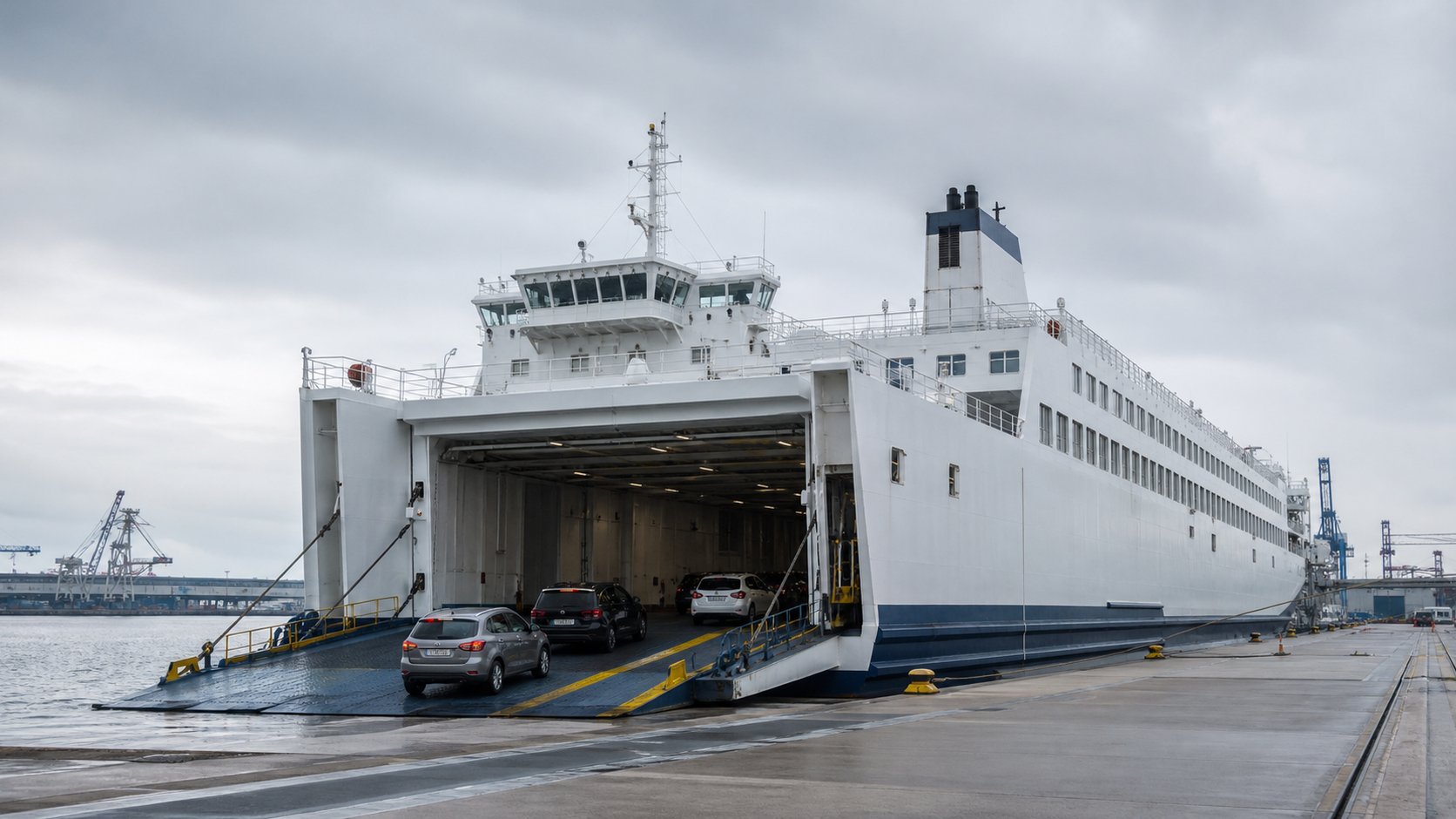
A RoPax vessel looks like a car carrier with a few extra decks of cabins, but the passenger dimension changes almost everything about how it is bought and certified. The moment a ship carries fare-paying passengers alongside vehicles, it stops being regulated like a cargo Ro-Ro or PCTC and becomes a passenger ship under SOLAS — with damage stability, lifesaving and fire-safety requirements that a pure cargo vessel never has to meet. Buying one means checking the vehicle deck the same way you would a car carrier, and then checking an entirely separate layer of passenger compliance on top.
What makes a RoPax different from a pure Ro-Ro or PCTC
| Factor | RoPax | Cargo Ro-Ro / PCTC |
|---|---|---|
| Regulatory class | Passenger ship under SOLAS once it carries more than 12 passengers | Cargo ship rules; no passenger certification needed |
| Stability standard | SOLAS 2009 damage-stability rules for RoPax, a materially higher bar | Standard cargo-ship stability requirements |
| Accommodation | Passenger cabins, lounges, catering and public spaces alongside crew berths | Crew accommodation only |
| Lifesaving appliances | Lifeboats/liferafts sized for full passenger + crew complement, evacuation systems | Sized for crew only |
| Vehicle deck | Same fundamentals as a Ro-Ro — ramps, lane metres, deck height | Same fundamentals as a Ro-Ro — ramps, lane metres, deck height |
See current stock under Ro-Ro and car carriers for sale, which spans PCTC, cargo Ro-Ro and RoPax tonnage.
The vehicle deck: the same checks as any Ro-Ro
- Lane metres and car capacity — the primary commercial figure; check both the headline lane metres and the practical capacity once ramps, columns and turning circles are accounted for.
- Ramp SWL and configuration — stern, bow, quarter or side ramps, and whether they suit the ports you intend to serve.
- Deck height and hoistable decks — fixed deck height caps what can be carried; hoistable/movable decks add flexibility for trucks and high vehicles.
- Ventilation and fire safety on the vehicle deck — mechanical ventilation and fixed fire-fighting systems are mandatory and scrutinised harder on a RoPax because passengers are aboard while vehicles load.
The passenger side: what a cargo Ro-Ro buyer has never had to check
- Passenger Ship Safety Certificate — confirm it is current and matches the certified passenger number; operating over that number is not a grey area, it is a compliance breach.
- Damage stability — verify the vessel meets the SOLAS 2009 RoPax stability standard (or the standard applicable to its build date and trading area), since retrofitting stability is one of the most expensive corrections possible on this ship type.
- Lifesaving appliances — lifeboat and liferaft capacity, davits, and evacuation systems sized and certified for the full passenger and crew complement.
- Passenger accommodation standard — cabin count and grade, lounges, catering galleys, and accessibility, which vary hugely by route (overnight ferry vs short day crossing).
- Fire safety in accommodation and public spaces — SOLAS passenger-ship fire zoning is stricter than cargo-ship requirements.
- Route and flag passenger certification — some trades require additional national or regional passenger-ship approvals beyond the base SOLAS certificate; confirm what your intended route needs before you commit.
Tip: Get the passenger certificate and the stability booklet checked by a naval architect before survey, not after. A RoPax that fails the current damage-stability standard for its intended trade can be effectively unsellable into that trade without a costly stability upgrade — and that is not something a standard hull-and-machinery survey will catch on its own.
Class, certificates and due diligence
- Class and status — in class with a recognised society, no overdue surveys or outstanding Conditions of Class; note any conversion history between cargo and passenger configuration.
- Passenger Ship Safety Certificate and Passenger Ship Safety Construction Certificate — current, and matched to the certified passenger number and route.
- Stability booklet — reviewed against the standard applicable to the ship’s intended trading area, not just its original build standard.
- Statutory certificates — Load Line, tonnage, safety, pollution, and the vehicle-deck-specific fire and ventilation certification.
- Clean title — no liens, mortgages or maritime claims.
Survey: deck, stability and passenger systems all get checked
Commission an independent pre-purchase condition survey covering both the vehicle deck (ramps, deck strength, ventilation, fire systems) and the passenger areas (accommodation condition, catering equipment, lifesaving appliances). Insurance is a related check worth running in parallel — passenger liability exposure changes the P&I picture materially versus a cargo ship; see marine insurance for ship buyers.
Newbuilding vs secondhand
A RoPax newbuild lets you specify lane metres, cabin mix and route-specific stability from the outset — see newbuilding vessels for how that process runs. Secondhand RoPax tonnage trades sooner, but stability and passenger-certification compliance for your intended route should be confirmed before price, not after, since a vessel built to an older stability standard may need requalification or upgrade for a new trade.
RoPax purchase checklist
- ☐ Certified passenger number and route confirmed against intended trade
- ☐ Damage stability verified against the standard applicable to the intended trading area
- ☐ Passenger Ship Safety Certificate and stability booklet reviewed by a naval architect
- ☐ Lane metres and car capacity checked at practical, not just headline, figures
- ☐ Ramp SWL and configuration matched to intended ports
- ☐ Lifesaving appliances sized and certified for full passenger + crew complement
- ☐ P&I and passenger liability cover confirmed before purchase
- ☐ In class, no overdue surveys or outstanding Conditions of Class
Frequently asked questions
What is a RoPax vessel? A roll-on/roll-off ship that carries fare-paying passengers alongside vehicles and rolling cargo — combining a Ro-Ro vehicle deck with passenger accommodation, and regulated as a passenger ship under SOLAS.
How is a RoPax different from a car carrier or PCTC? A PCTC or cargo Ro-Ro carries vehicles and rolling cargo only, with no passenger certification required. A RoPax carries passengers too, which brings SOLAS passenger-ship stability, lifesaving and fire-safety requirements a cargo Ro-Ro never has to meet.
What is RoPax damage stability and why does it matter so much? It is the SOLAS standard governing how a RoPax must remain stable after flooding, given the high-sided open vehicle deck and large passenger complement. It is one of the most expensive things to retrofit on this ship type, so verifying it against your intended trade before purchase is essential.
Can a cargo Ro-Ro be converted into a RoPax? In principle yes, but it usually requires significant work on stability, accommodation and lifesaving systems, plus full passenger-ship recertification — get a firm naval-architect and class assessment before assuming conversion is cheaper than buying a purpose-built RoPax.
Is the secondhand RoPax market active? Yes — good secondhand RoPax tonnage has traded steadily as newer, larger newbuildings enter service and push older units onto the resale market.
Looking for a RoPax vessel? Golden Shipyard sources RoPax, PCTC and cargo Ro-Ro tonnage as newbuildings and surveyed resales, with class and passenger-certification records released to qualified buyers under NDA. Browse current stock under Ro-Ro and car carriers for sale, or talk to us through our ship sale & purchase brokerage services. For a confidential discussion, email [email protected].
Buying, or want a second opinion?
Our sale & purchase desk can help you find, value and inspect the right tonnage. Tell us what you’re looking for and we’ll revert within one working day.