

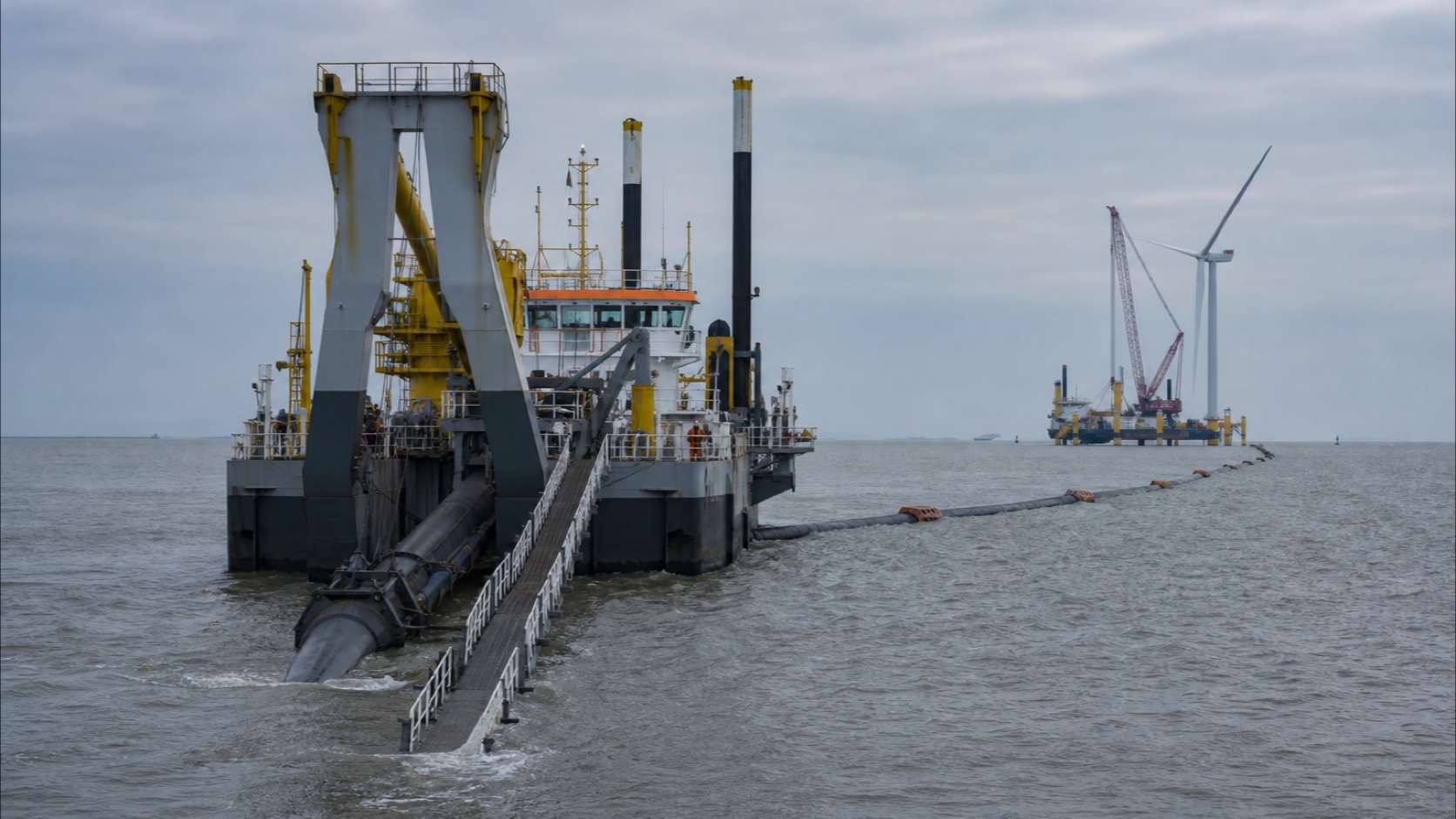
“Dredging” now covers two genuinely different businesses trading under one name, and 2026 is the year that split became impossible to ignore. Traditional dredging — land reclamation, port maintenance, capital dredging with a CSD or TSHD — is having a soft year at both of the sector’s dominant contractors. At the same time, the offshore energy work that shares the same yards, the same vessels’ near cousins, and often the same balance sheet is booming hard enough to carry the group numbers. This is a broker’s read on both halves, for anyone buying CSD or TSHD tonnage in 2026.
Traditional dredging: a genuinely soft year
Boskalis, one of the two dominant global dredging contractors, reported first-half 2026 revenue of €1.90 billion, down from €2.35 billion in the same period of 2025. The company was explicit about where the softness sits: hopper occupancy declined compared with “exceptionally high” levels in the prior period, and utilisation of its cutter suction dredgers was described as “extremely low.” The causes are largely external to the work itself — Middle East geopolitical tensions and delayed project awards across Asia, not a collapse in underlying demand for reclamation or maintenance dredging. That distinction matters: a fleet sitting idle because contracts are late to be awarded is a very different signal than a fleet sitting idle because the demand for dredging has actually shrunk.
Offshore energy: the business carrying the group numbers
While traditional dredging softened, the offshore energy side of the same contractors had the opposite year. Van Oord’s offshore wind revenue climbed 36% in 2025, and offshore energy now accounts for the larger share of group revenue than dredging itself — a genuine role reversal for a company whose name has meant dredging for over a century. Boskalis reported “excellent project execution” on major wind installations from its own Offshore Energy division, strong enough to support the group’s results through the dredging-side softness. Both contractors are backing that shift with capital: Boskalis is investing in a state-of-the-art high-capacity cable-laying vessel due in service in 2029, and christened the Windpiper — a 45,500-tonne subsea rock installation vessel — in July 2026. Newbuild investment is flowing toward seabed work tied to offshore wind, not toward expanding the traditional dredge fleet.
The work is still there — it’s arriving late, not disappearing
Order books at both majors remain large even through the soft utilisation numbers: Boskalis held a €6.8 billion order book at 30 June 2026, only modestly down from €7.0 billion at the end of 2025, and Van Oord’s stood at a stable €4.4 billion heading into the year. Real capital dredging projects are still being awarded and executed — Boskalis and Van Oord jointly won an approximately €500 million contract to expand the Port of Luleå in Sweden, and UK maintenance dredging programmes were extended through the year. The combination of a large order book with low current utilisation is consistent with the stated cause: projects delayed rather than cancelled, which points to a recovery in fleet utilisation as those delayed awards work through rather than a structural decline in reclamation and maintenance demand.
What this means for a dredging buyer in 2026
The traditional CSD and TSHD side of this market is soft right now for reasons that look temporary rather than structural — geopolitical disruption and delayed project timing against a still-large order book, not falling demand. That combination tends to favour a buyer with patience: secondhand values and charter economics on conventional dredge plant are unlikely to be commanding a premium while utilisation sits this low, and a large order book still working through the system suggests the softness has a foreseeable end rather than an open one. Anyone whose work overlaps with offshore wind seabed preparation should note the opposite read entirely — that side of the business is where the contractors themselves are putting new capital, and vessels suited to cable-lay and rock installation work sit closer to our special purpose vessel guide than to conventional dredging tonnage. See our CSD and TSHD buyer’s guides for what to check on a specific candidate, browse current stock under dredgers for sale, or talk to a broker about a specific opportunity.
Buying, or want a second opinion?
Our sale & purchase desk can help you find, value and inspect the right tonnage. Tell us what you’re looking for and we’ll revert within one working day.