

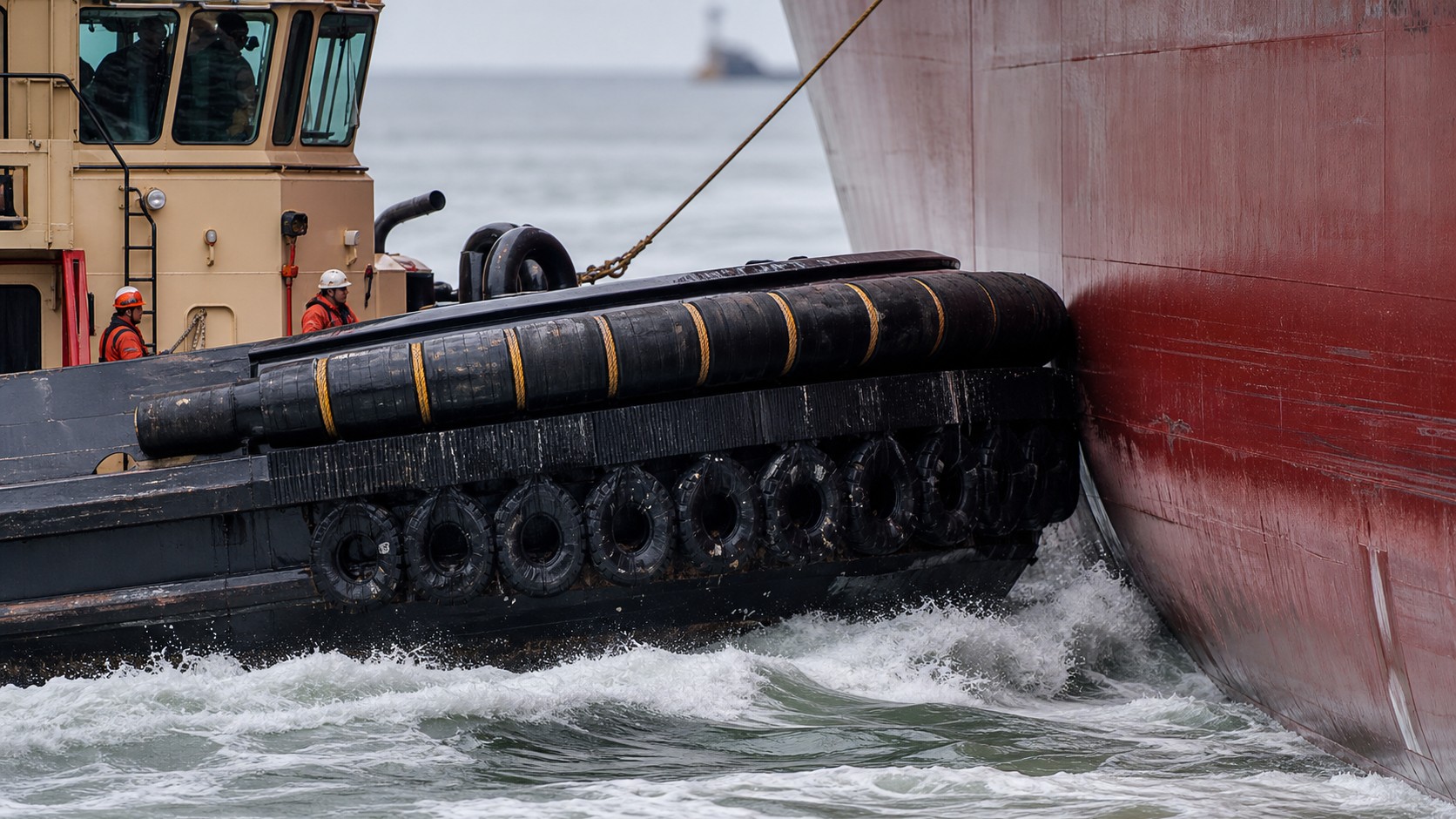
A tugboat is a small ship with an outsized job — moving vessels many times its size, holding tankers alongside a terminal, escorting ships through tight water, and towing barges along the coast. It’s defined less by its length than by its pulling power and how it manoeuvres. Get the type and the bollard pull right for your work and a tug earns its keep for decades; get them wrong and it can’t do the job at all. This guide covers what to check before you buy.
What a tugboat is for
Tugs do several distinct jobs, and the right tug depends on which one is yours:
| Role | What it does | Key needs |
|---|---|---|
| Harbour / ship-handling | Berthing and unberthing ships in port | High bollard pull, manoeuvrability |
| Escort | Steering/braking a moving ship in confined water | High-speed steering forces, ASD/tractor design |
| Terminal | Holding tankers alongside jetties, often with FiFi | Bollard pull, fire-fighting, push gear |
| Coastal / ocean towage | Towing barges and structures between ports | Endurance, towing winch, seakeeping |
| Pusher / river | Pushing barge trains | Push knees, shallow draft |
In-stock tonnage includes compact coastal/harbour tugs around 30–35 m, twin-screw and steel-built, suited to port towage and near-coastal work.
See current availability among our work & offshore vessels for sale; for larger offshore-going support and anchor-handling tonnage, see the OSV guide.
Bollard pull — the number that defines a tug
Bollard pull (BP), measured in tonnes, is the steady pulling force a tug can exert — the single most important figure:
- It sets what the tug can move, hold, or escort — bigger ships need more BP.
- Quoted as maximum and continuous (steady) bollard pull; check which figure you’re buying and whether it’s from a certified test.
- Match BP to your heaviest job (largest ship handled, biggest tow), with margin for weather and current.
Tip: Confirm bollard pull from a certified bollard-pull test certificate, not just the brochure — and note whether it’s ahead and astern, since ship-handling uses both.
Tug types: ASD vs conventional vs tractor
How a tug is propelled decides how it manoeuvres:
- ASD (Azimuth Stern Drive) — two steerable azimuth thrusters aft; the modern workhorse for harbour and escort work, with excellent manoeuvrability and thrust in any direction.
- Conventional — fixed propeller(s) with rudders (often twin-screw). Simpler and robust; well suited to towage and general port work, less agile than ASD for ship-handling.
- Tractor tug (VSP / azimuth forward) — propulsion forward of amidships; very responsive, a tractor tug is favoured for escort.
A compact twin-screw conventional tug is a proven, economical choice for harbour towage and coastal work; ASD suits demanding ship-handling and escort.
Towing gear, FiFi, and fit
Beyond propulsion, check the working equipment:
- Towing winch / hook — the towing arrangement, wire/rope capacity, and condition for your tows.
- Push gear / fenders — heavy fendering and push knees for ship-handling and pushing.
- FiFi (fire-fighting) — external fire-fighting monitors for terminal and escort duty (FiFi class if required).
- Deck equipment — capstans, tow pins, and any deck crane.
- Endurance & tankage — fuel and range for coastal/ocean towage.
Class, service area, and condition
Before committing, confirm on paper and under NDA:
- Class & status — in class with a recognised classification society (e.g. CCS, ABS, DNV, BV, LR), no overdue surveys or outstanding Conditions of Class.
- Service/navigation area — harbour, coastal, or near-coastal (with any regional exclusions) — this caps where the tug can legally work.
- Bollard-pull test certificate, GA, and machinery particulars.
- Statutory certificates — Load Line/Tonnage as applicable, Safety, and pollution certificates.
- Clean title — no liens, mortgages, or maritime claims.
Survey: propulsion and towing gear get the scrutiny
Commission an independent pre-purchase condition survey, and a slipway/drydock survey for any serious purchase. On a tug the surveyor focuses on:
- Propulsion — azimuth thrusters (ASD) or shafting, propellers, gearboxes, and steering; a bollard-pull-critical system.
- Towing winch / hook & foundations — condition, wires, and load capacity.
- Hull & fendering — thickness gaugings, corrosion, and heavy-duty fenders.
- FiFi and deck systems — operational tests where fitted.
- Engines & seakeeping gear — tugs work hard; check running hours and maintenance.
Tip: A cheap tug with worn thrusters, a tired towing winch, or an out-of-date bollard-pull certificate can cost more than a dearer, well-maintained unit once you add overhaul and lost hire — survey the propulsion and towing gear first.
Newbuilding vs. secondhand
Tugs are long-lived and often bought secondhand for immediate service, or built new to an exact fit (bollard pull, ASD/conventional, FiFi, service area). For towing barges and deck cargo, pair a tug with a deck cargo barge; for smaller harbour and utility work, compare a small work boat. Budget beyond the price: survey and any class rectification, thruster/winch overhaul reserve, delivery, flag and class transfer, insurance, and spares.
Quick pre-signing checklist
- ☐ Tug role (harbour / escort / terminal / coastal towage / pusher) matched to your work
- ☐ Bollard pull (max and continuous) confirmed from a certified test
- ☐ Tug type (ASD / conventional / tractor) suits your manoeuvring needs
- ☐ Towing winch/hook, push gear, and fendering adequate
- ☐ FiFi and deck equipment as required by your duties
- ☐ Service/navigation area suits where you’ll work
- ☐ In class, no overdue surveys / Conditions of Class
- ☐ Independent condition survey (+ slipway); propulsion and towing gear tested
- ☐ Full documents under NDA; clean title confirmed
- ☐ Total cost of ownership budgeted (thruster/winch overhaul, delivery)
Frequently asked questions
What is bollard pull on a tugboat? Bollard pull is the steady pulling force a tug can exert, measured in tonnes — the most important figure when buying a tug. It’s quoted as maximum and continuous bollard pull and determines what the tug can move, hold, or escort. Always confirm it from a certified bollard-pull test.
What is the difference between an ASD and a conventional tug? An ASD (Azimuth Stern Drive) tug has two steerable azimuth thrusters aft, giving excellent manoeuvrability and thrust in any direction — ideal for ship-handling and escort. A conventional tug uses fixed propellers with rudders (often twin-screw); it’s simpler and robust, well suited to towage and general port work but less agile than an ASD.
What size tug do I need? Size the tug by bollard pull, not length. Match the bollard pull to your heaviest job — the largest ship you’ll handle or biggest tow — with margin for weather and current. A compact 30–35 m harbour tug suits port and near-coastal work; larger or ASD tugs handle bigger ships and escort duty.
What is an escort tug? An escort tug steers and brakes a moving ship in confined or sensitive waters, generating steering forces at speed. Escort work favours ASD or tractor designs for their responsiveness and controllable high-speed forces.
Should I buy a newbuilding or a secondhand tug? Tugs are long-lived and often bought secondhand for immediate, lower-cost service; newbuildings suit buyers needing an exact fit (bollard pull, ASD/conventional, FiFi, service area) and a clean history. Either way, survey the propulsion and towing gear closely.
Looking for a tugboat now? Golden Shipyard carries in-stock and newbuilding tugs, including compact twin-screw coastal and harbour tugs around 30–35 m. Browse current availability among our work & offshore vessels for sale, or learn about our ship sale & purchase brokerage services. To receive full particulars under NDA, email [email protected].
Buying, or want a second opinion?
Our sale & purchase desk can help you find, value and inspect the right tonnage. Tell us what you’re looking for and we’ll revert within one working day.